Mexico. Izamal, Yucatan. The Golden City
-
Artists
-
Chris Langley
-
Mexico. Izamal, Yucatan. The Golden City
-
(0)
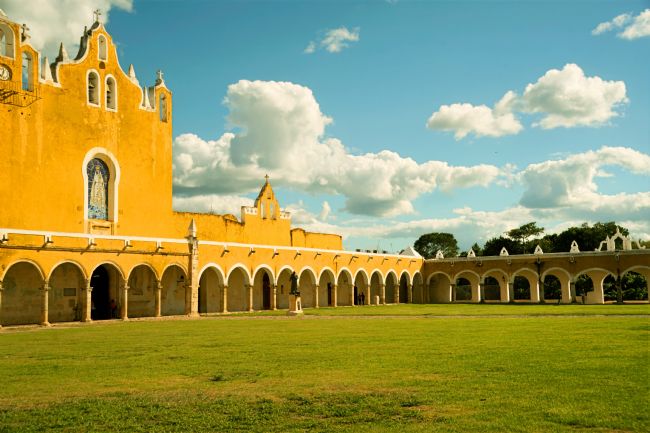
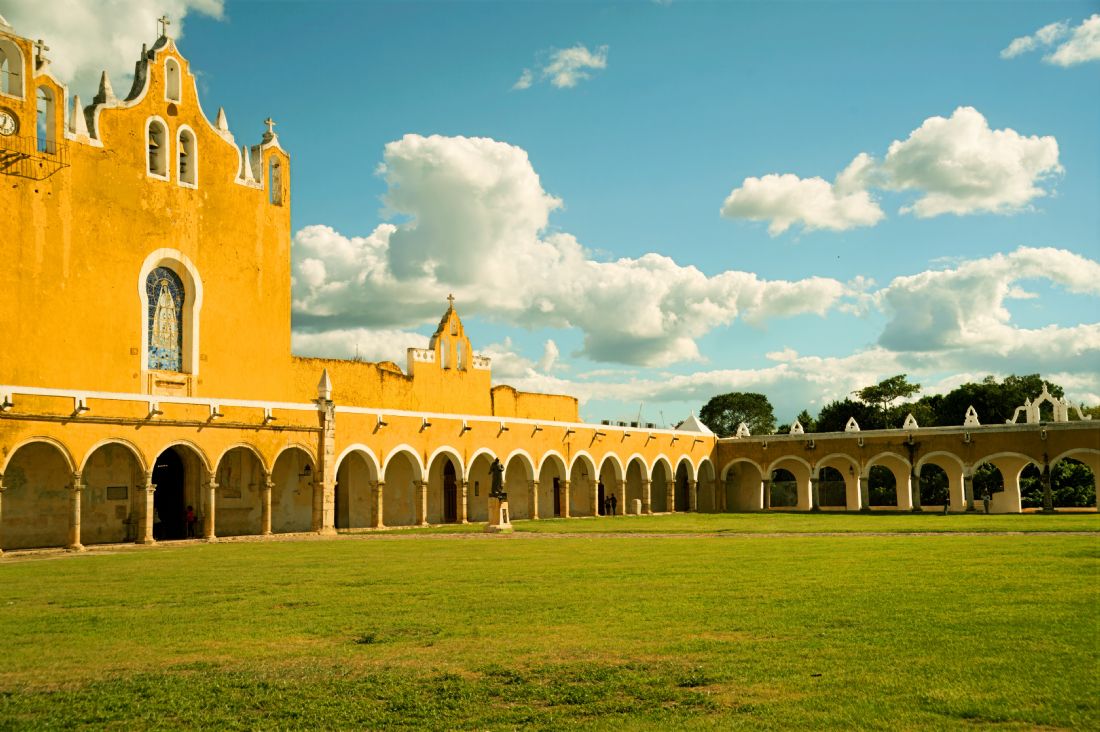
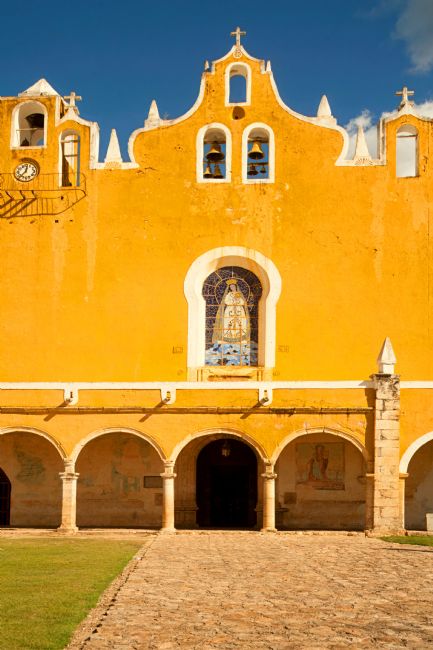
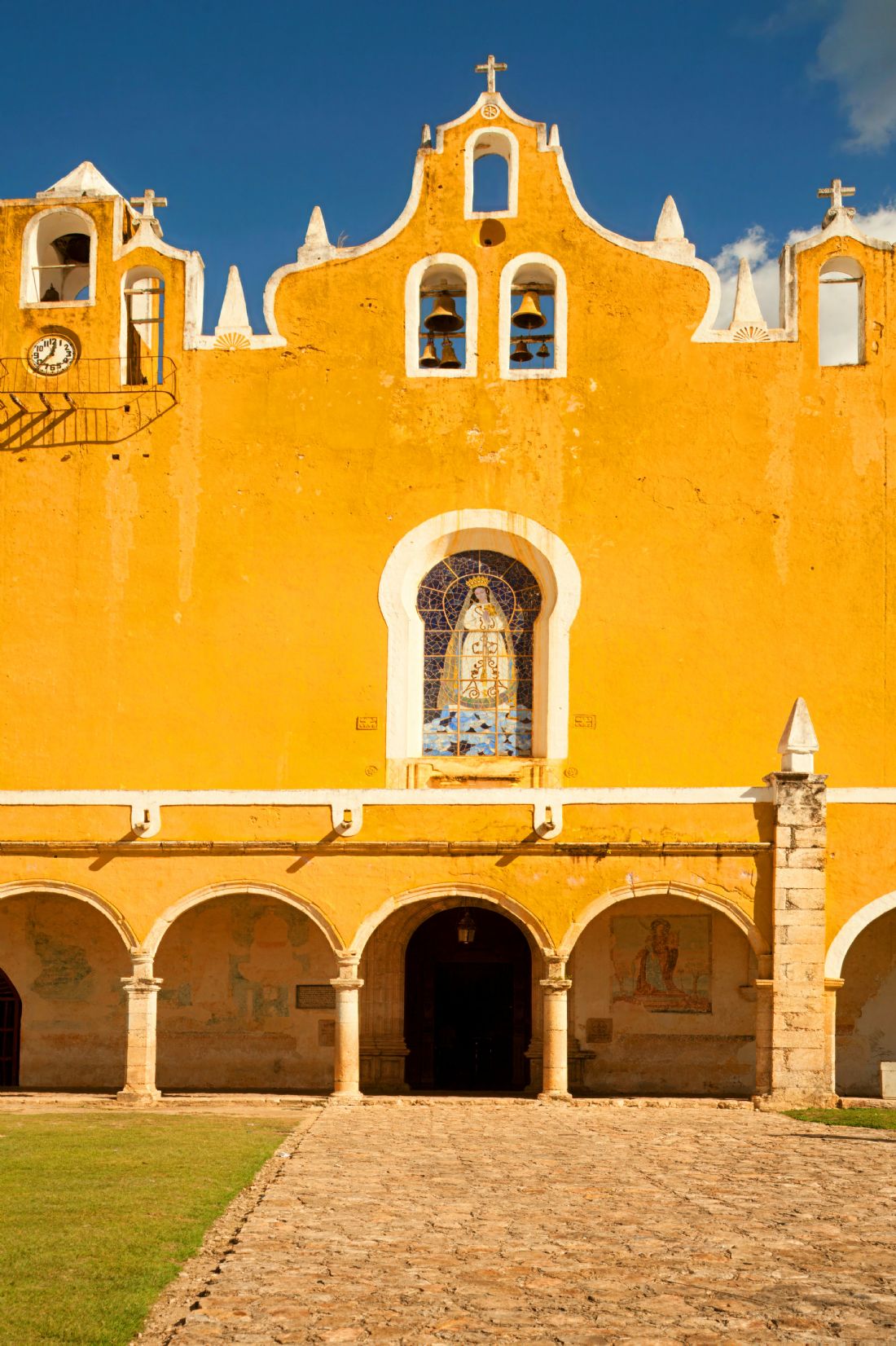
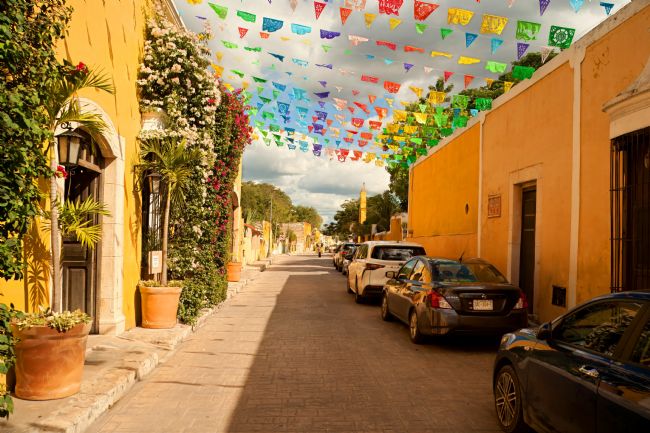
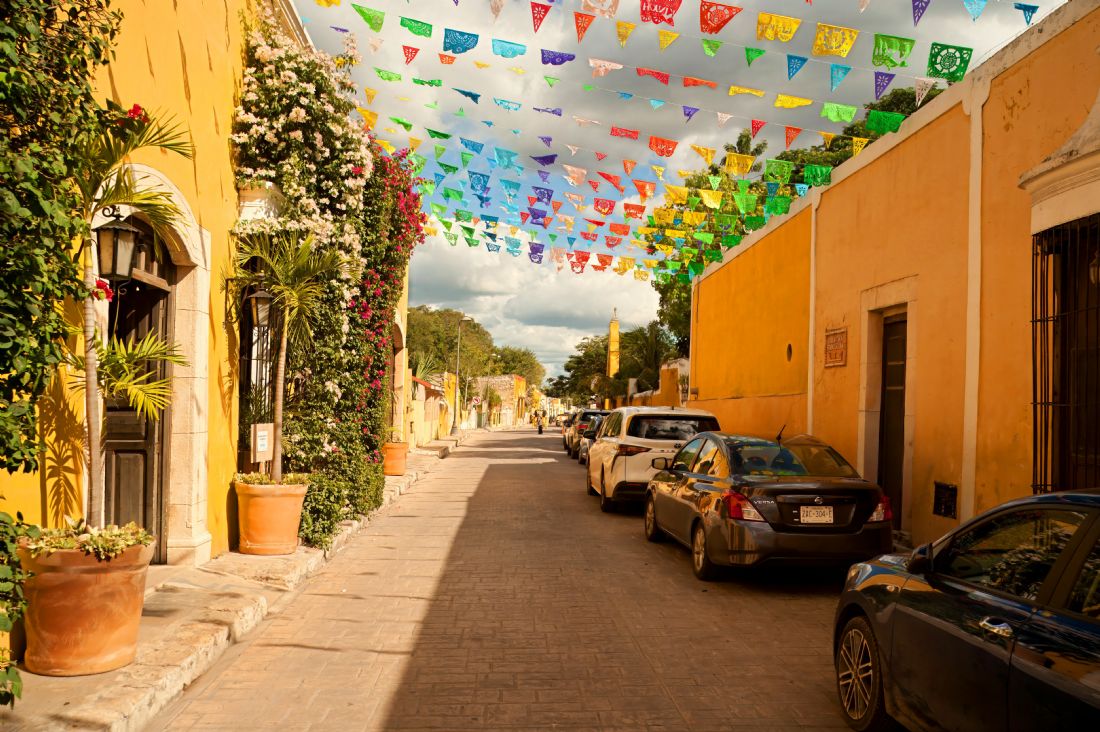
The town of Izamal in Yucatan, Mexico, was built in and on top of Mayan ruins by the Spanish. Dating from the mid 1500s, much of the town is now painted in yellow to ochre since a visit to the town by Pope John Paul 2, said to honour the Papal flag.
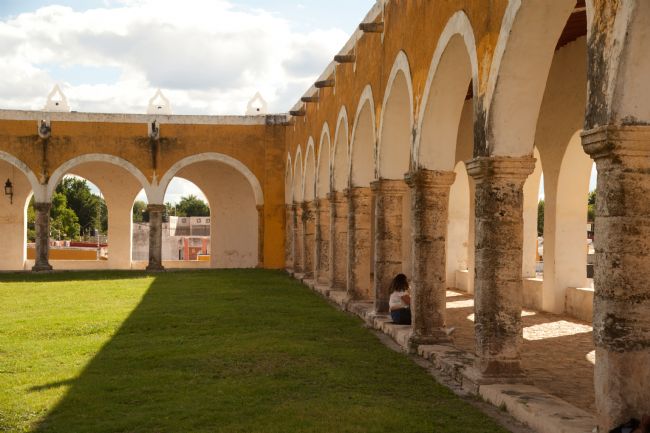
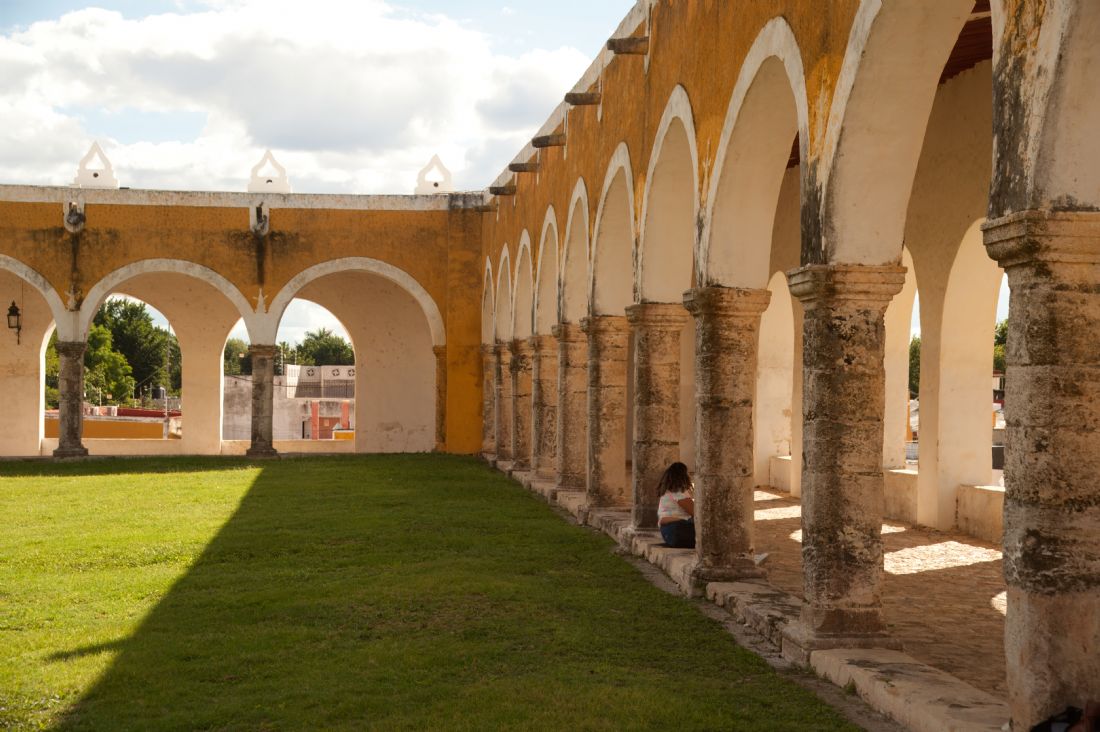
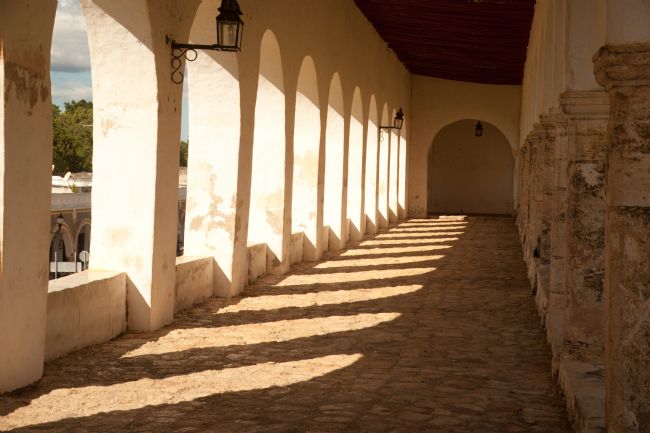
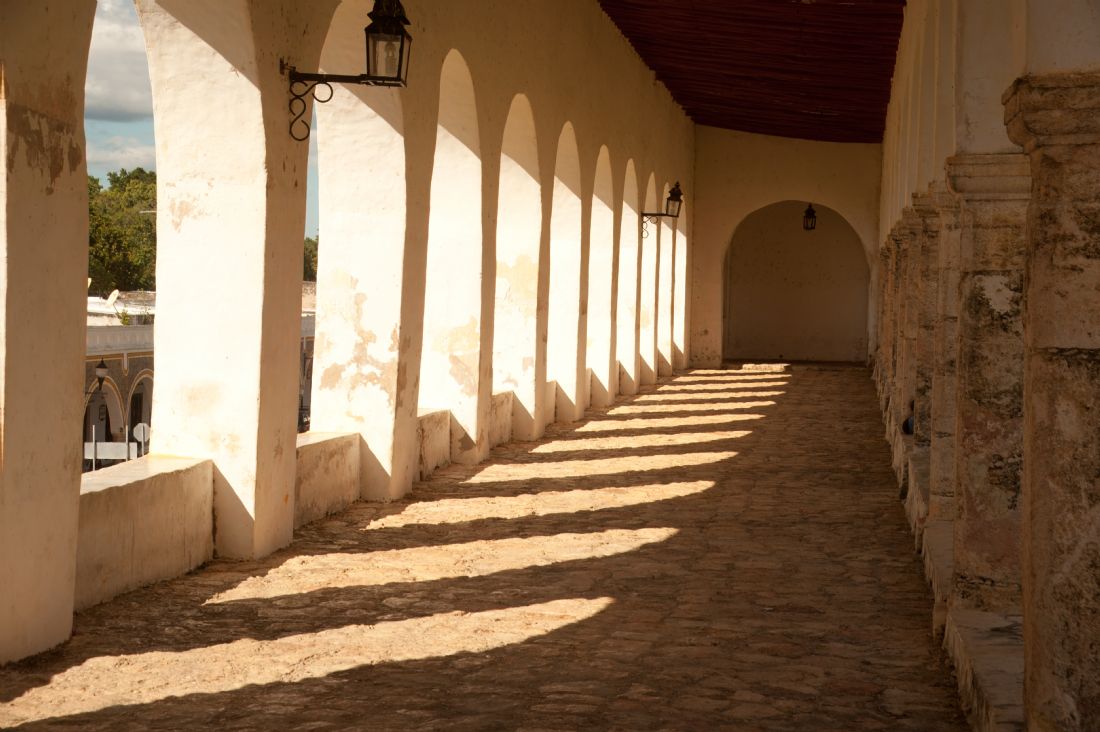
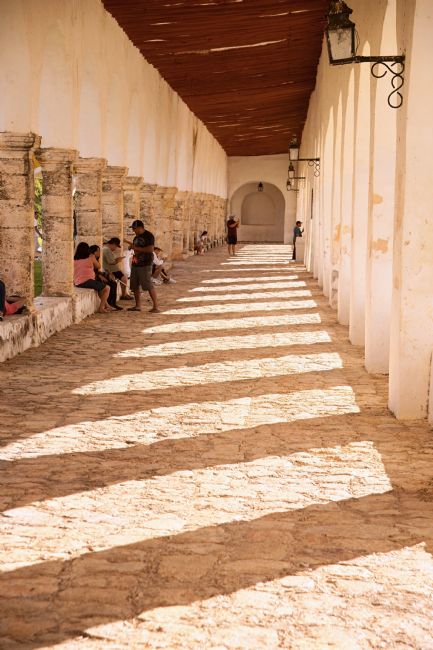
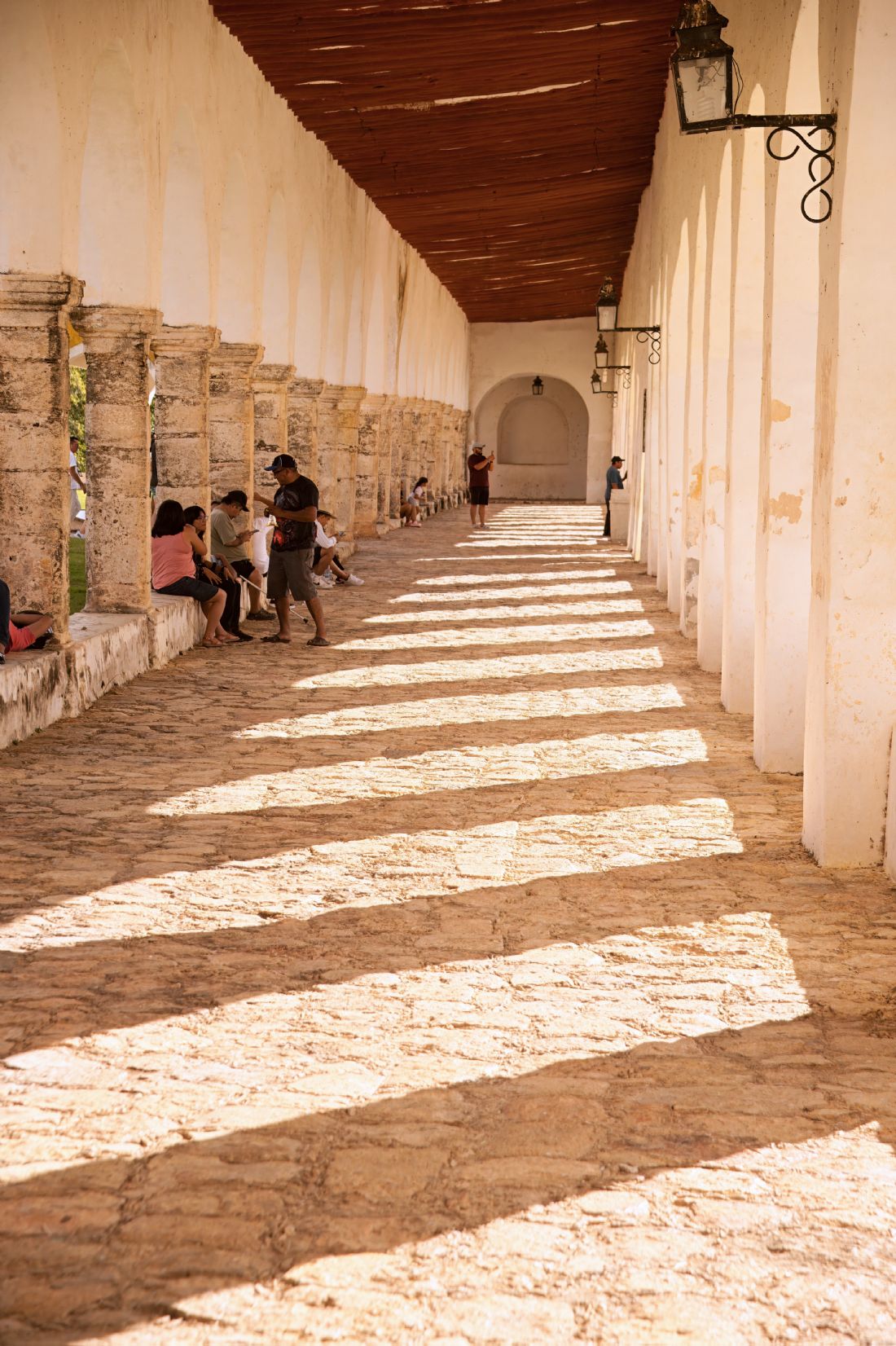
The Convent of San Antonia de Padua was finished in 1561 and remains an active Convent today. The arched parade enclosed area in front of the convent and church is second only in size to that in front of St Pauls in Vatican City. This entire building and site was built on the partially demolished Ppapp-Hol-Chac pyramid by the Spanish to create a level platform in what became the center of the town. There are 12 other overgrown pyramids still evident in the landscape of the town. Kinich Kak Moo Pyramid is adjacent
The town of Izamal in Yucatan, Mexico, was built in and on top of Mayan ruins by the Spanish. Dating from the mid 1500s, much of the town is now painted in yellow to ochre since a visit to the town by Pope John Paul 2, said to honour the Papal flag.
The Convent of San Antonia de Padua was finished in 1561 and remains an active Convent today. The arched parade enclosed area in front of the convent and church is second only in size to that in front of St Pauls in Vatican City. This entire building and site was built on the partially demolished Ppapp-Hol-Chac pyramid by the Spanish to create a level platform in what became the center of the town. There are 12 other overgrown pyramids still evident in the landscape of the town. Kinich Kak Moo Pyramid is adjacent.
The town of Izamal in Yucatan, Mexico, was built in and on top of Mayan ruins by the Spanish. Dating from the mid 1500s, much of the town is now painted in yellow to ochre since a visit to the town by Pope John Paul 2, said to honour the Papal flag.
The Convent of San Antonia de Padua was finished in 1561 and remains an active Convent today. The arched parade enclosed area in front of the convent and church is second only in size to that in front of St Pauls in Vatican City. This entire building and site was built on the partially demolished Ppapp-Hol-Chac pyramid by the Spanish to create a level platform in what became the center of the town. There are 12 other overgrown pyramids still evident in the landscape of the town. Kinich Kak Moo Pyramid is adjacent
The town of Izamal in Yucatan, Mexico, was built in and on top of Mayan ruins by the Spanish. Dating from the mid 1500s, much of the town is now painted in yellow to ochre since a visit to the town by Pope John Paul 2, said to honour the Papal flag.
The Convent of San Antonia de Padua was finished in 1561 and remains an active Convent today. The arched parade enclosed area in front of the convent and church is second only in size to that in front of St Pauls in Vatican City. This entire building and site was built on the partially demolished Ppapp-Hol-Chac pyramid by the Spanish to create a level platform in what became the center of the town. There are 12 other overgrown pyramids still evident in the landscape of the town. Kinich Kak Moo Pyramid is adjacent
The town of Izamal in Yucatan, Mexico, was built in and on top of Mayan ruins by the Spanish. Dating from the mid 1500s, much of the town is now painted in yellow to ochre since a visit to the town by Pope John Paul 2, said to honour the Papal flag.
The Convent of San Antonia de Padua was finished in 1561 and remains an active Convent today. The arched parade enclosed area in front of the convent and church is second only in size to that in front of St Pauls in Vatican City. This entire building and site was built on the partially demolished Ppapp-Hol-Chac pyramid by the Spanish to create a level platform in what became the center of the town. There are 12 other overgrown pyramids still evident in the landscape of the town. Kinich Kak Moo Pyramid is adjacent
The town of Izamal in Yucatan, Mexico, was built in and on top of Mayan ruins by the Spanish. Dating from the mid 1500s, much of the town is now painted in yellow to ochre since a visit to the town by Pope John Paul 2, said to honour the Papal flag.
The Convent of San Antonia de Padua was finished in 1561 and remains an active Convent today. The arched parade enclosed area in front of the convent and church is second only in size to that in front of St Pauls in Vatican City. This entire building and site was built on the partially demolished Ppapp-Hol-Chac pyramid by the Spanish to create a level platform in what became the center of the town. There are 12 other overgrown pyramids still evident in the landscape of the town. Kinich Kak Moo Pyramid is adjacent
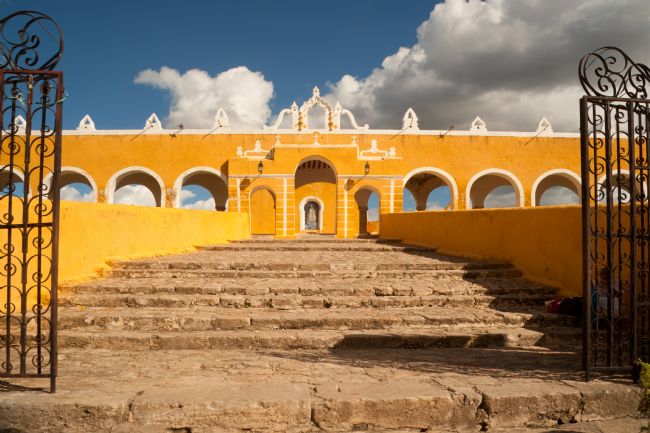
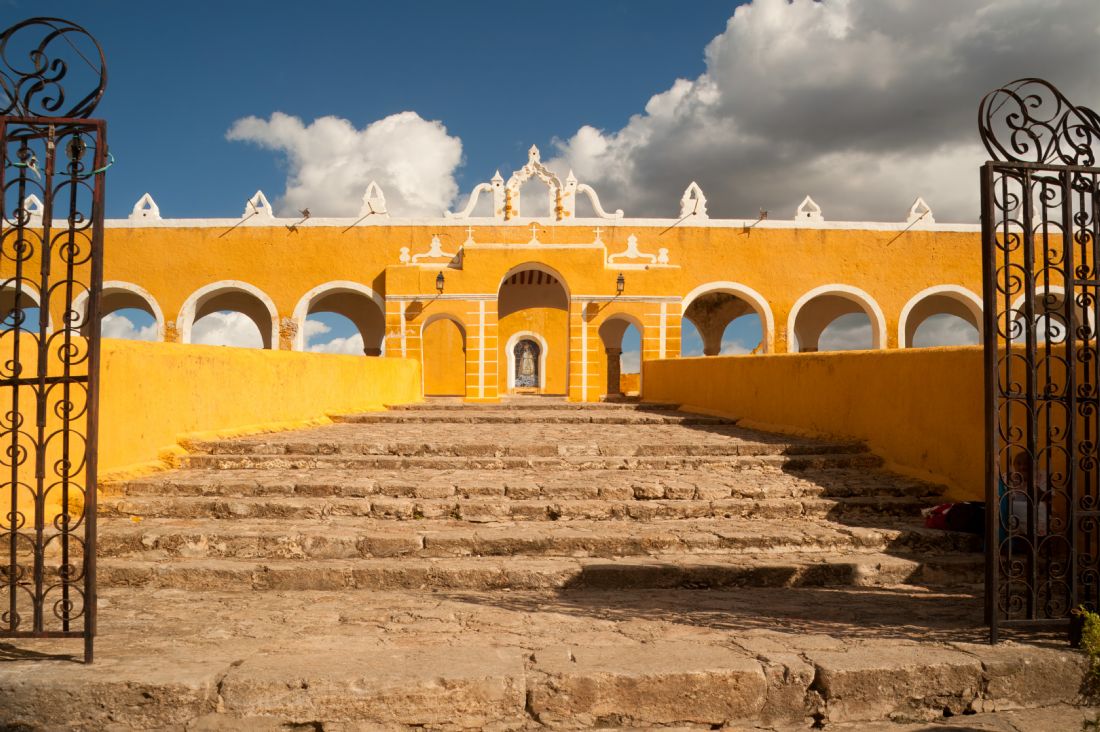
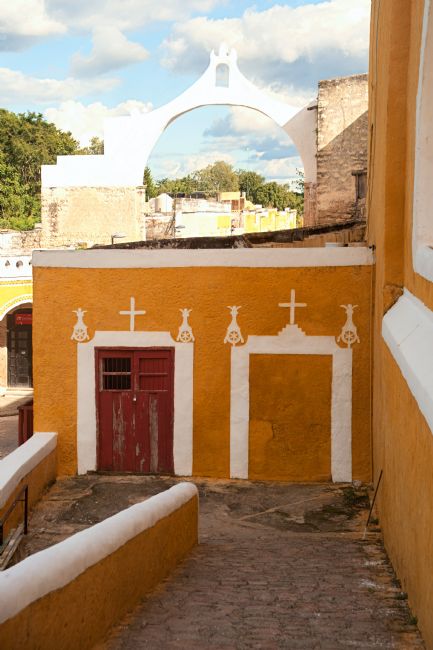
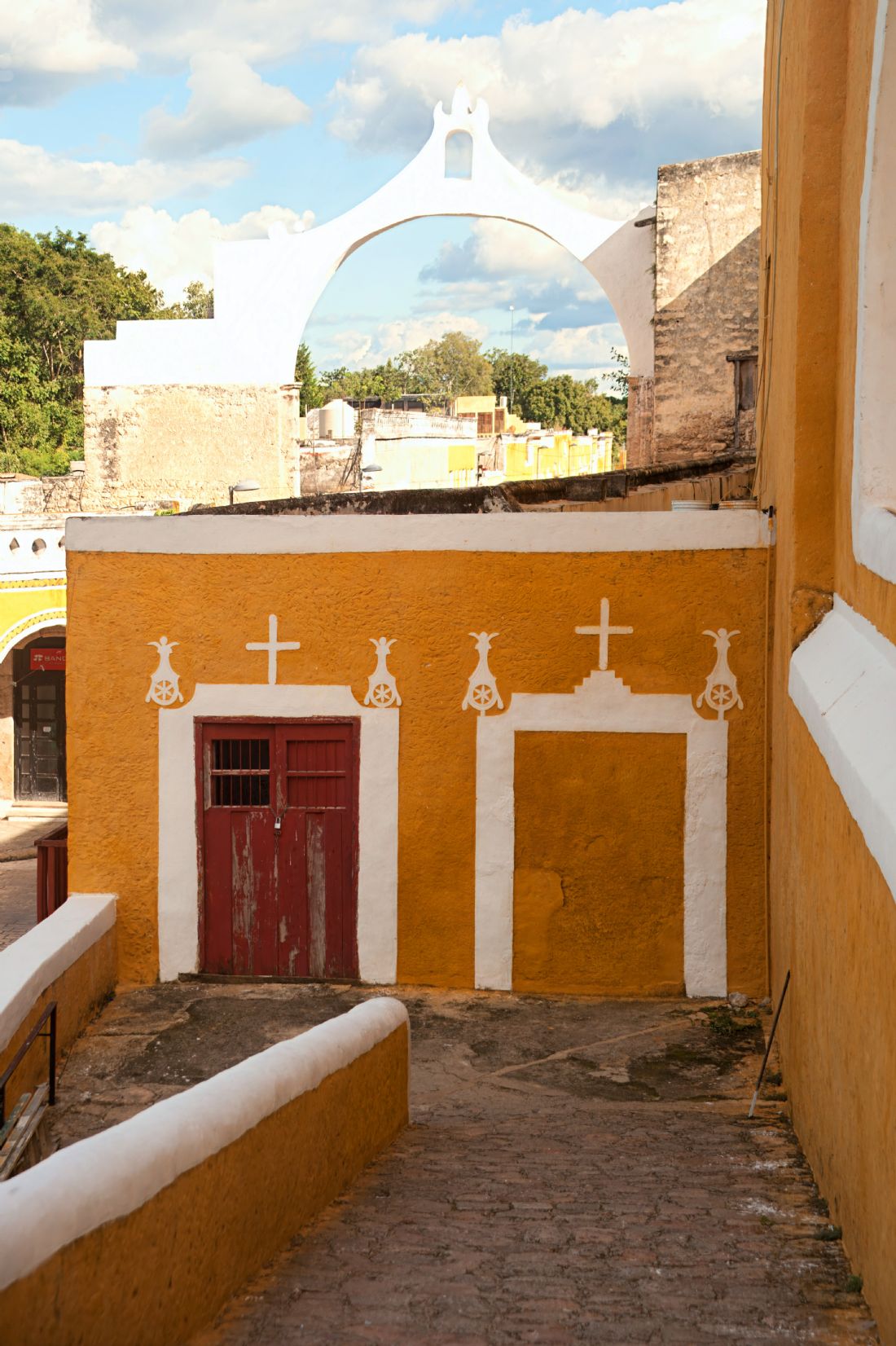
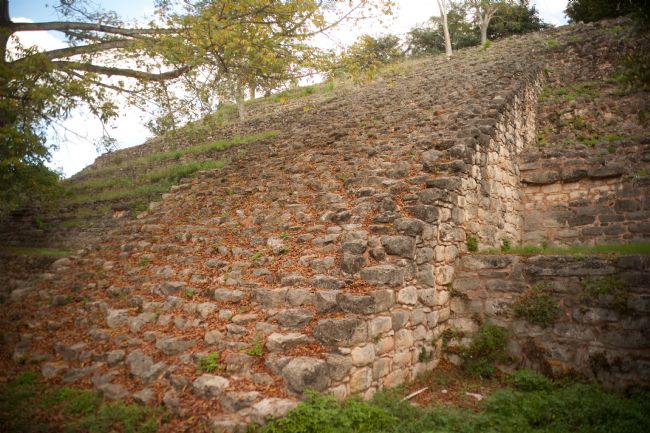
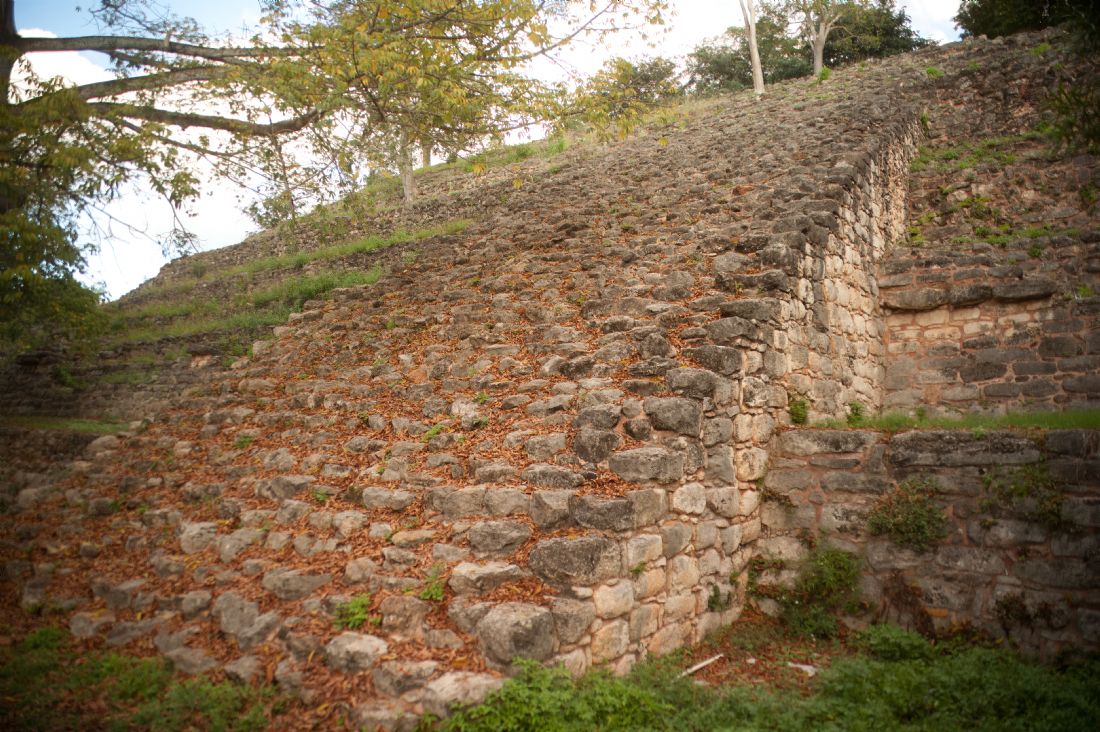
With the huge convent of San Antonio de Padua being built on the raised platform remains of the Mayan pyramid Ppapp-Hol-Chac in the center of what is Izamal, there are many stairways up these ramparts around its perimeter, some significant in size and processional perception and some more utilitarian.
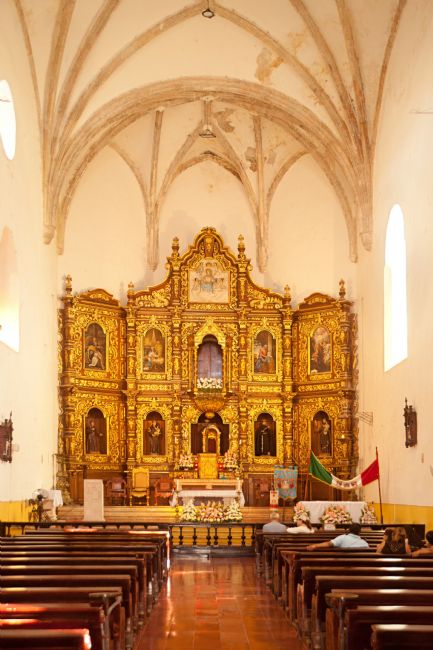
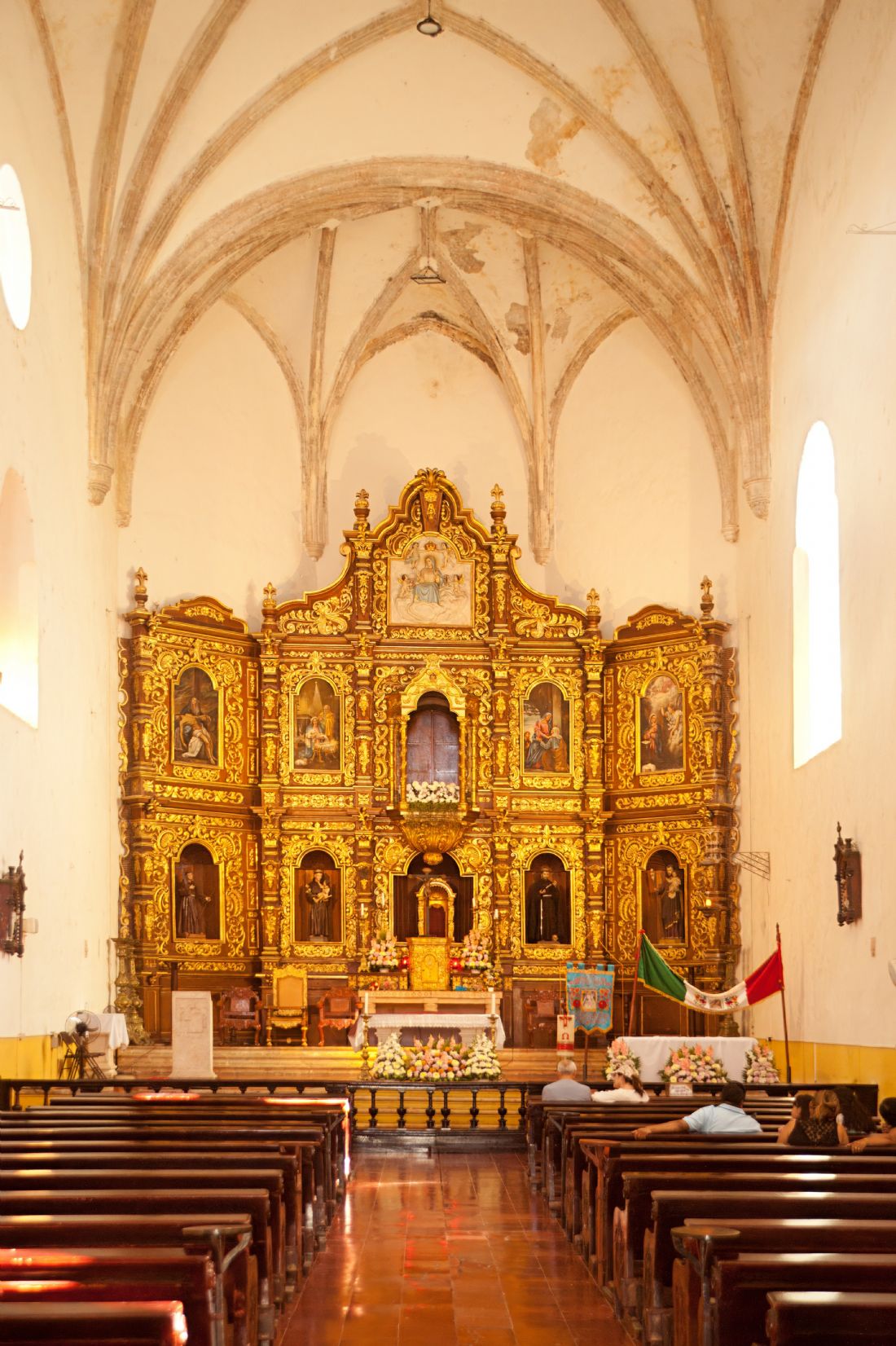
Santuario de la Virgen de Izamal. integrated into the Convent of San Antonio de Pada. The town of Izamal in Yucatan, Mexico, was built in and on top of Mayan ruins by the Spanish. Dating from the mid 1500s, much of the town is now painted in yellow to ochre since a visit to the town by Pope John Paul 2, said to honour the Papal flag.
The Convent of San Antonia de Padua was finished in 1561 and remains an active Convent today. The arched parade enclosed area in front of the convent and church is second only in size to that in front of St Pauls in Vatican City. This entire building and site was built on the partially demolished Ppapp-Hol-Chac pyramid by the Spanish to create a level platform in what became the center of the town. There are 12 other overgrown pyramids still evident in the landscape of the town. Kinich Kak Moo Pyramid is adjacent
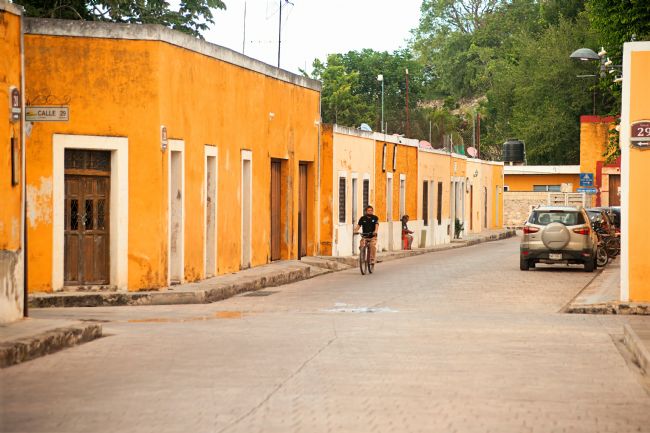
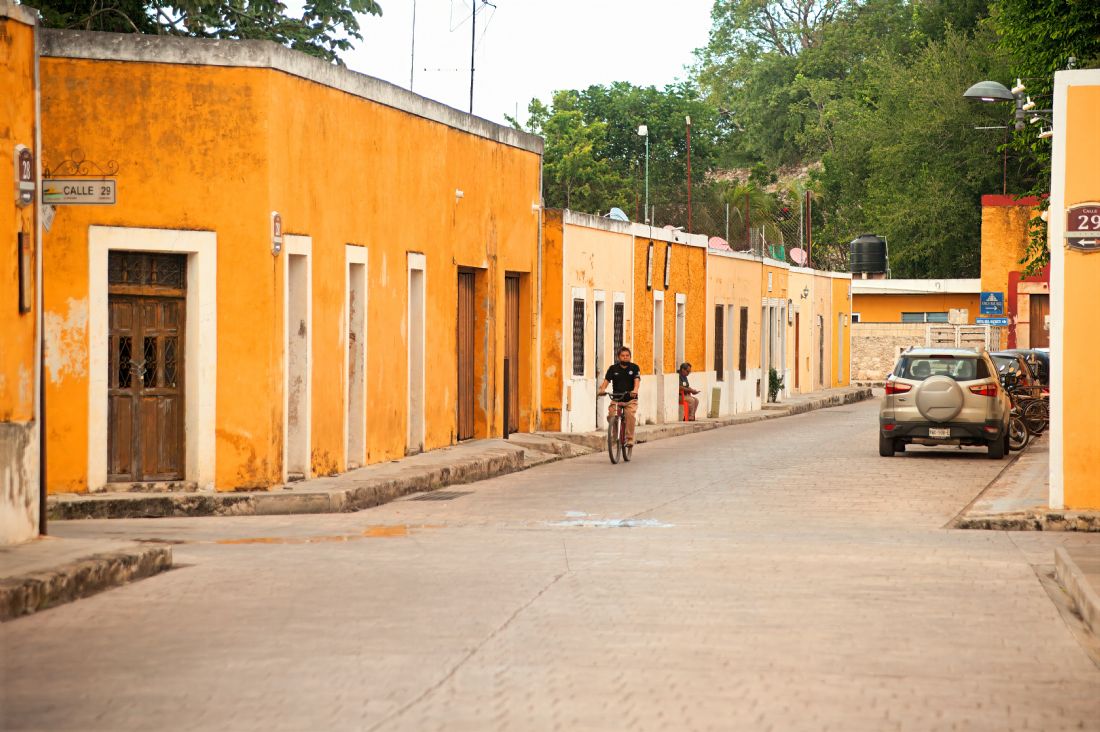
Most of the buildings in Izamal are painted in a yellow, golden, ochre render. It is a popular colour in Yucatan, but it is said that this was done everywhere in Izamal to celebrate the visit to the Convent of Pope John Paul 2. It is certainly striking and cheerful.
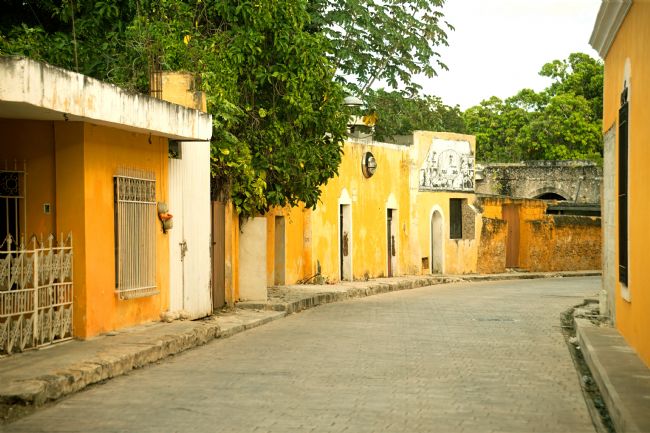
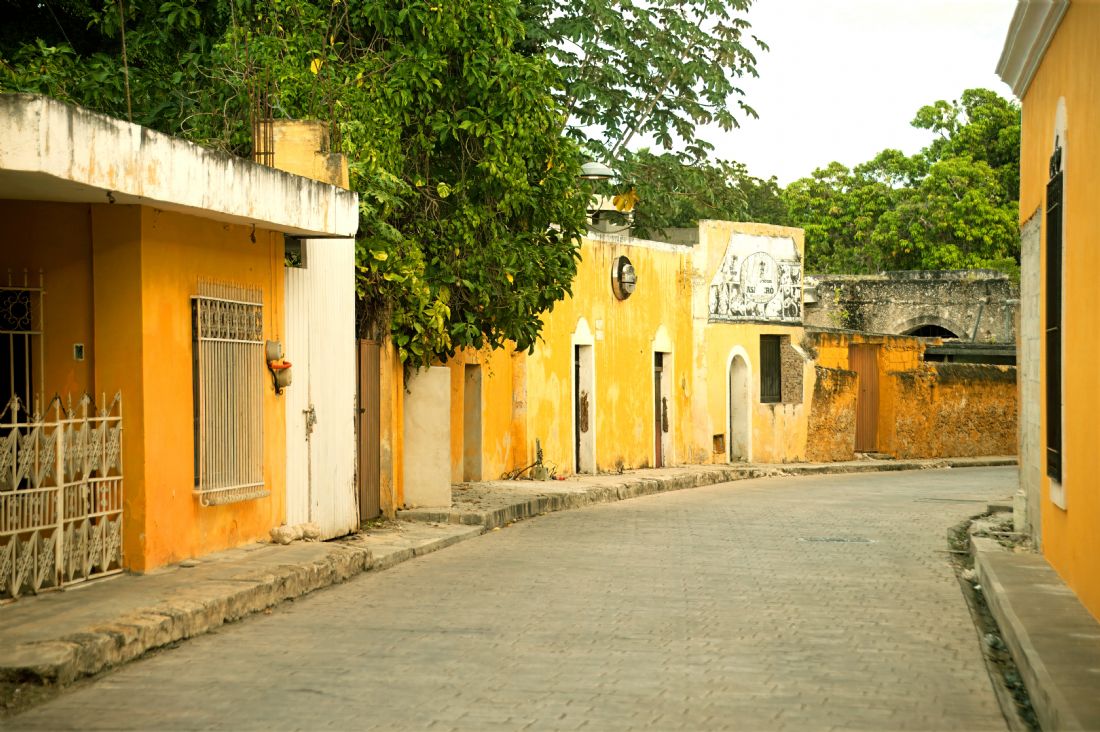
The older penetrated wall street front on this street has more newly build residences also which present more of a "face" to the street. The real surprise in this street is the breaking away from a strict grid pattern, introducing a gentle curve.
In Izamal as elsewhere in the Yucatan and across Mexico, the Spanish settlement of the 1500s and onward were largely built in a grid pattern, made of stone and typically the street walls showed mainly doorways in the wall-lined streets.
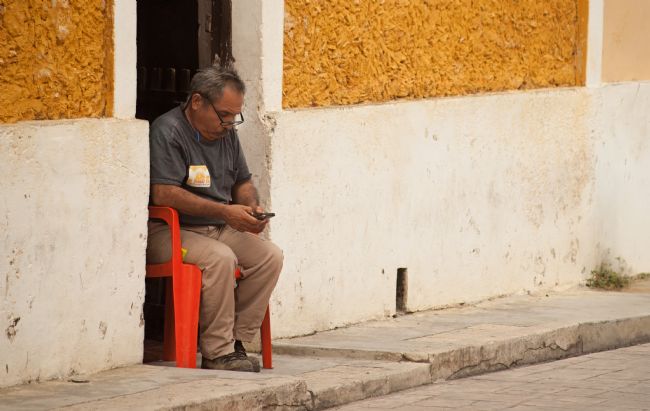
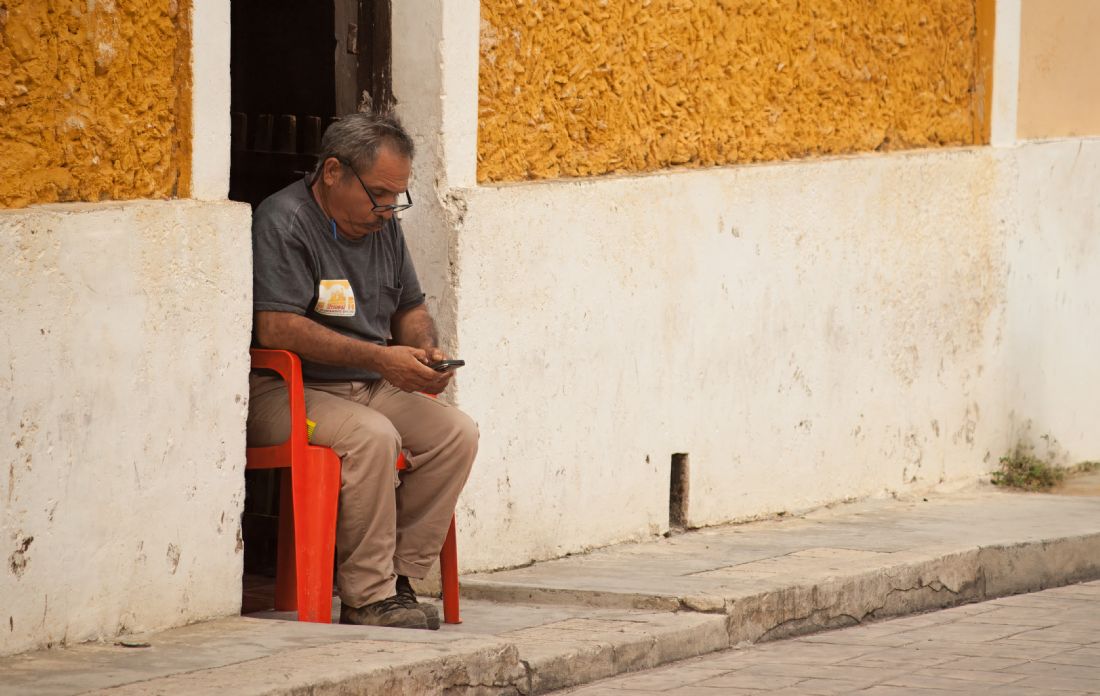
Irresistable, one man in an empty street in Izamal, Mexico, sat in the doorway of his house, looking at his phone, peacefully passing his day.
This type of construction was commonly used by the Mayan culture for their everyday use. This one has clearly seen better days, but with the roof remade will stand for centuries.
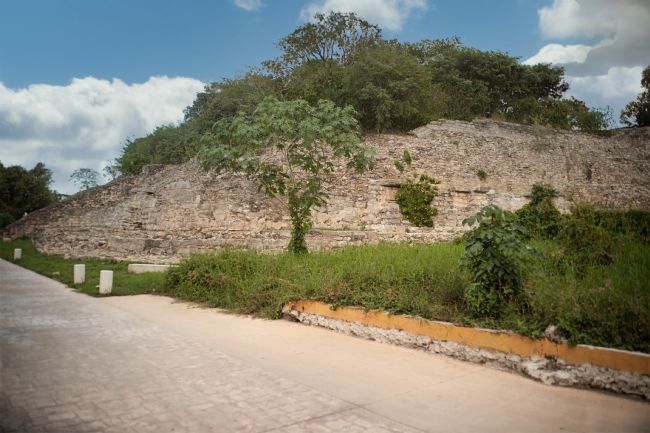
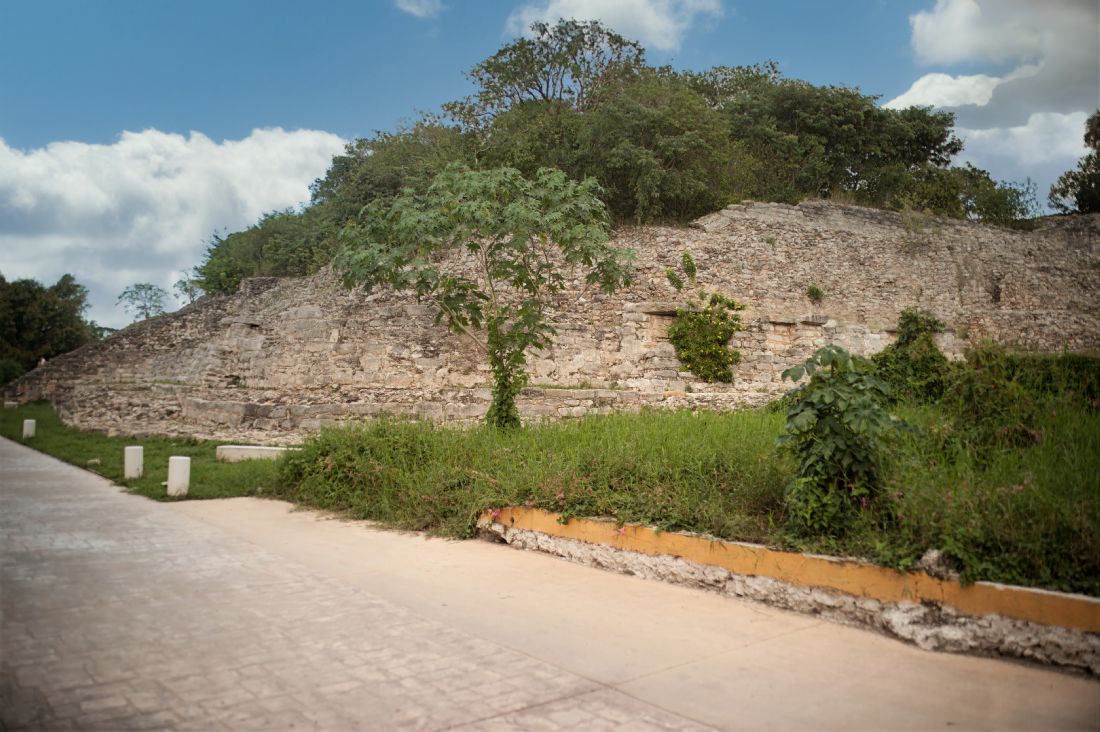
Situated right in the middle of Izamal, from street level this is just about all that can be seen because of the forest growth on the sides and top of the largely unreclaimed Kinich Kak Moo. On top of the 200m x 180m platform however is a 35 metre tall pyramid at one end.
I believe that there are long term plans to totally clear and restore this massive monument to the Mayan culture.
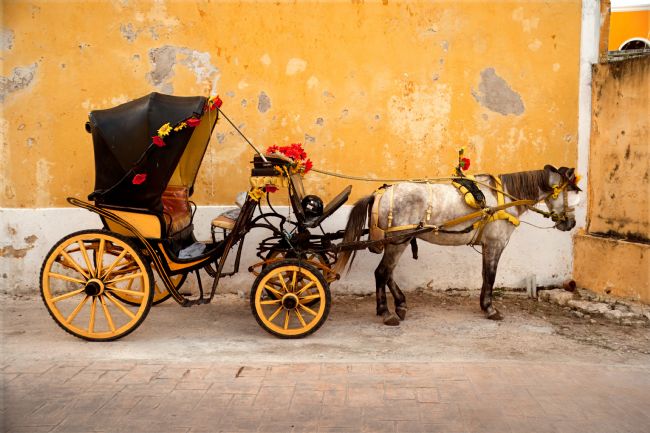
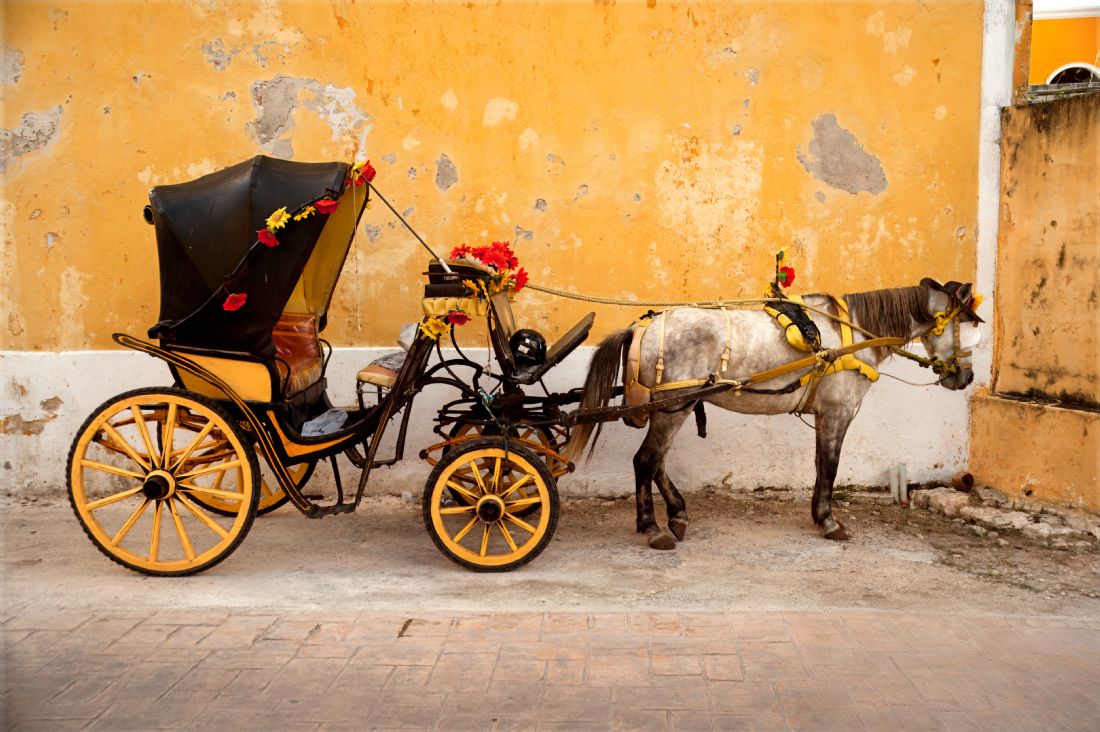
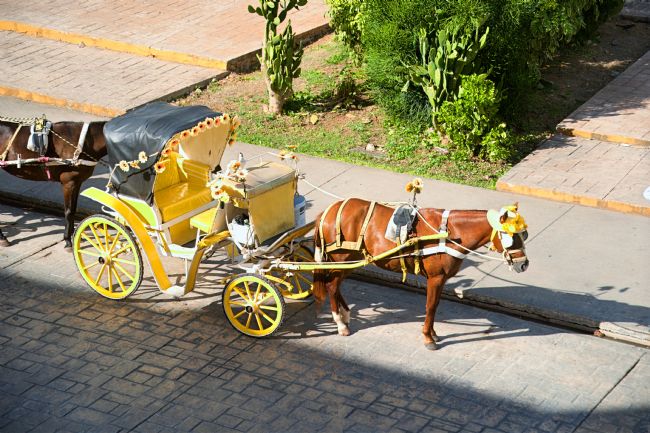
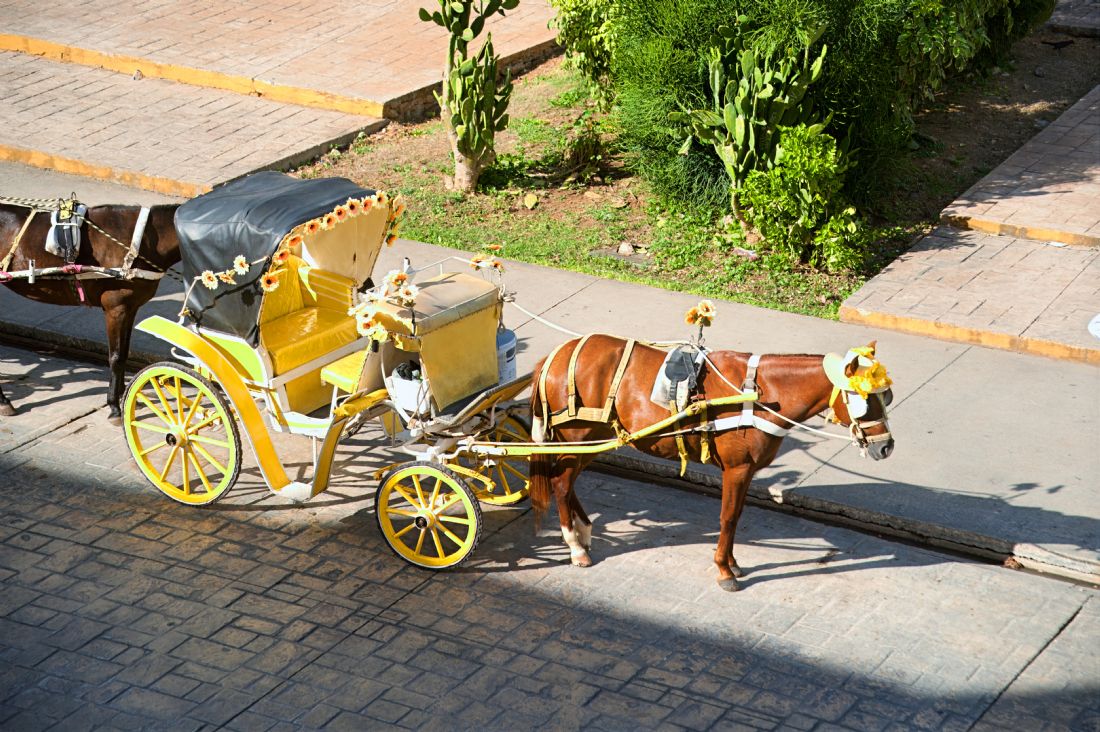
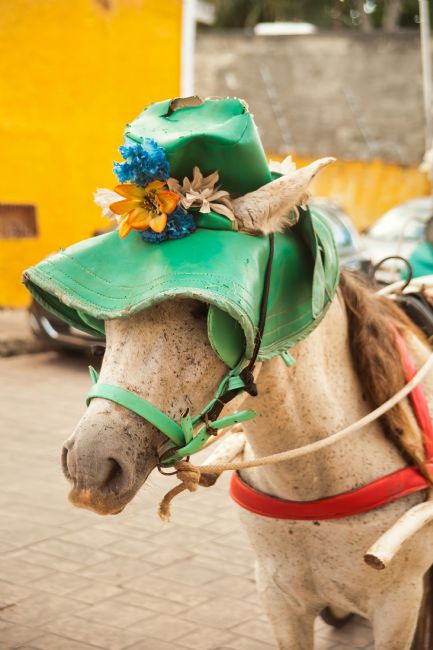
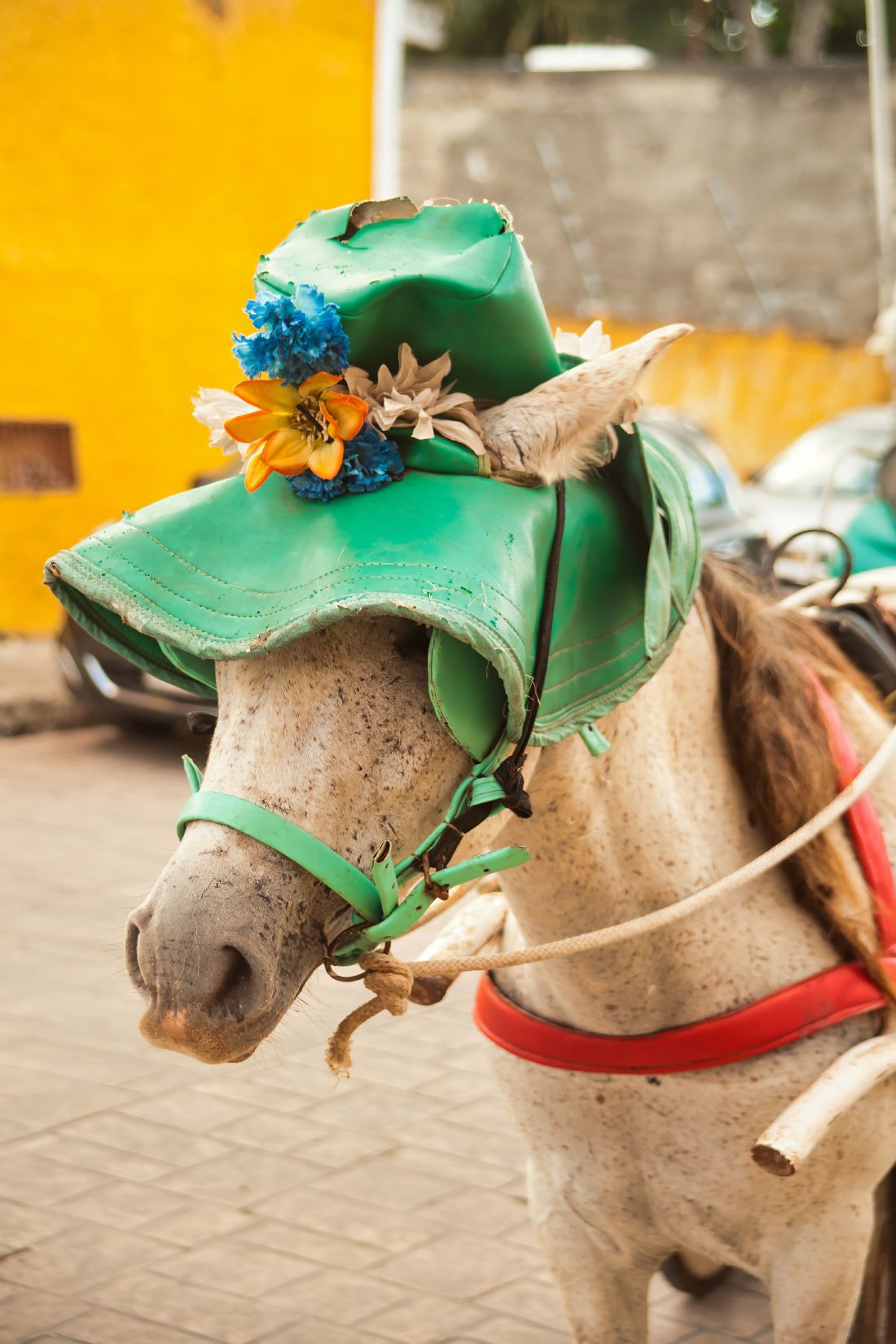
A horse and carriage taxi seen in Izamal, Yucatan, Mexico, waiting for someone to call for a ride. Note the hat!
Izamal is a small town but visited extensively by the faithful because of the huge Convent of San Antonio de Padua and its association with Pope John Paul 2. There is not a huge demand for taxis but several horse drawn vehicles wait around the base of Ppapp-Hol-Chac to show people around the several Mayan remains amoung which the town is built.
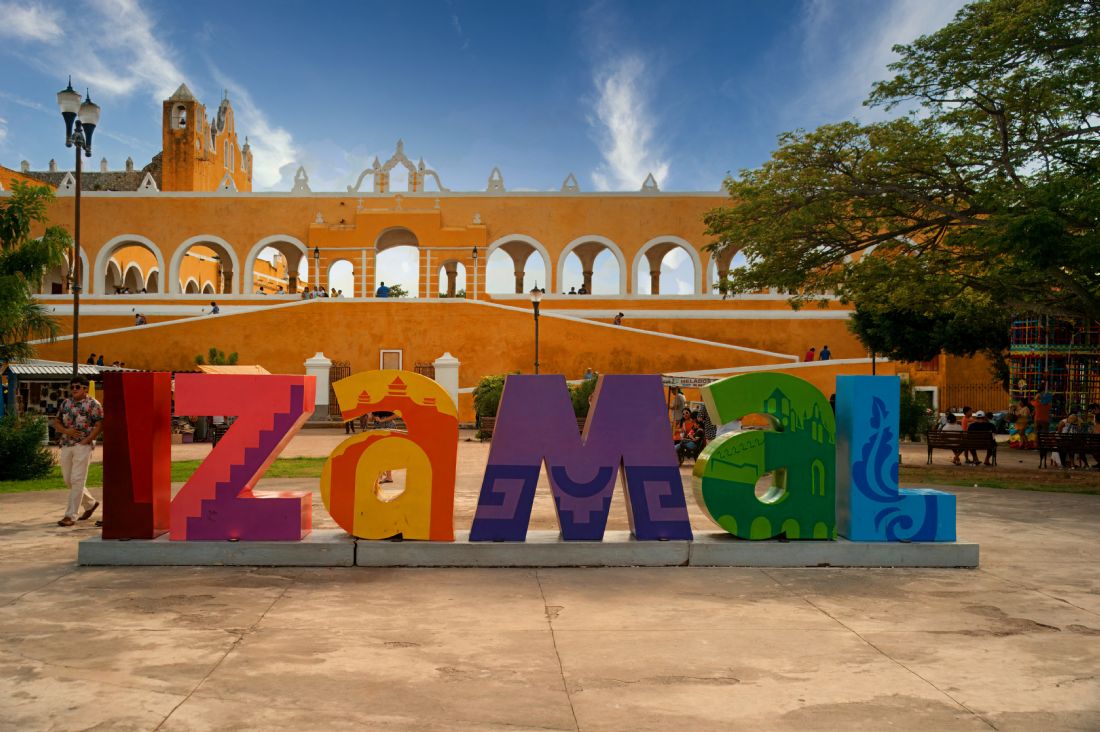
These colourful place name monuments are to be found pretty well everywhere in Mexico The background for this one is the Convent of San Antonio de Padua, built on a raised platform which used to be the Mayan pyramid Ppapp-Hol-Chac, destroyed and levelled at this level by the Spanish in the mid 1500s to build the convent.
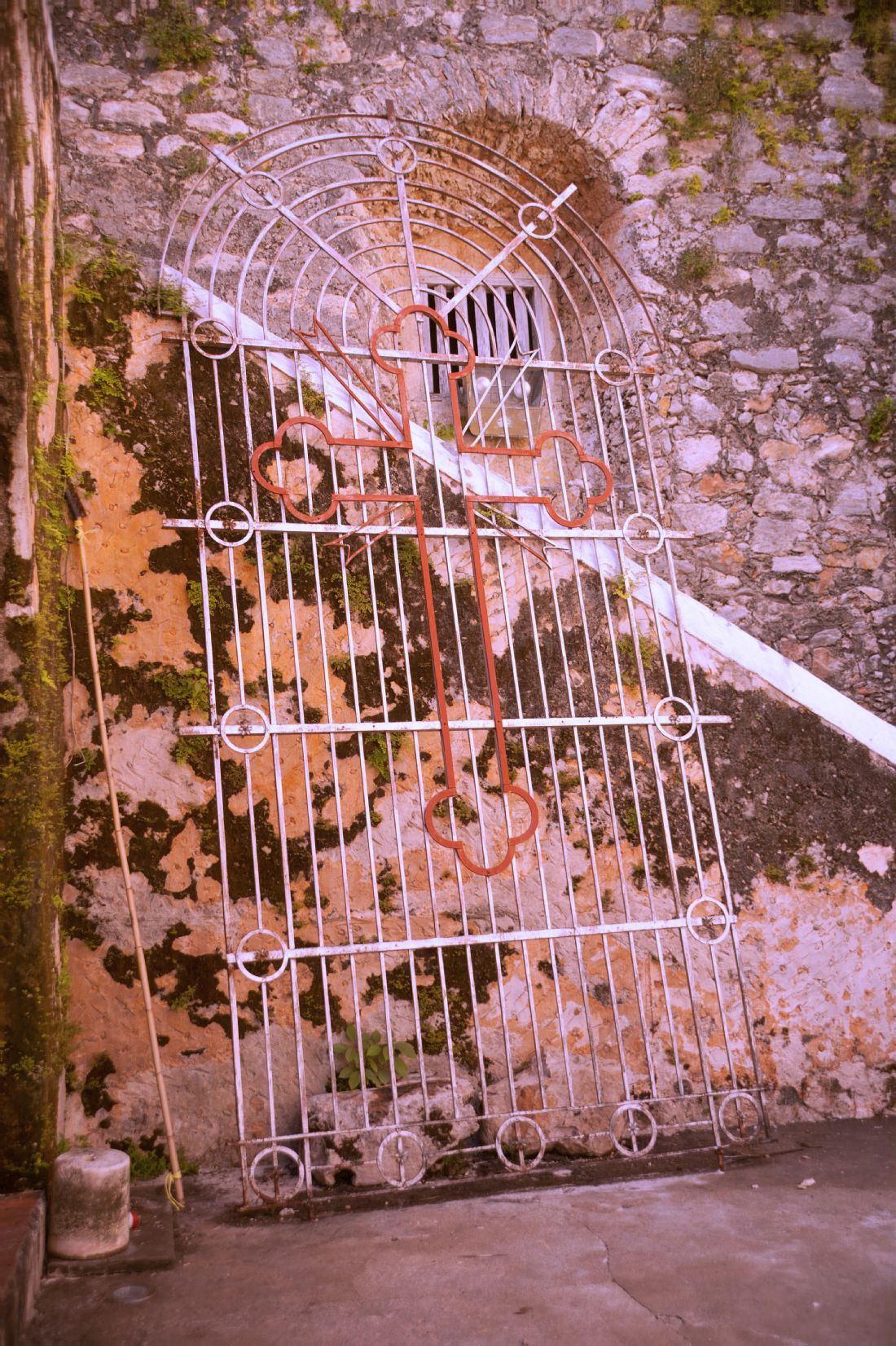
This iron gate formerly blocked off the stairway behind it, rising from the town plaza to the platform (the base of the former Mayan pyramid Ppapp-Hol-Chac) of the convent of San Antonio de Padua in Izamal, Yucatan, Mexico.
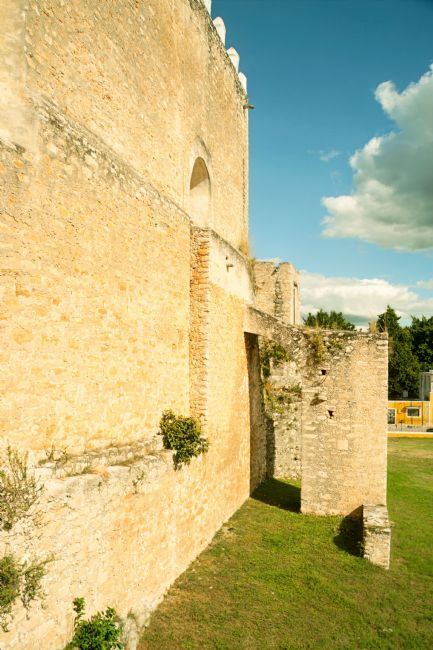
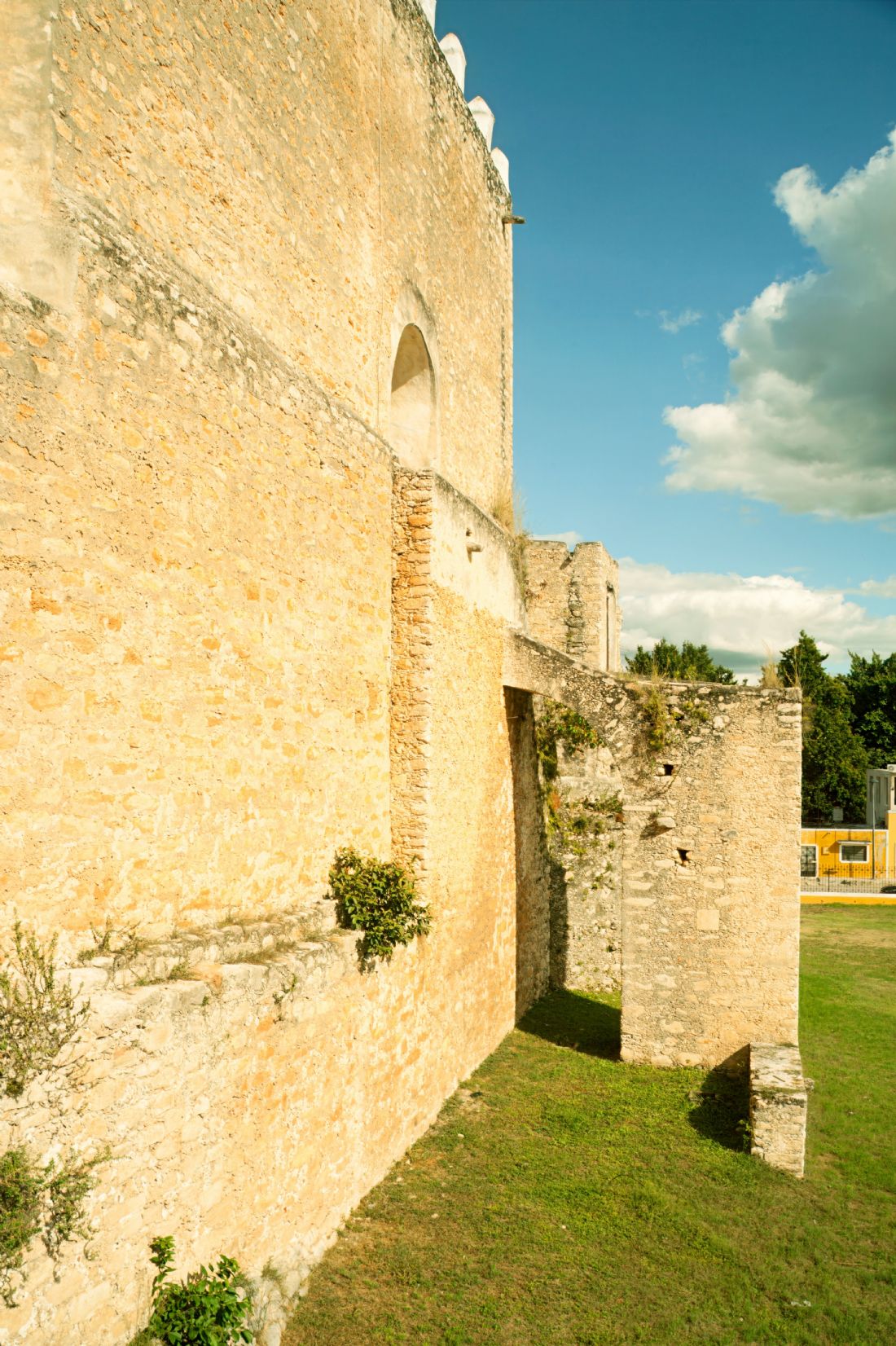
While the old platform of the Ppapp-Hol-Chac pyramid is highly prominent in Izamal with the Covent of San Antonio de Padua built atop of it, little can be seen of the Mayan stonework, except in one area where it was re-used to build a high rampart supporting wall
Right in the middle of Izamal lies a partially exposed pyramid, Kinich Kak Moo. What can be seen from the surrounding street level is only the linear plinth which is 200m x 180m in size. On top of this at one end is a 35m tall pyramid which is shielded by forest growthI understand that this pyramid and its plinth are one of the most significant remains of its sort and there are long term plans to fully expose and restore the site. It is one of several pyramids around Izamal