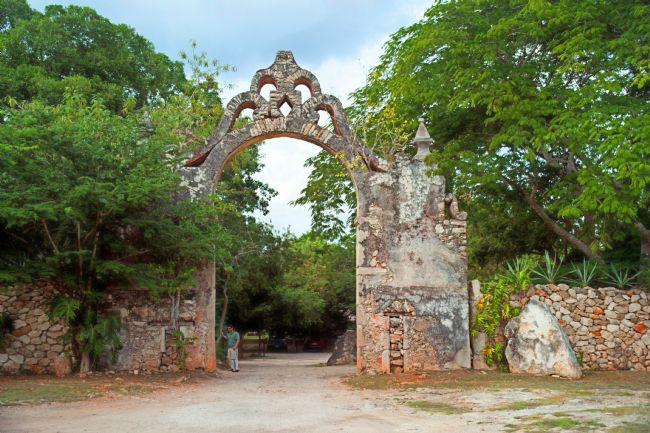
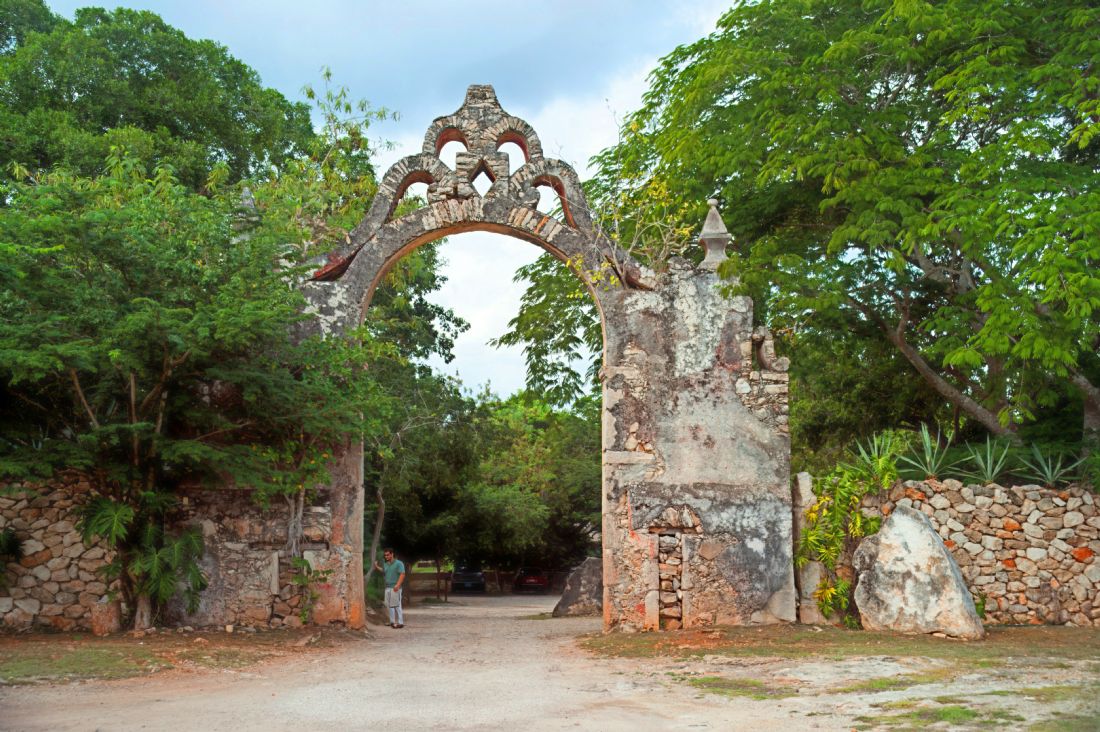
Mexico. Hacienda Mucuyche ruins, Merida, Yucatan
-
Artists
-
Chris Langley
-
Mexico. Hacienda Mucuyche ruins, Merida, Yucatan
-
(0)
Entrance to the residence and plant for processing Hennequen Agarve into jute fibres.
The site dates from the mid 1600s and was abandoned in early-mid 1900s when synthetic fibres made agricultural fibres redundant
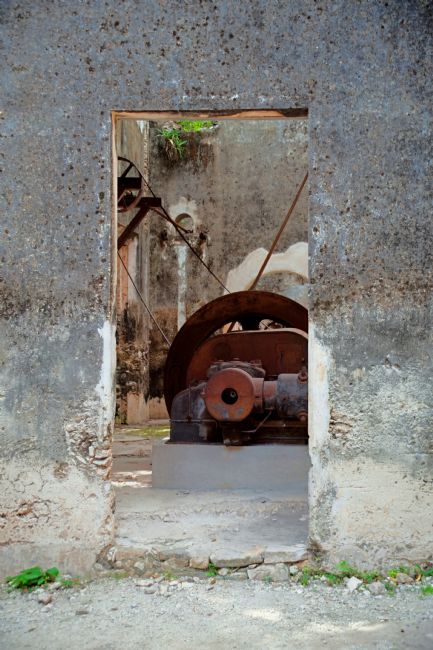
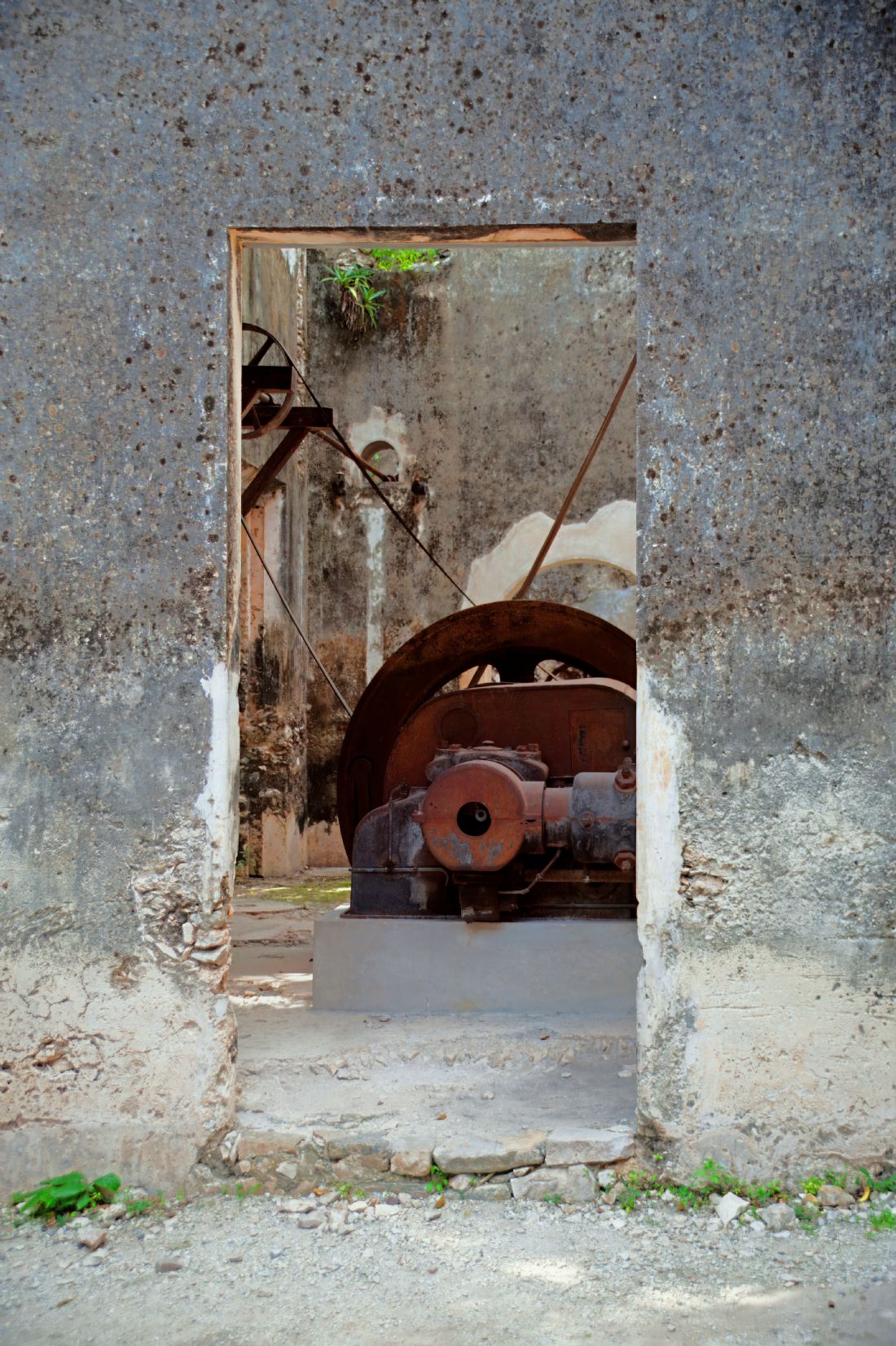
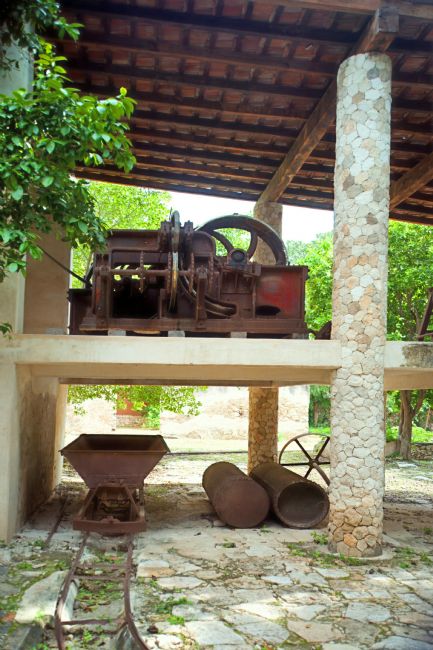
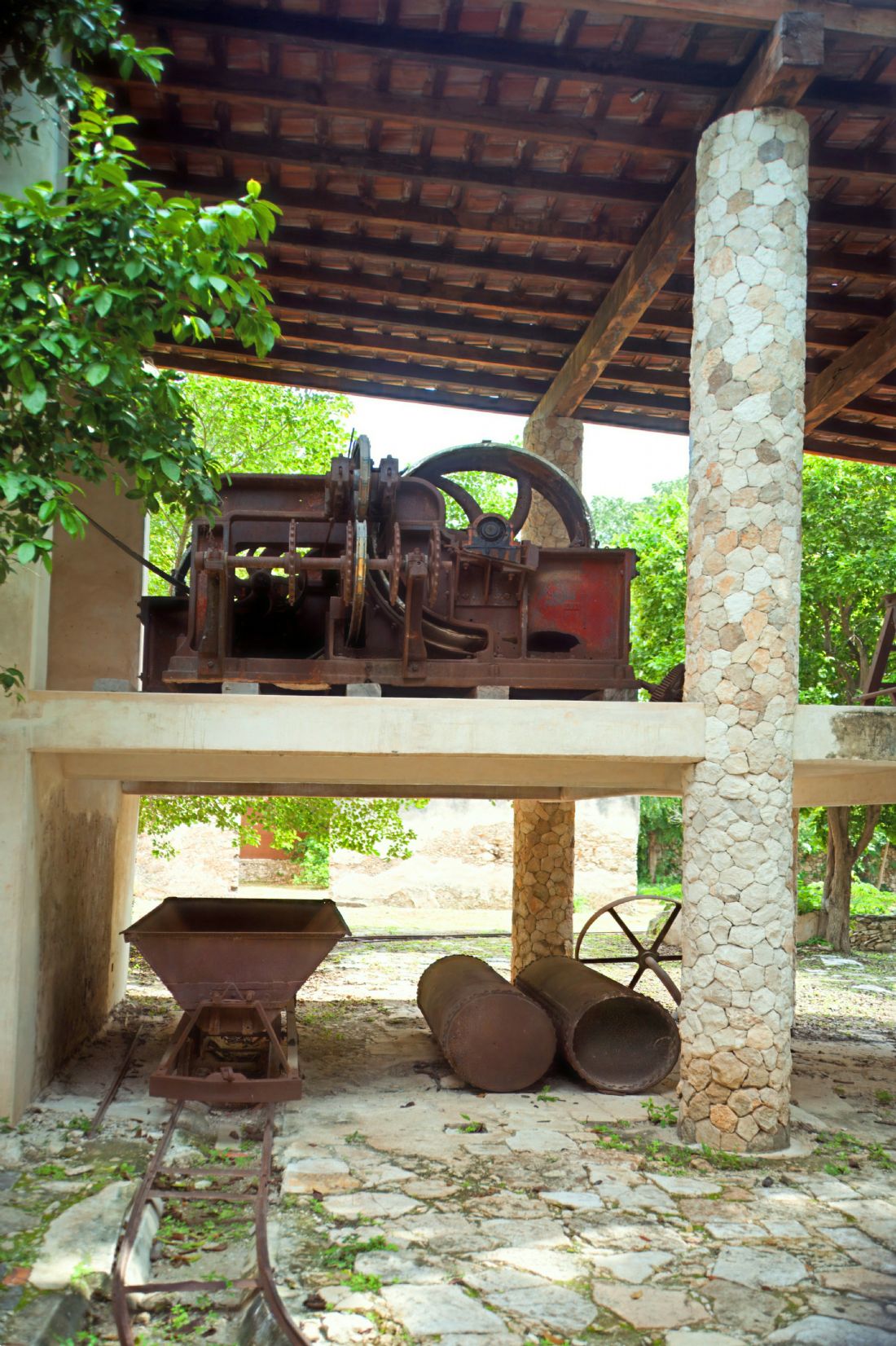
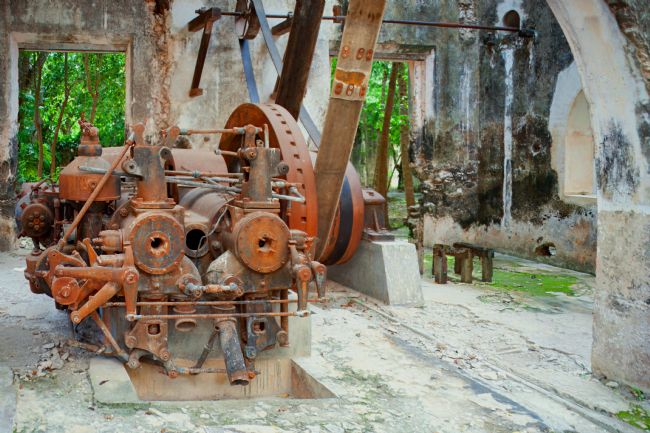
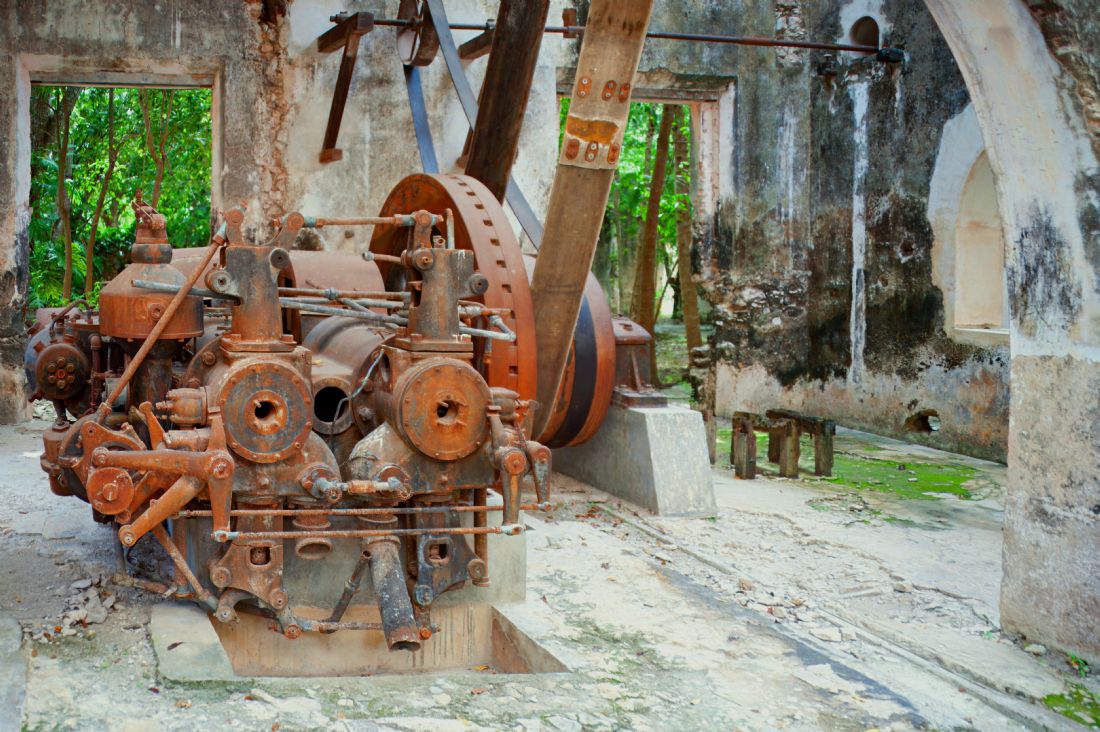
a second, smaller room used to house the industrial machinery used in production of Jute from henequen/agarve.
This addition to the industrial element of the jute factory which made Hacienda Mucuyche famous for its output of jute, made from the henequen/agarve plant appears more modern than the very early mechanised rendering floor in the colonade or the steam driven belt machines behind the colonade and probably represents the peak of production in the early 1900s, before the use of plastic fibres which replaced jute and killed off the wealthy jute producing estates.
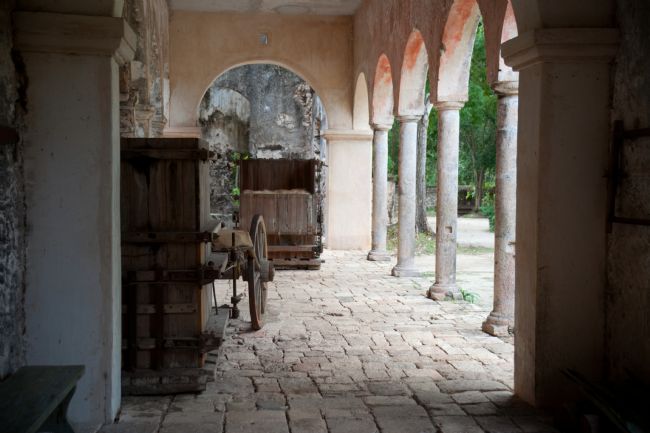
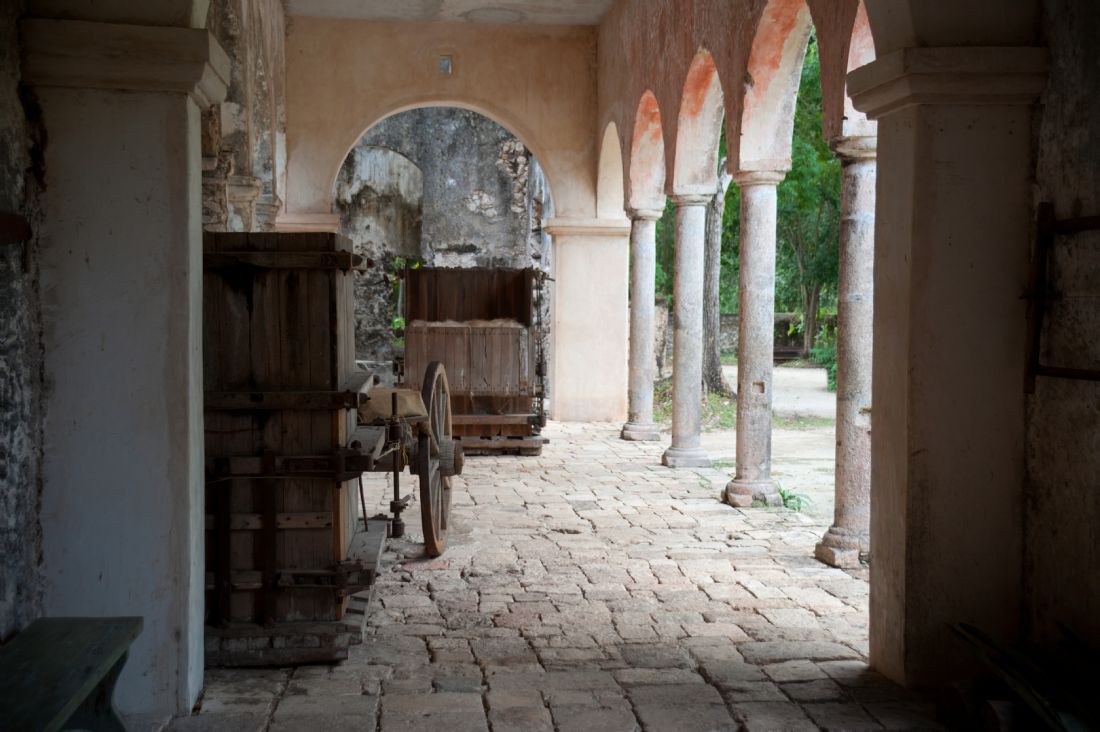
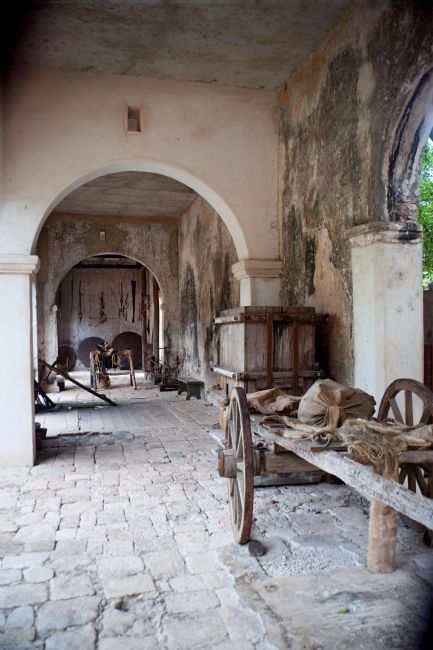
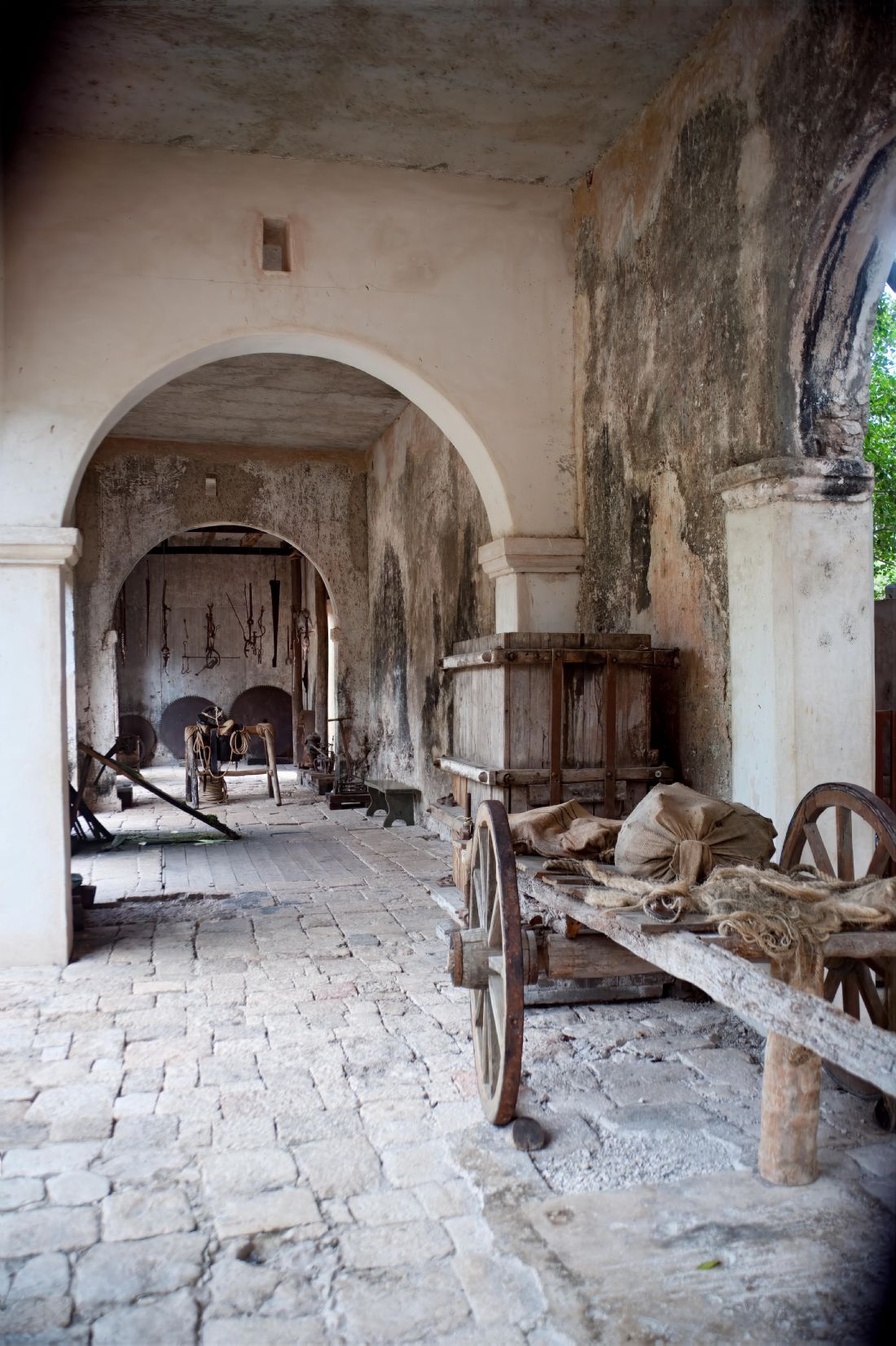
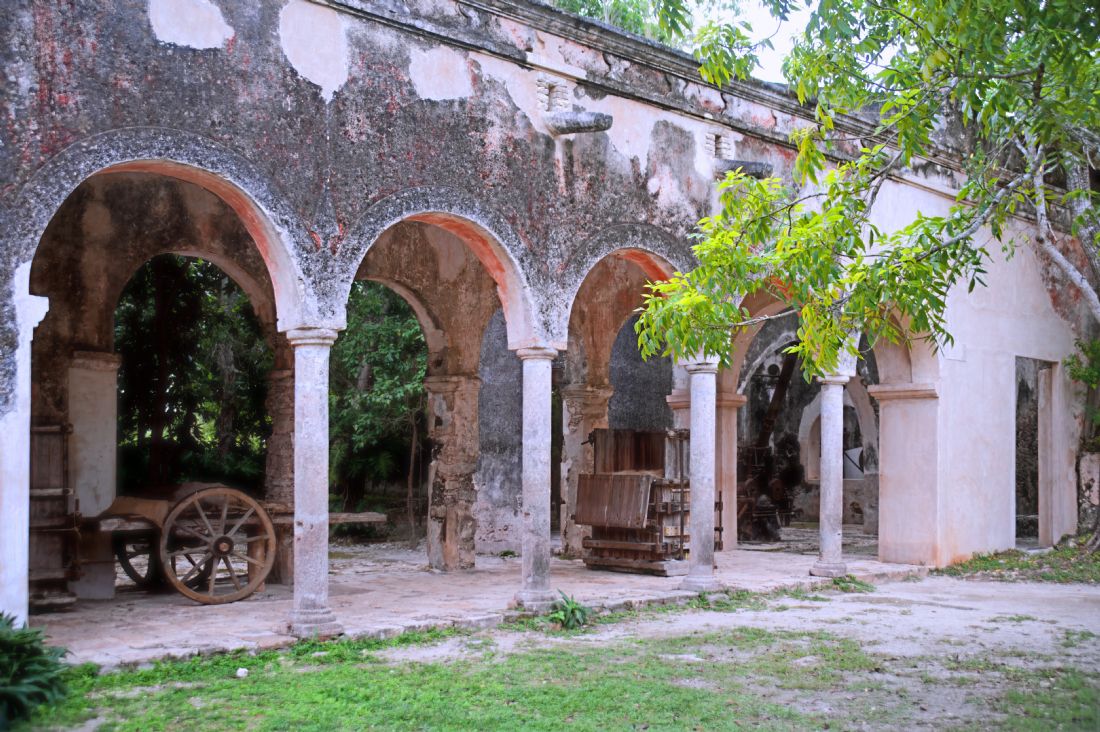
This colonaded workspace was utilised for the handwork involved in processing henequen/agave into jute fibres
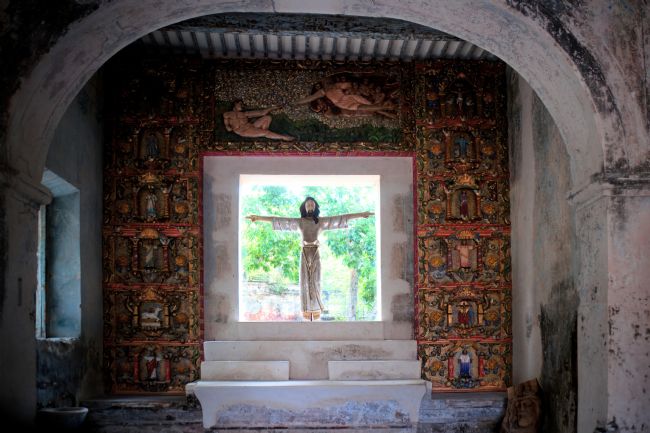
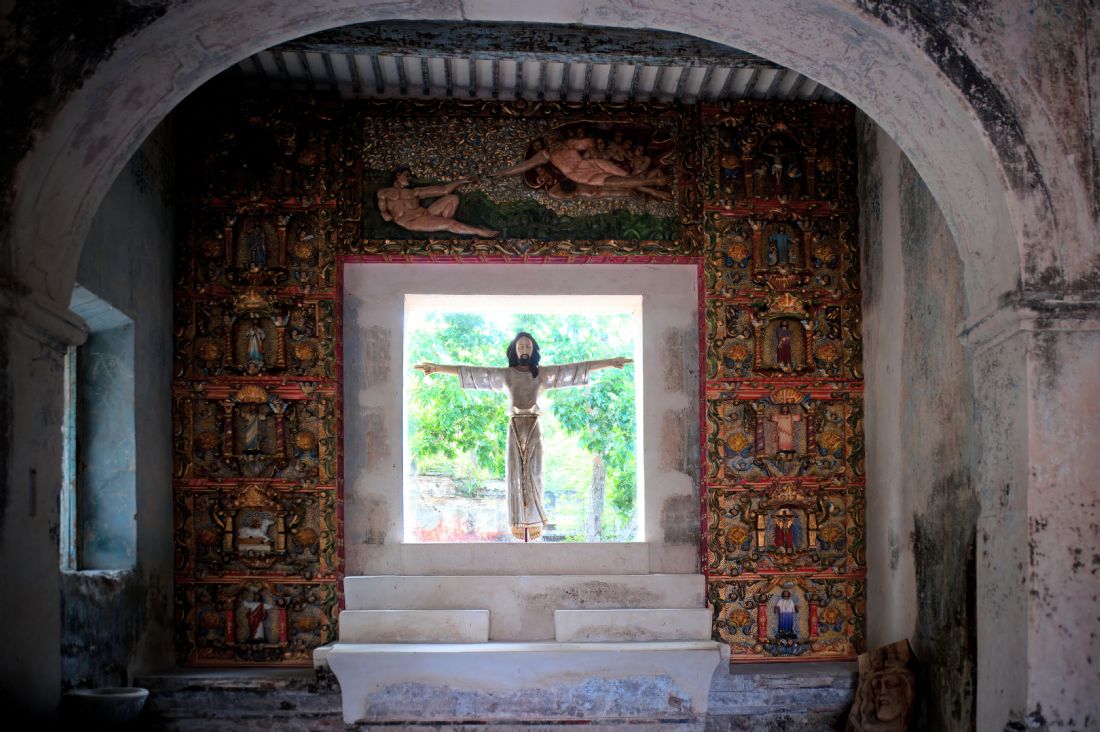
Small bits of restoration have recently begun at Hacienda Mucuyche (Image taken 2023). A start was made with the family chapel. the owners of the Hacienda were both wealthy and religious. In a hacienda of the status of Mucuyche a family chapel would have been very important to these devout Catholics. I believe that these panels either side of the window were copied from old photographs. I suspect that the Christ figure is a modern addition.
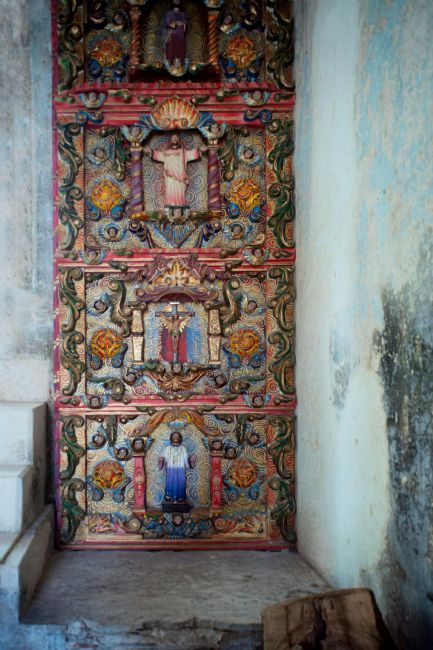
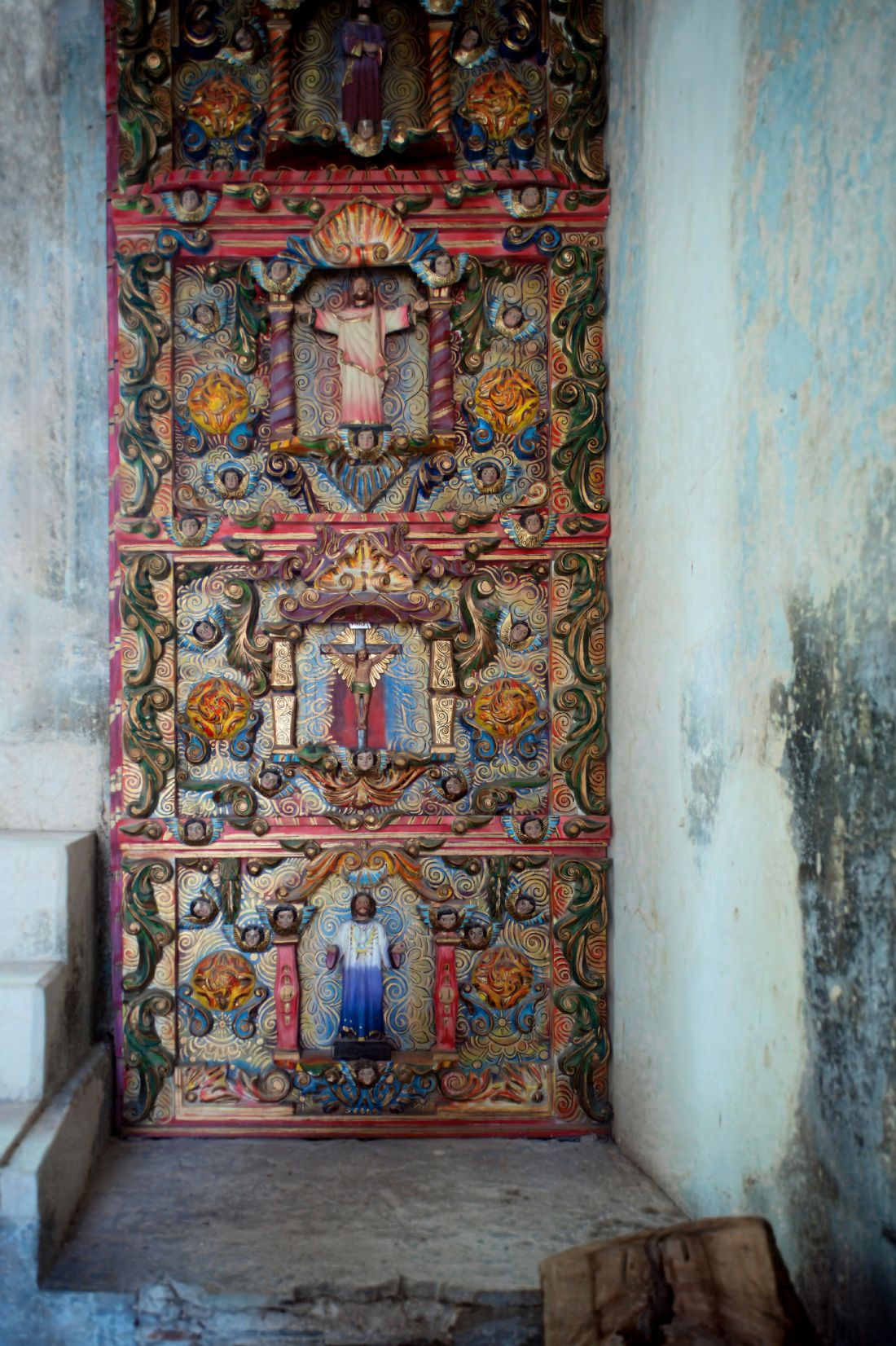
Small bits of restoration have recently begun at Hacienda Mucuyche (Image taken 2023). A start was made with the family chapel. the owners of the Hacienda were both wealthy and religious. In a hacienda of the status of Mucuyche a family chapel would have been very important to these devout Catholics. I believe that the panels either side of the window were copied from old photographs. This is a detail of the right hand panel.
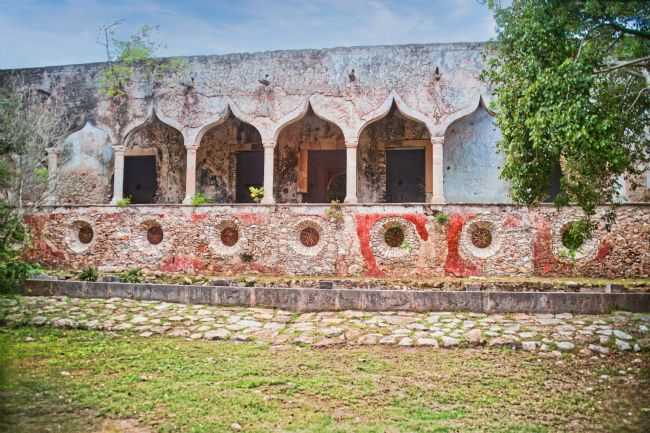
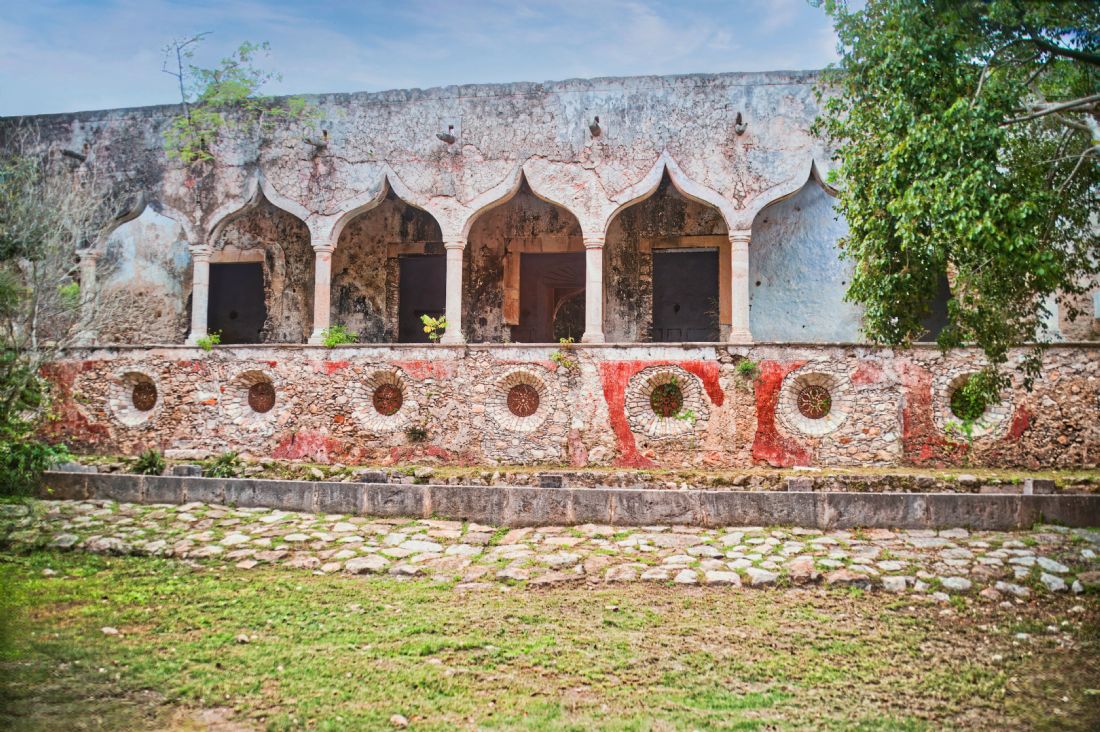
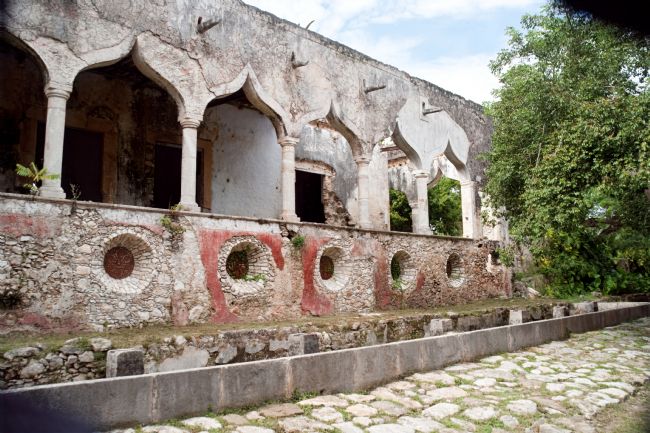
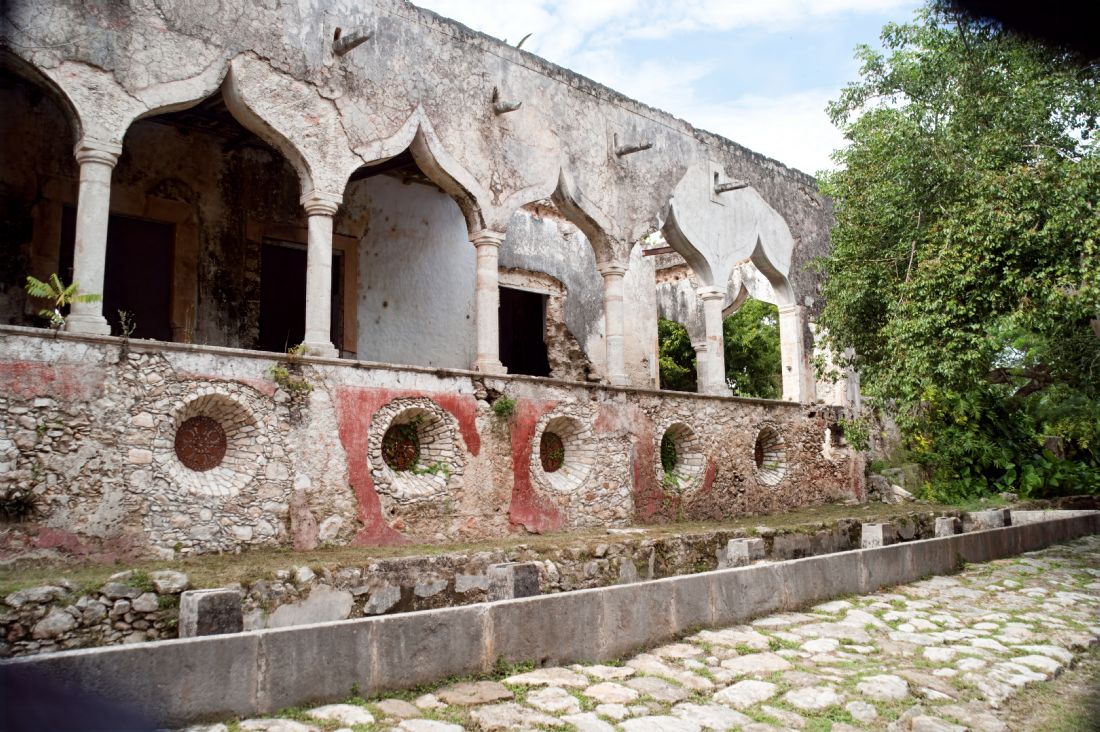
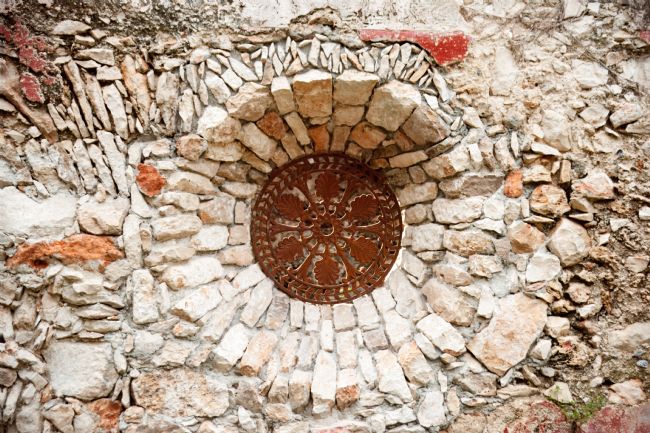
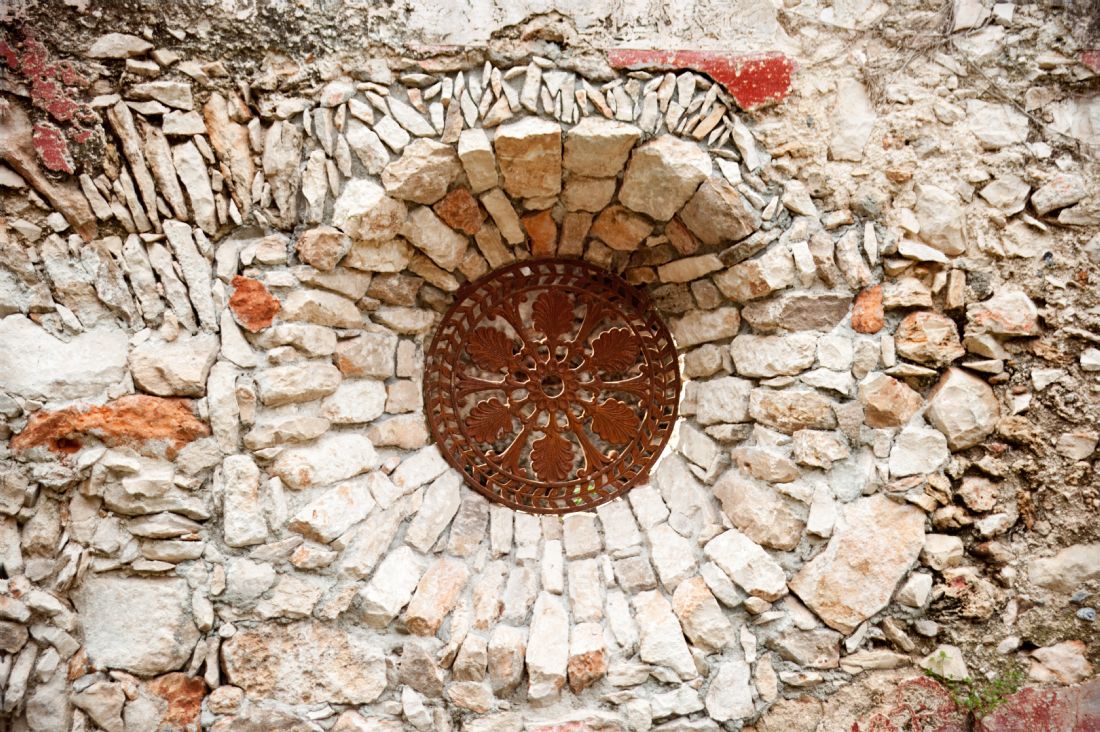
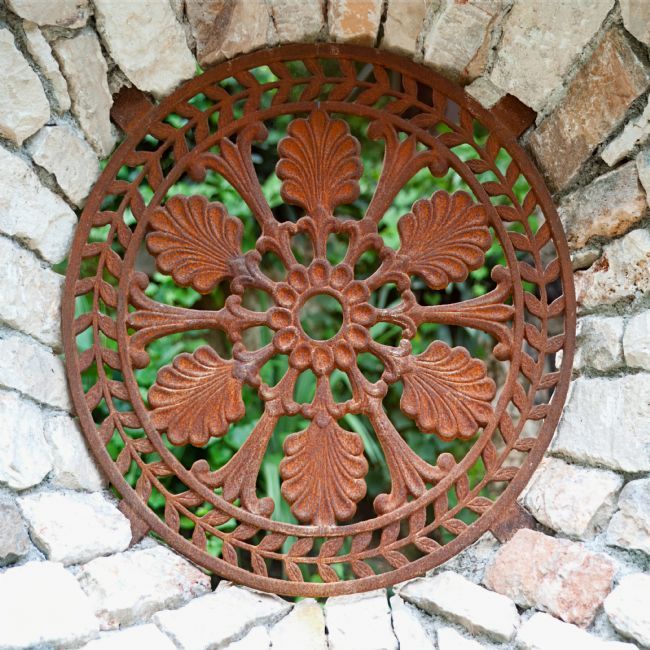
this was the highly decorated facade of the residence showing its verandah, the floor now collapsed. The stonework was most ornate with inset round cast panels and the use of coloured rendering on the stonework remains slight but obvious, as it does on much of the building exterior. There is some evidence inside on the plaster walls of the original rooms behind the verandah of some of the formed artistic decoration and colours used, but is hard to imagine the opulence that must have once existed here.
beautiful array of built and artistic decoration on the verandah wall of the residential complex
Beautiful stone and ironwork detail on residential verandah frontage. Sadly the verandah behind the wall has collapsed.
Perhaps the most interesting stonework and metal decorative detail on the residential site
Hacienda Mucuyche was one of the largest jute producing estates started in the 1600s. It survived until the early 1900s when plastics and metals replaced the very versatile just rope industry. In the early days the henequen/agave was cut and thrashed by hand to release the fibrous material used to create jute. This wing of the estate was used for such handwork and delivery, Later additions brought in various stages of mechanised industry to produce the jute in great volume but the enterprise failed in the 1920s. Many elaborate and beautiful residential haciendas were abandoned in that era and over the years have been allowed to fall into ruin
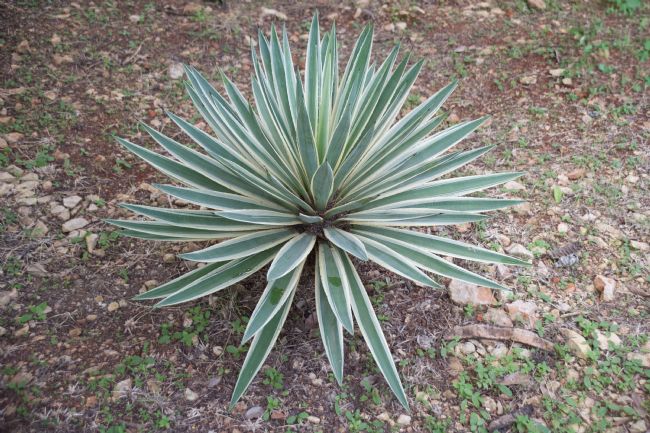
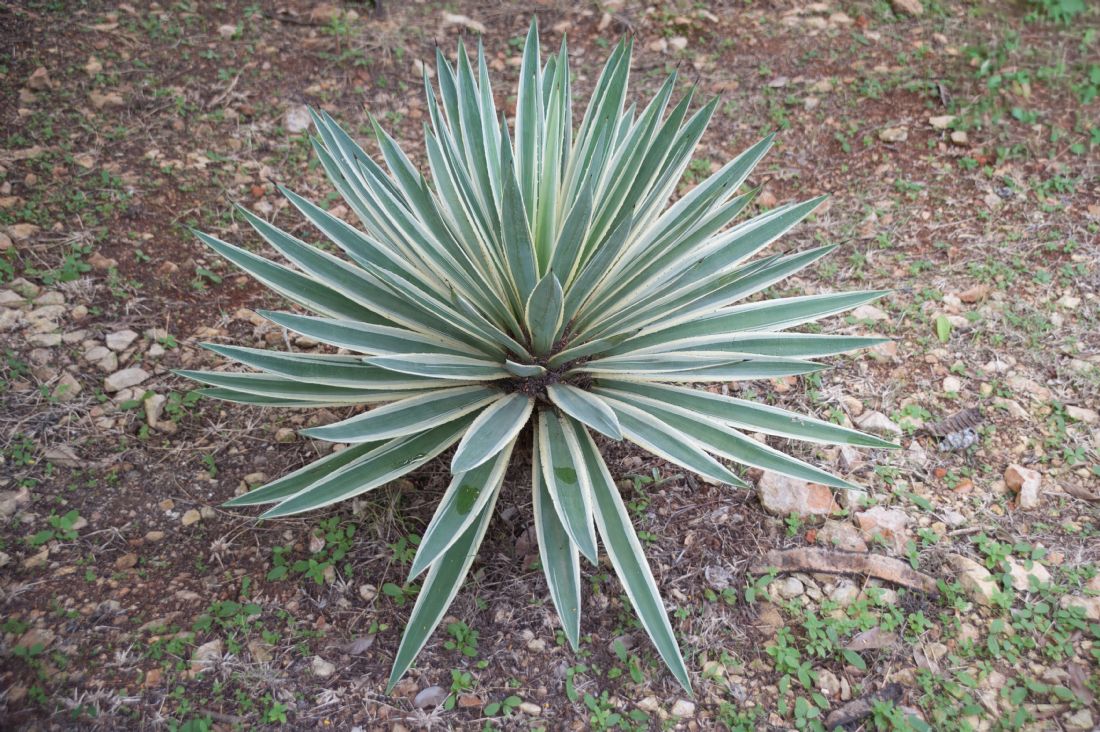
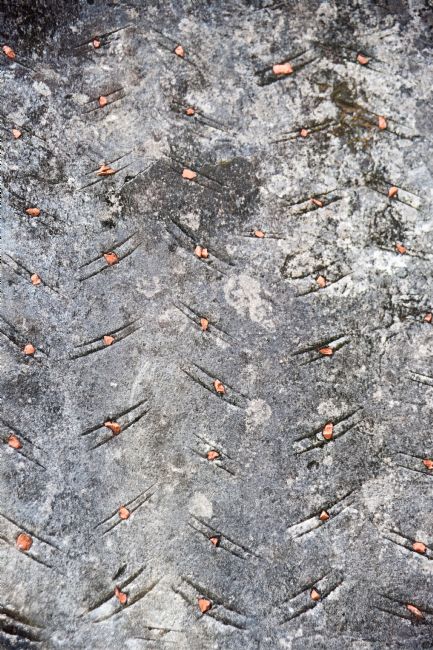
The major industry in the Yucatan peninsular of Mexico was the commercial growing of the plant called Henequen or Argave. It had been used in Mayan times and was industrialised by the Spanish in the 1600s going forward, there being many Hacienda estates across southern Mexico. Initially of course the strong fibre was prepared by hand, thrashing the heavy leaves of the plant against nail beds, then dried in the warm air. Later, in phases heavy machinery was developed and added in phases to the hacienda operations. The introduction of plastics destroyed the lucrative industrial production of jute for ropes very quickly and the hacienda estates were abandoned. It is still possible to see uncultivated agave growing in Yucatan. Elsewhere in Jalisco state it is grown for the production of fermented Tequila.
The old machine room used in the mechanised creation of jute fibre
Colonaded , shaded handworking space, Hacienda Mucuyche ruins , Yucatan, Mexico,
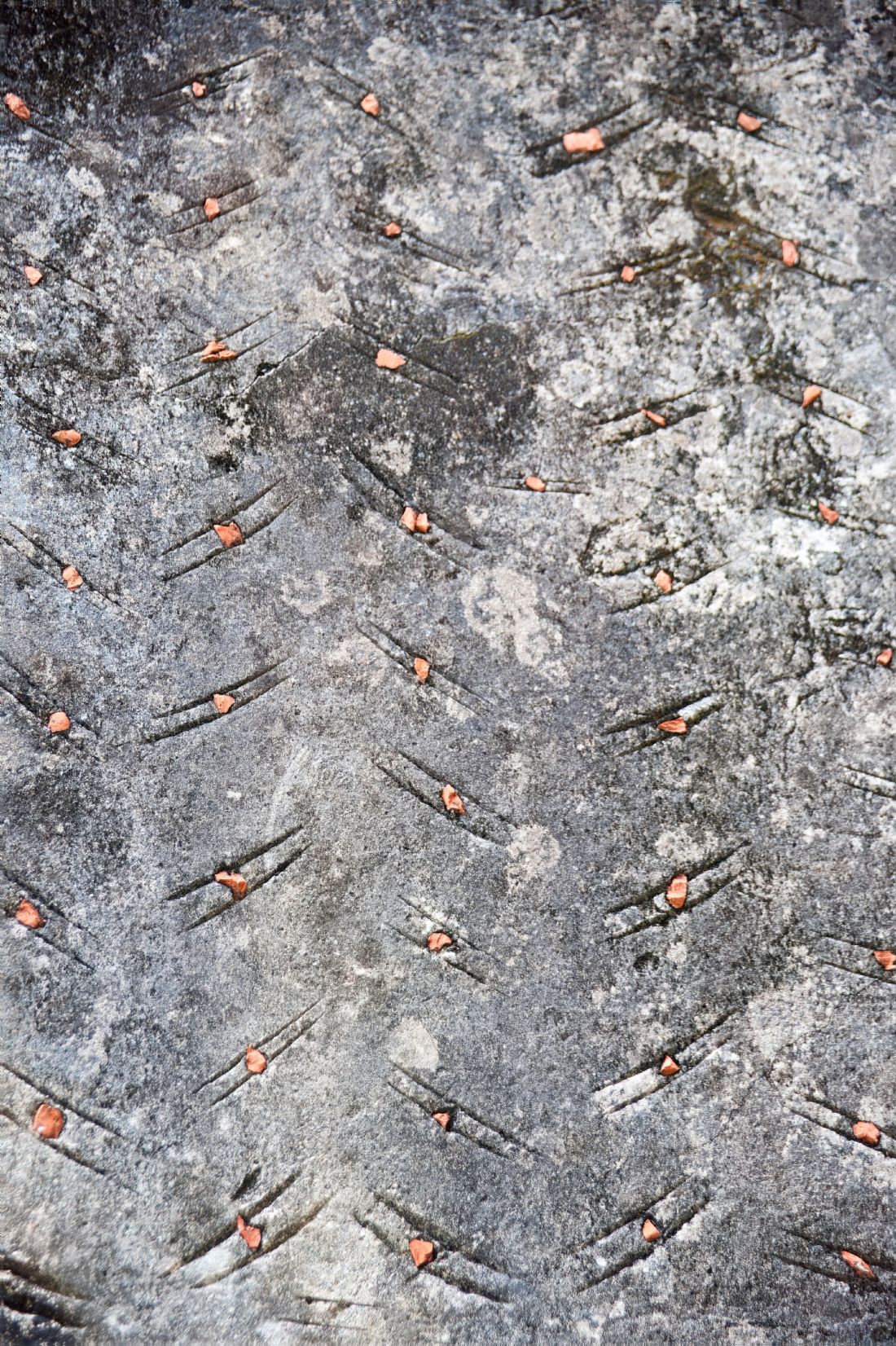
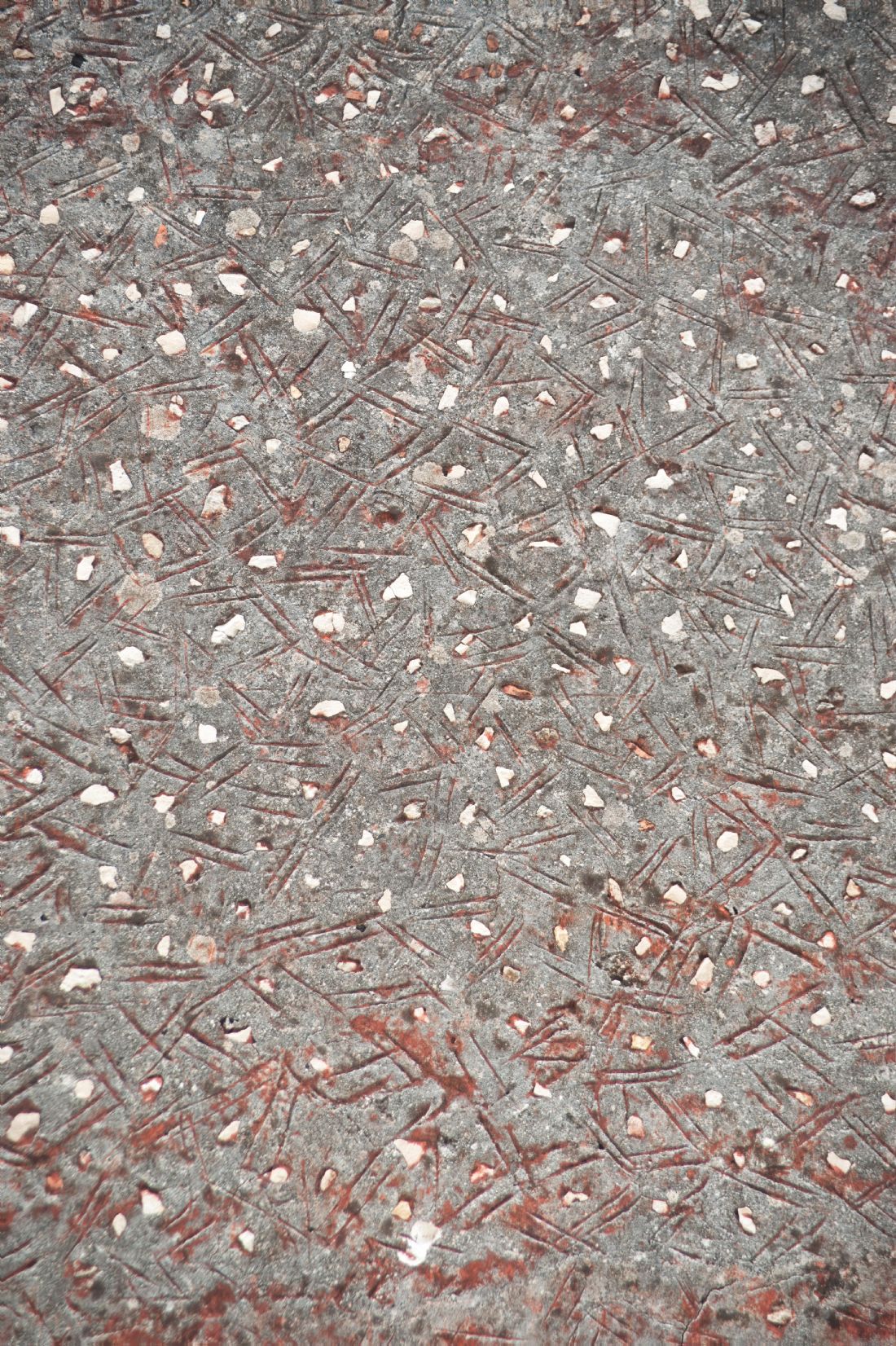
On large walls and in small panels around the site there are remains of the wall rendering over stone work which encompasses simple yet artistic and pleasing means of detailed decoration.
On large walls and in small panels around the site there are remains of the wall rendering over stone work which encompasses simple yet artistic and pleasing means of detailed decoration.
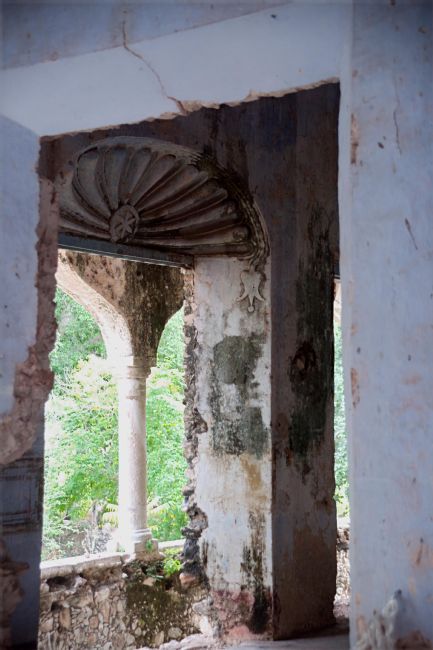
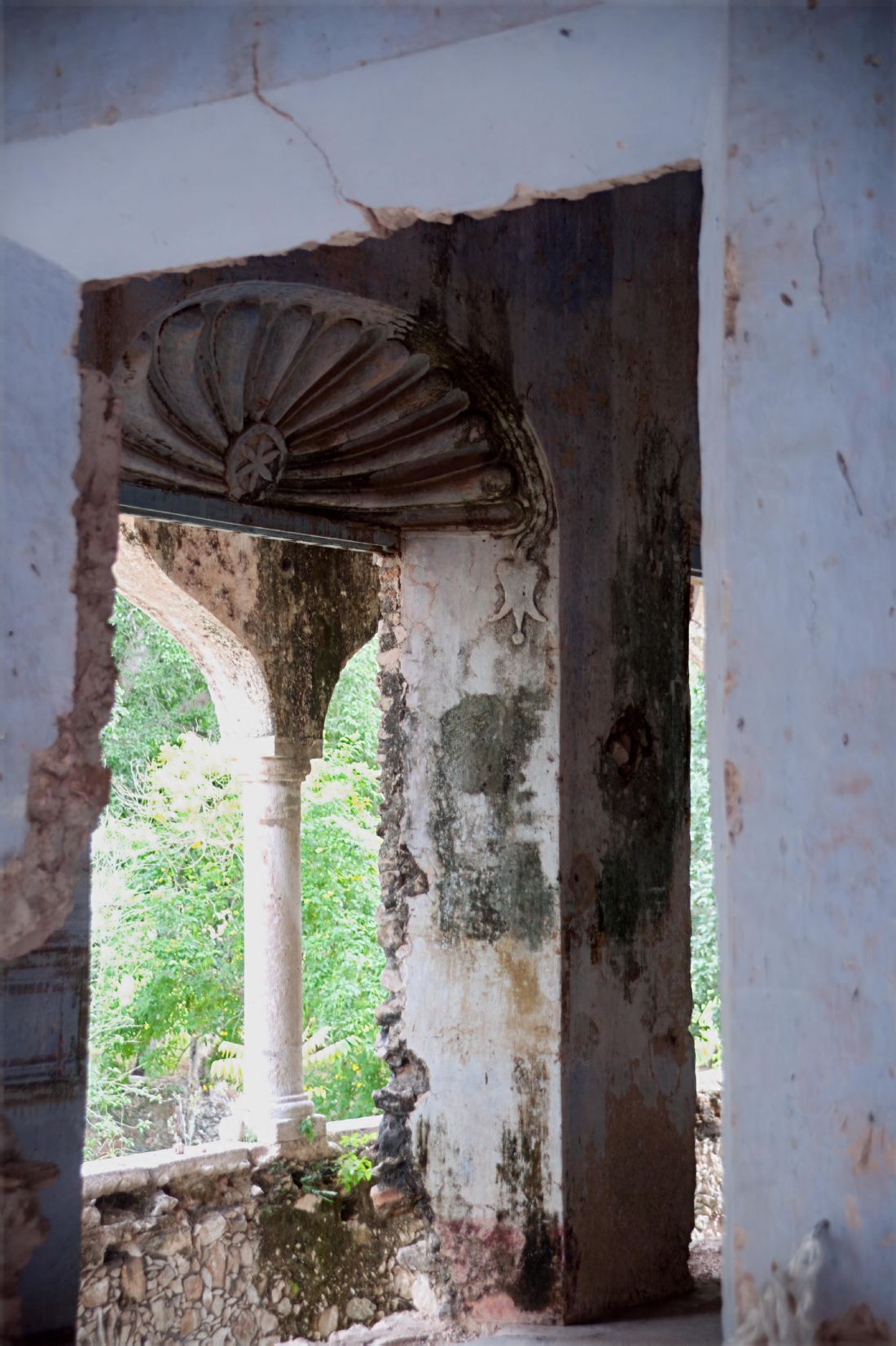
This shows an remaining example of the original interior decoration and embellishment of the state rooms over the windowed doorway openings onto long verandah, celebrating their industry with a formed agave over the door.
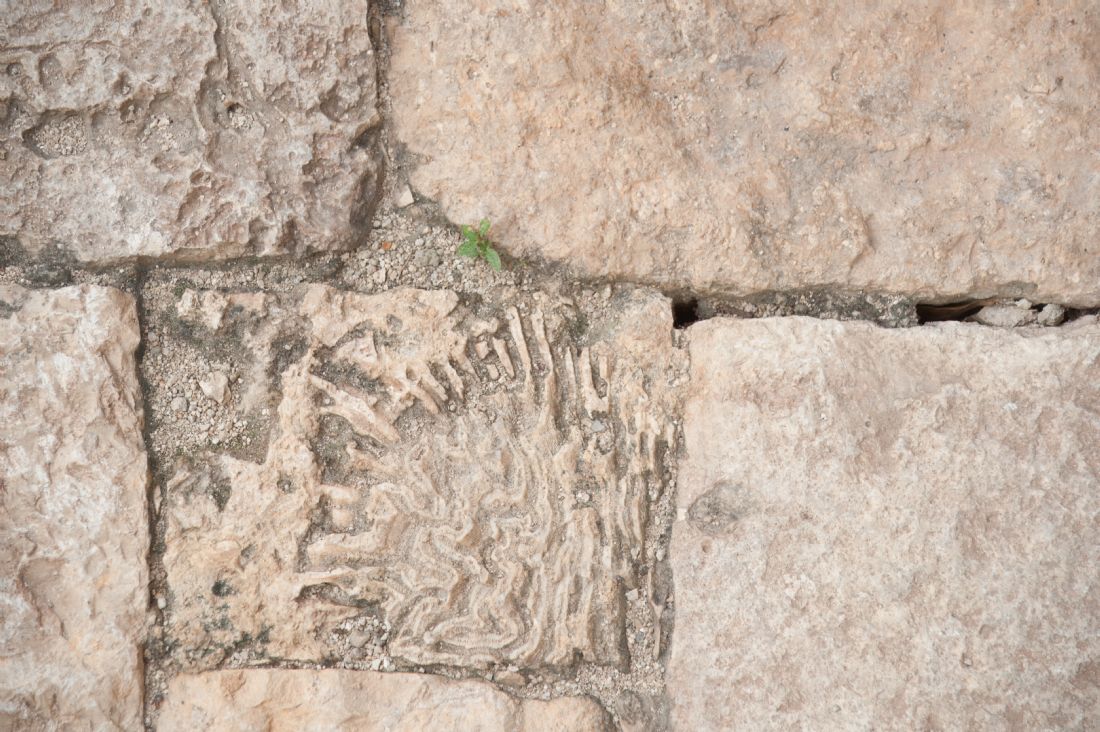
It is interesting how in the 1600s, elements of Mayan ruins, decorated stonework, were incorporated into the stone walls of the Hacienda without any consideration of completeness or beauty of the part or the whole. The Spanish thought nothing of obliterating the Mayan culture. this stonework was originally rendered over.
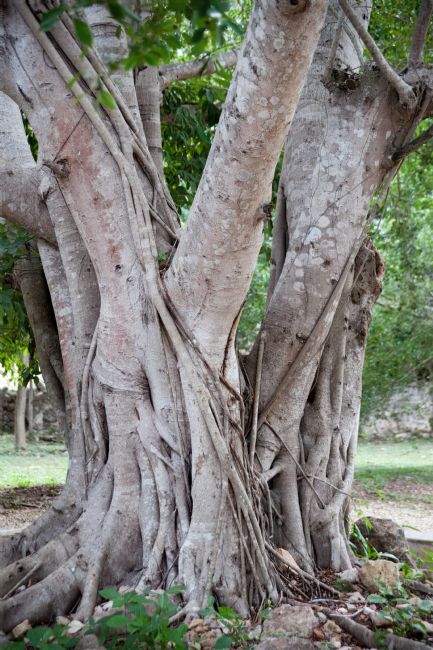
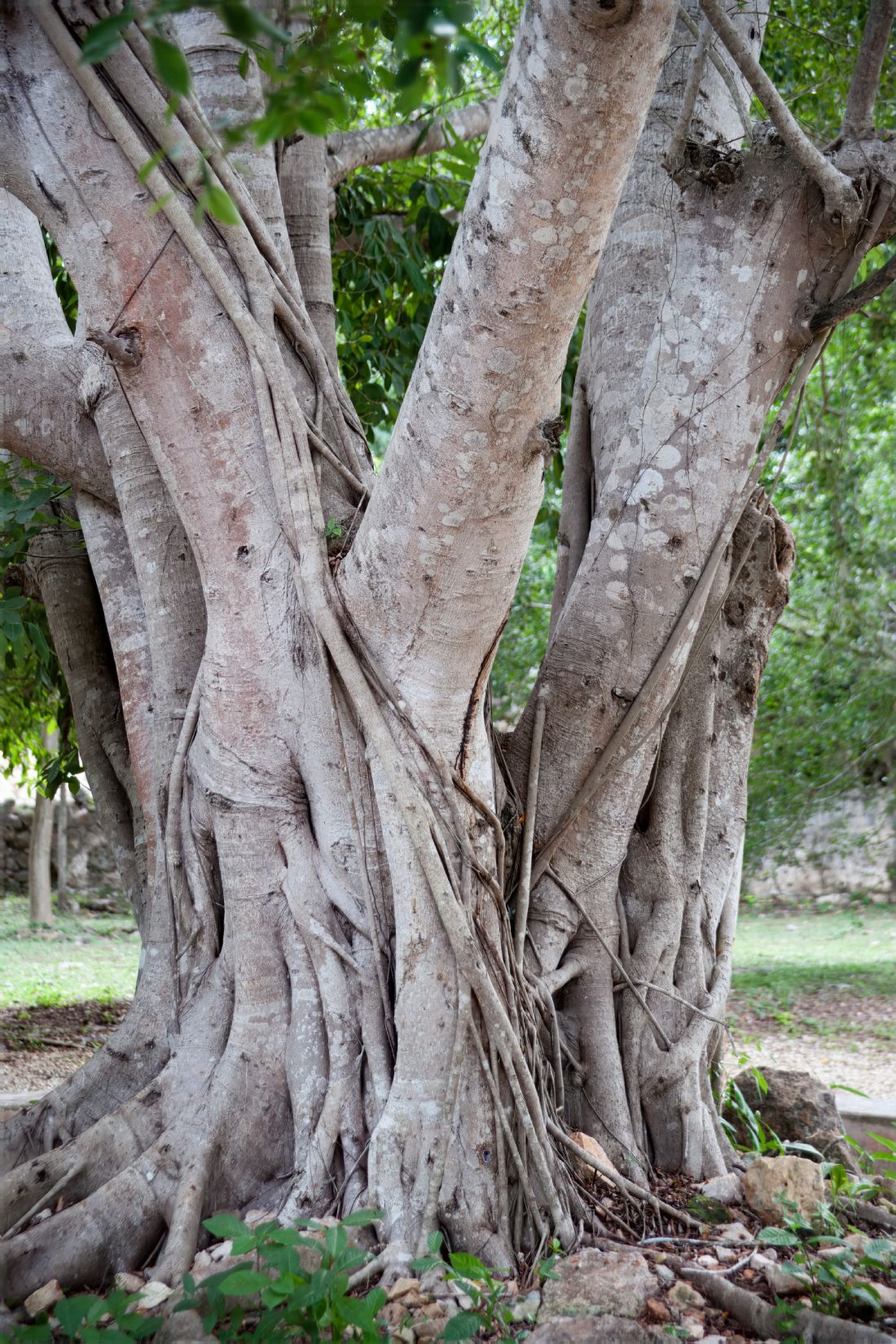
There are several of these giant entangled trees still standing around the Hacienda.