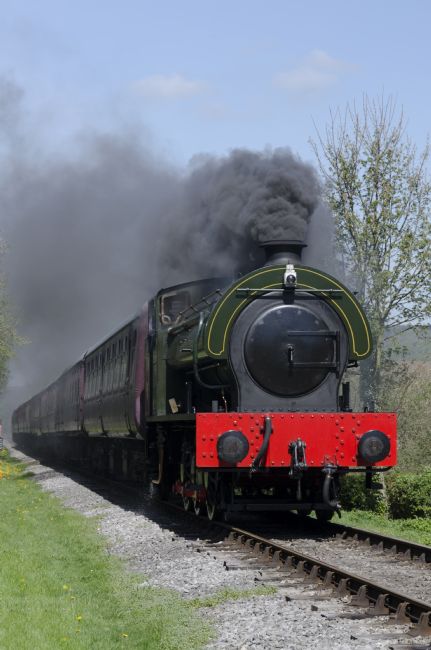
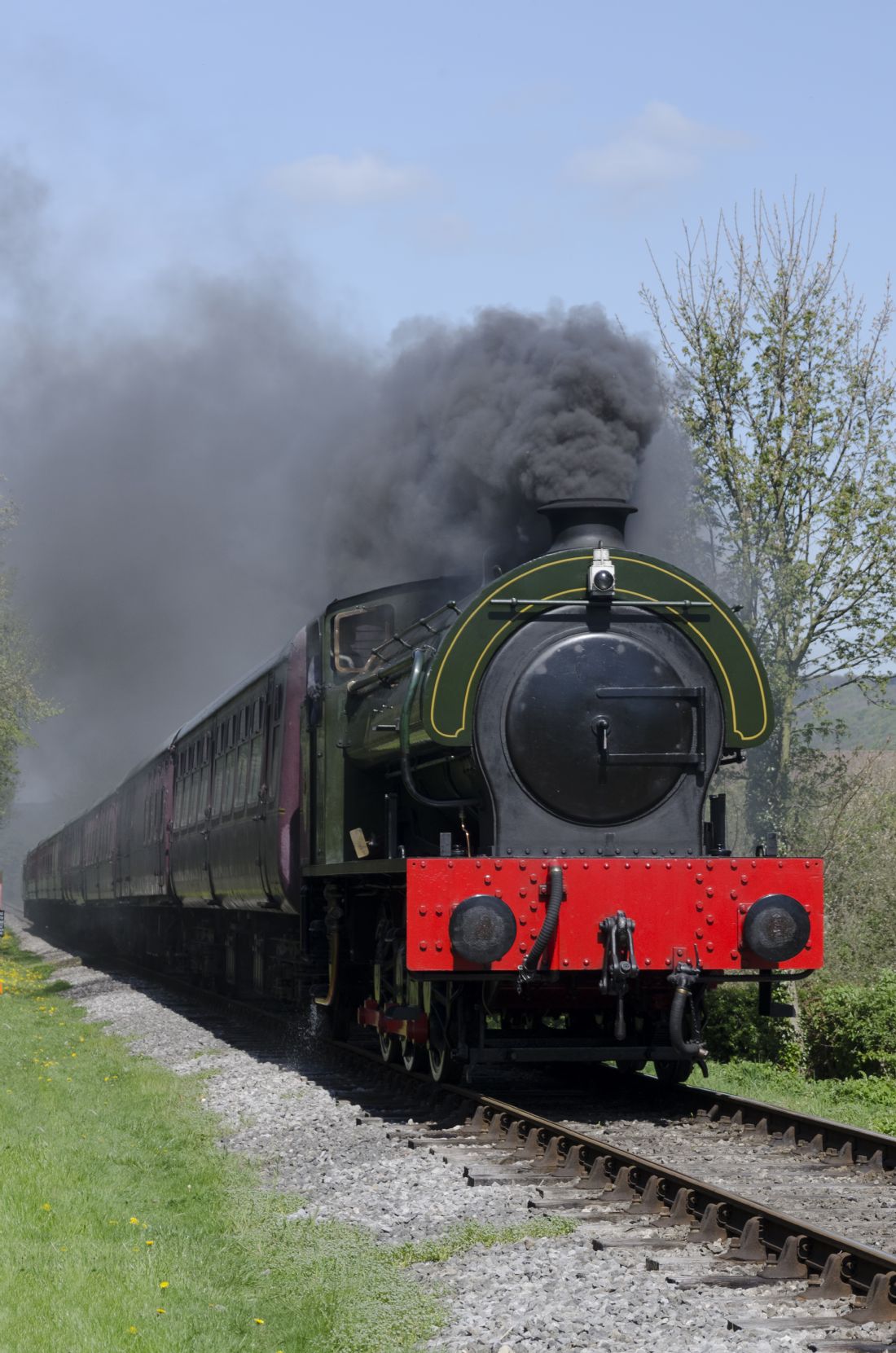
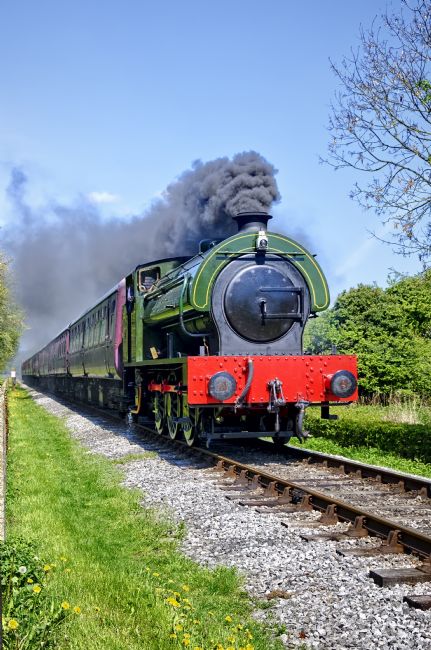
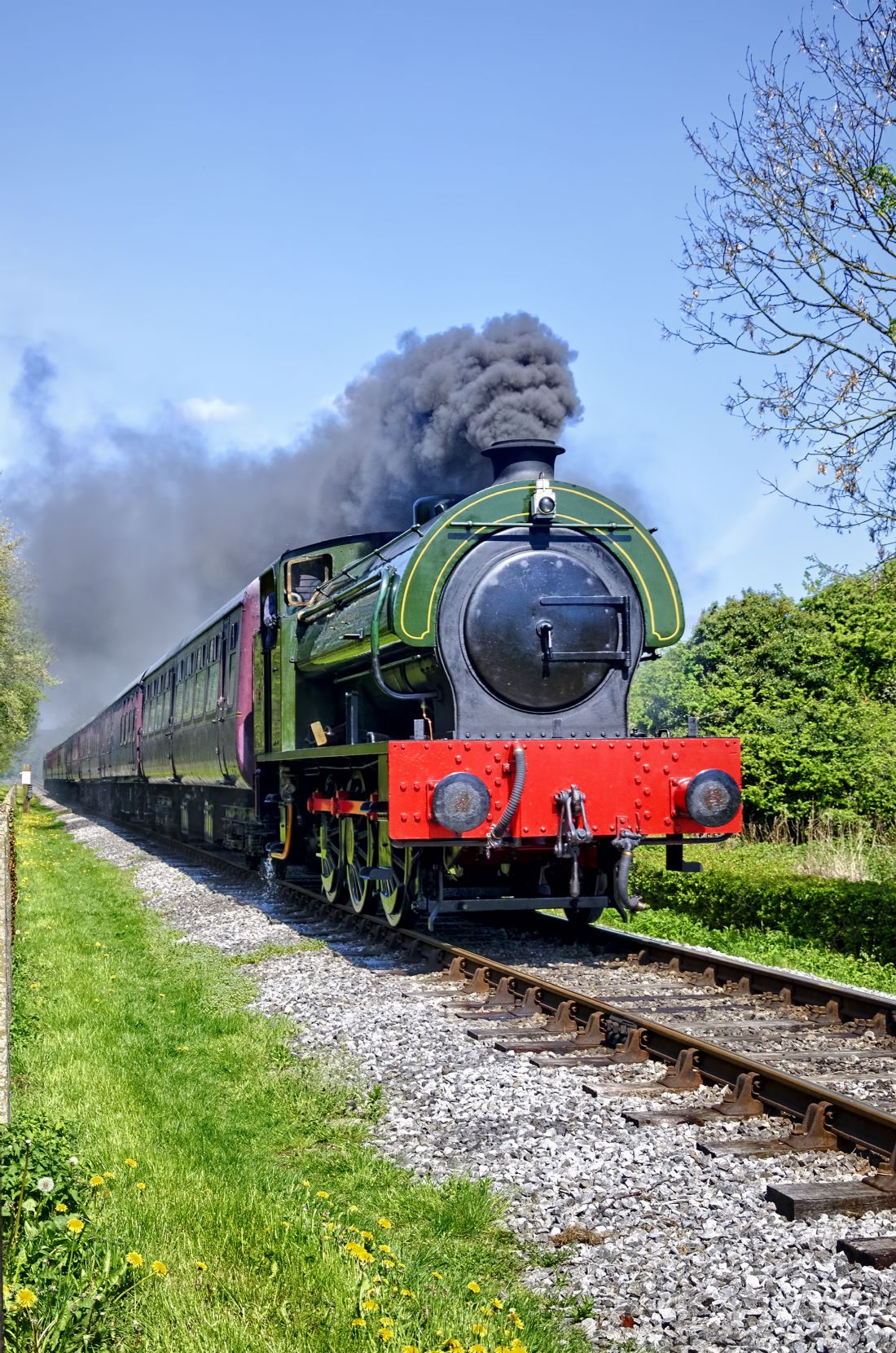
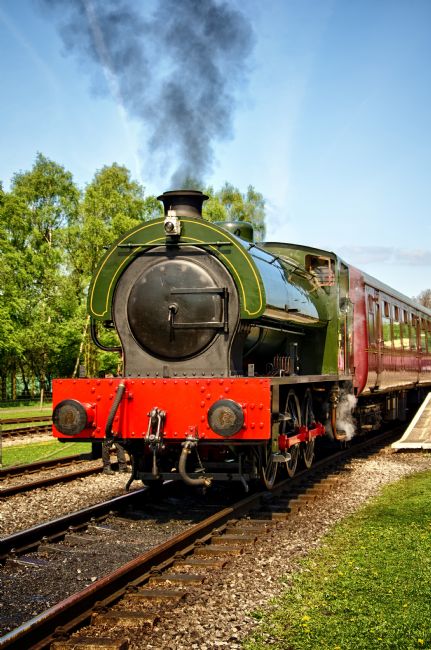
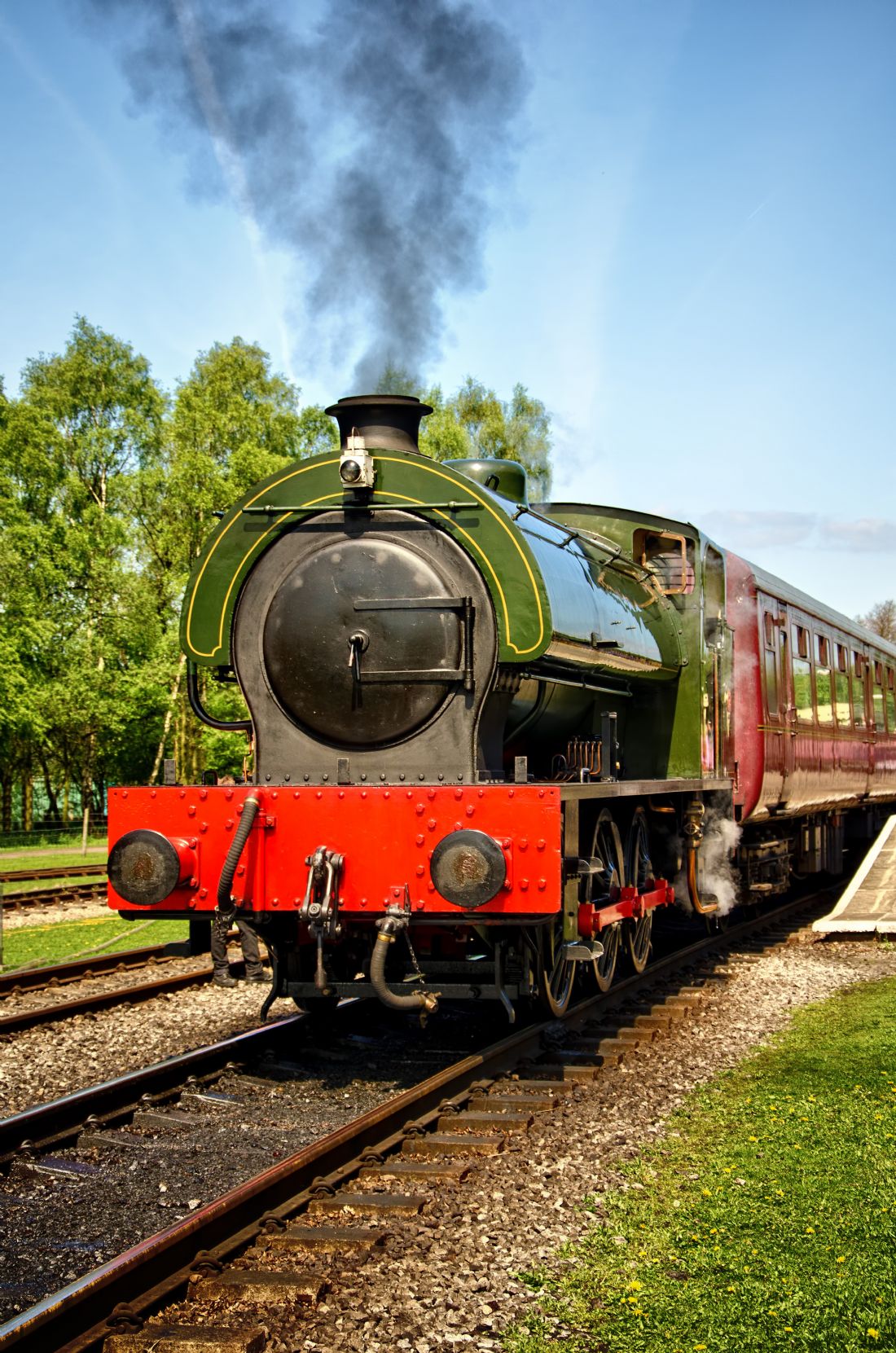
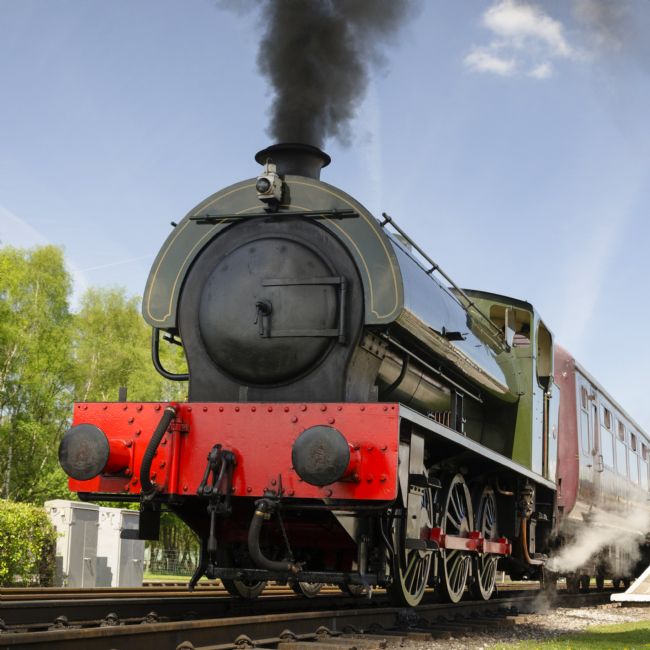
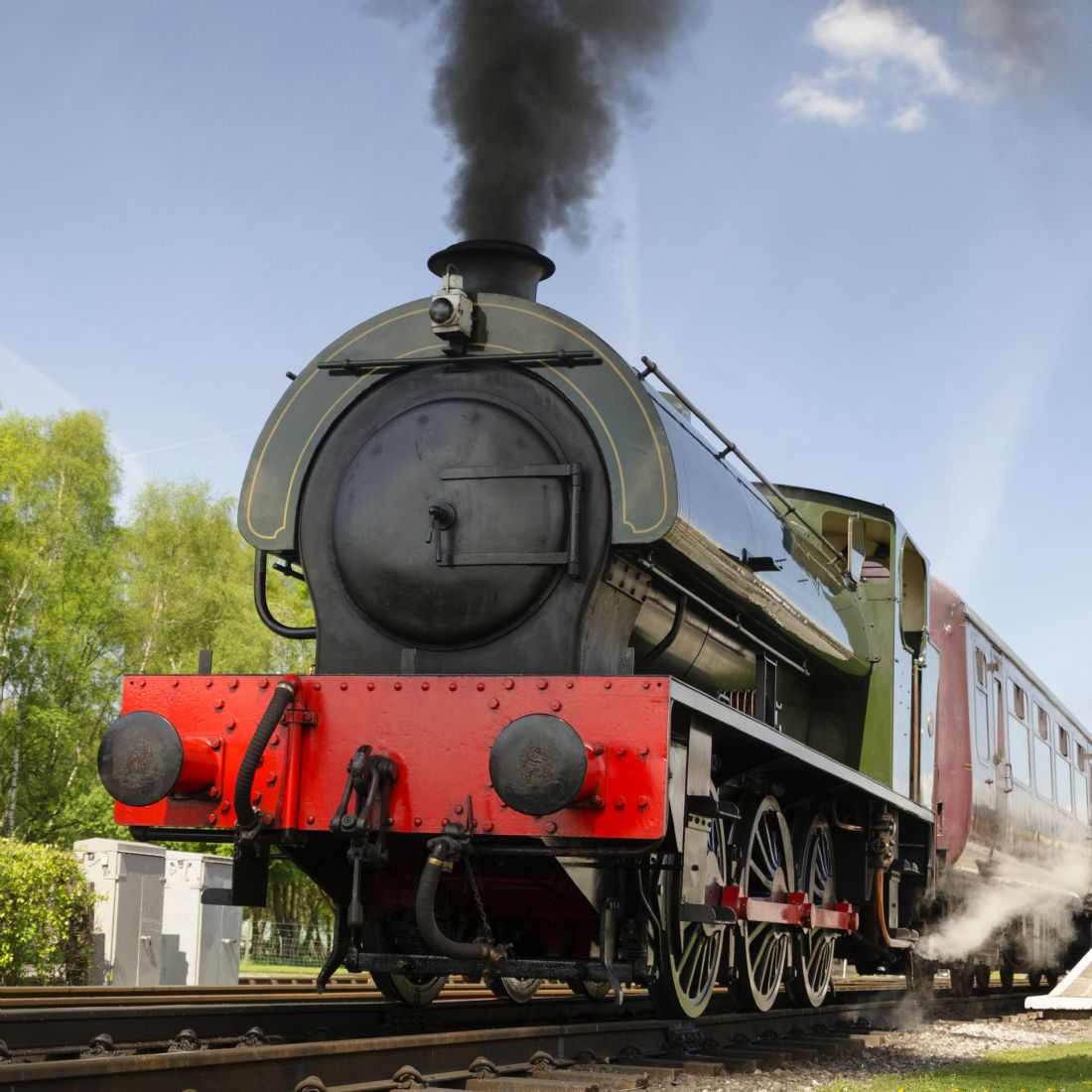
Lord Phil a 0-6-0 ST locomotive pulling a train on Peak Rail, Derbyshire. Lord Phil is an Austerity locomotive - built during WW2 by Hunslet as HE 2868 in 1943 and was subsequently rebuilt by them incorporating some modifications that increased power and efficiency as 3883.
Lord Phil a 0-6-0 ST locomotive pulling a train on Peak Rail, Derbyshire. Lord Phil is an 'Austerity' locomotive - built during WW2 by Hunslet as HE 2868 in 1943 and was subsequently rebuilt by them incorporating some modifications that increased power and efficiency as 3883.
Lord Phil a 0-6-0 ST locomotive at Rowsley station, Peak Rail, Derbyshire. Lord Phil is an Austerity locomotive - built during WW2 by Hunslet as HE 2868 in 1943 and was subsequently rebuilt by them incorporating some modifications that increased power and efficiency as 3883.
Lord Phil a 0-6-0 ST locomotive pulling a train on Peak Rail, Derbyshire. Lord Phil is an Austerity locomotive - built during WW2 by Hunslet as HE 2868 in 1943 and was subsequently rebuilt by them incorporating some modifications that increased power and efficiency as 3883.
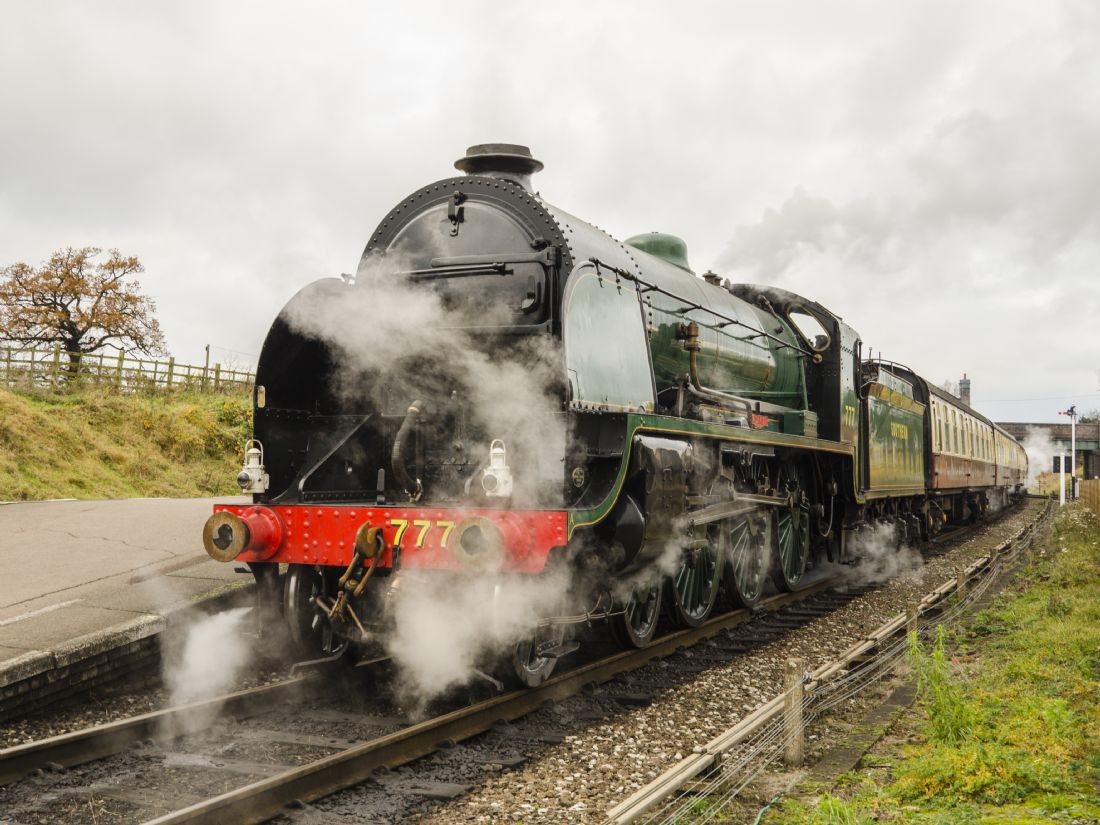
Sir Lamiel is a King Arthur class 4-6-0 steam locomotive seen here at a heritage railway ready to leave the station
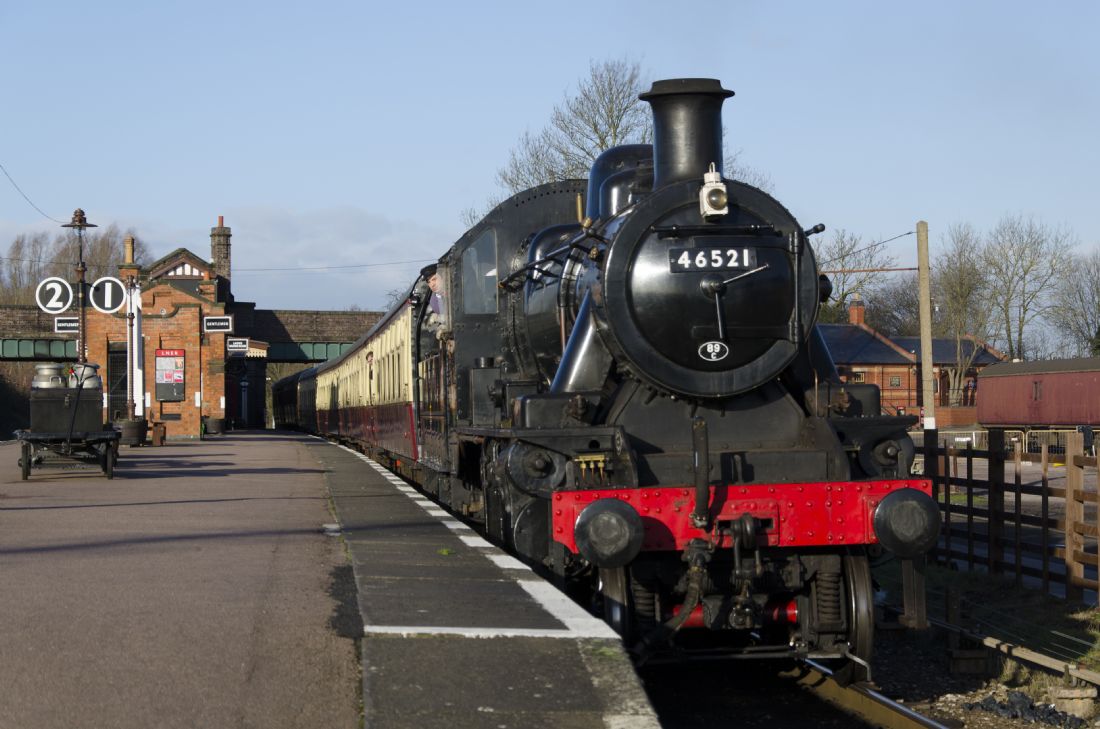
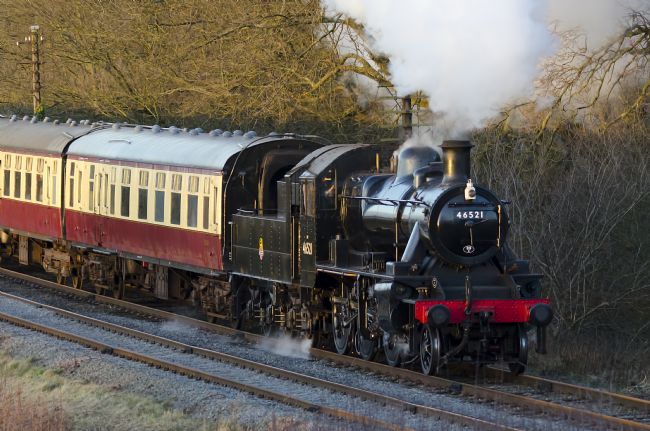
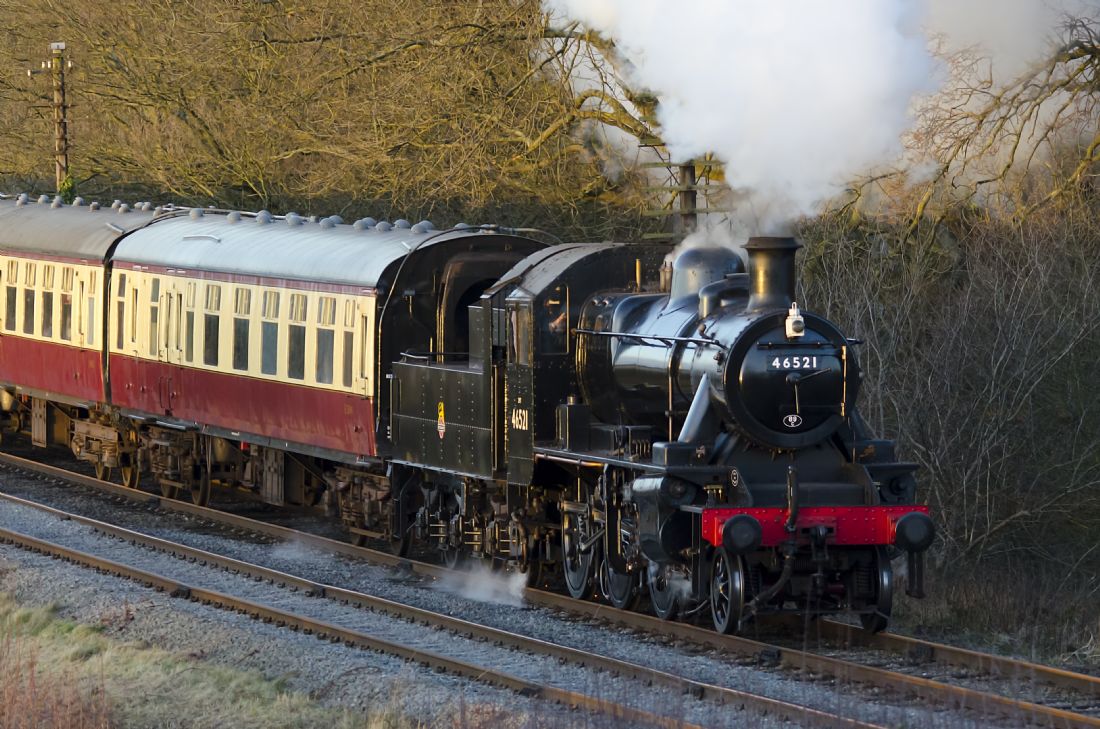
Steam locomotive 46521 is an LMS Class 2 2-6-0 originally completed in 1953. After a long career it went first to the Severn Valley Railway then to its current home - Great Central Railway where it continues to run regularly. Seen here at Quorn Station.
Steam locomotive 46521 is an LMS Class 2 2-6-0 originally completed in 1953. After a long career it went first to the Severn Valley Railway then to its current home - Great Central Railway where it continues to run regularly. Seen here at Kinchley curve.
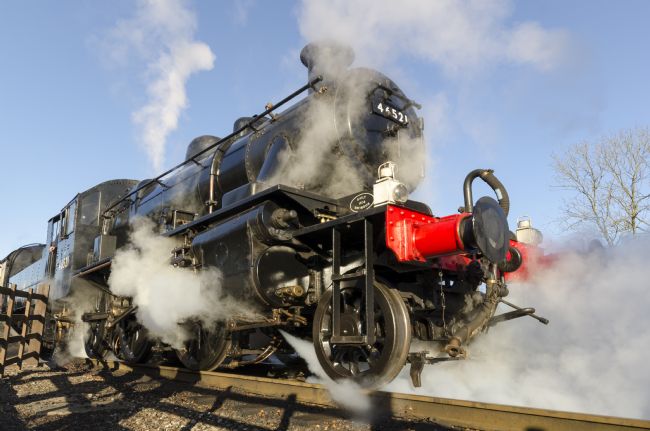
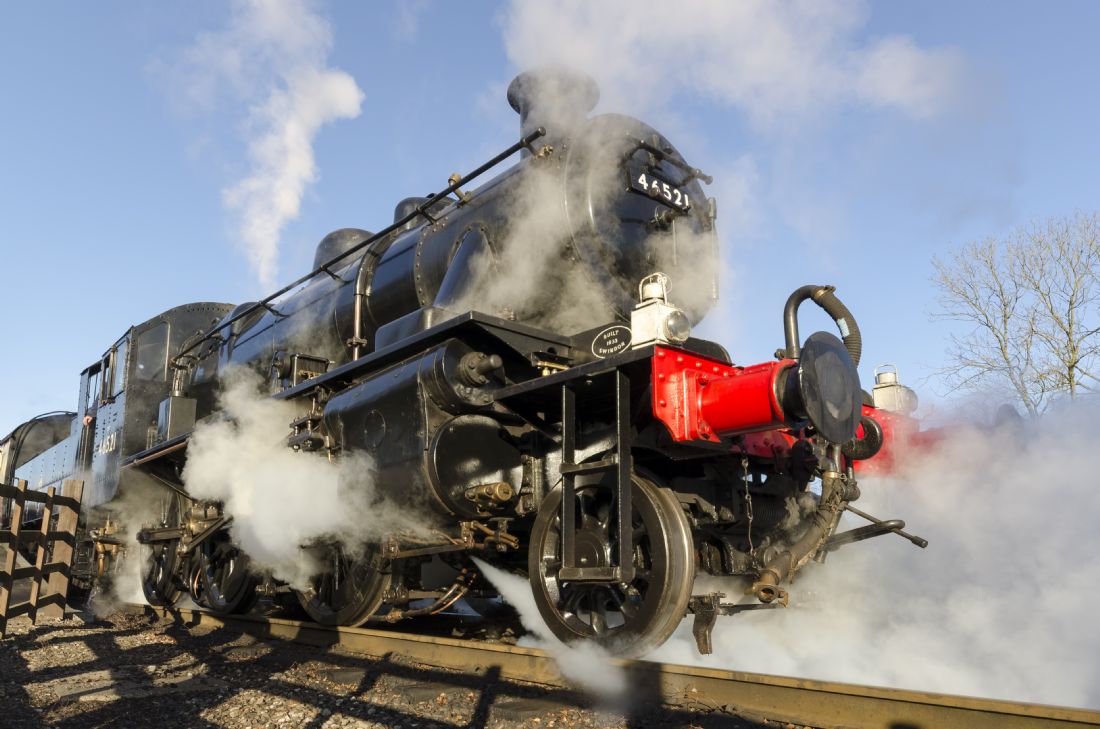
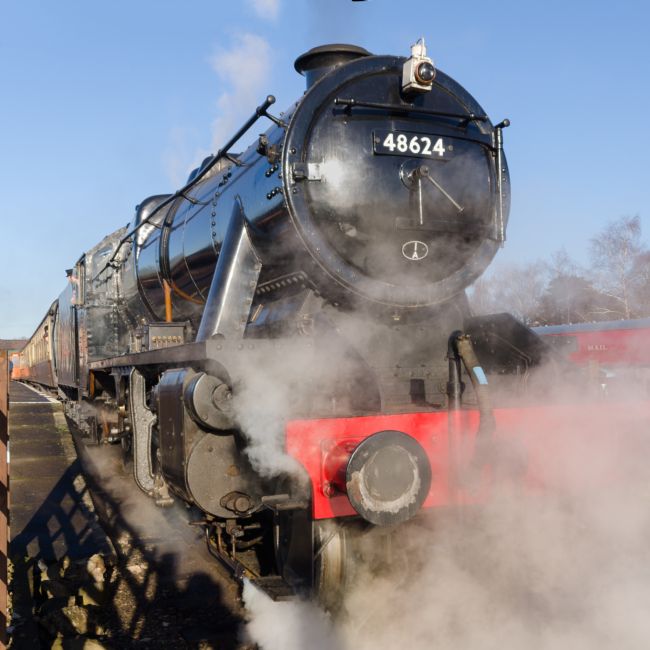
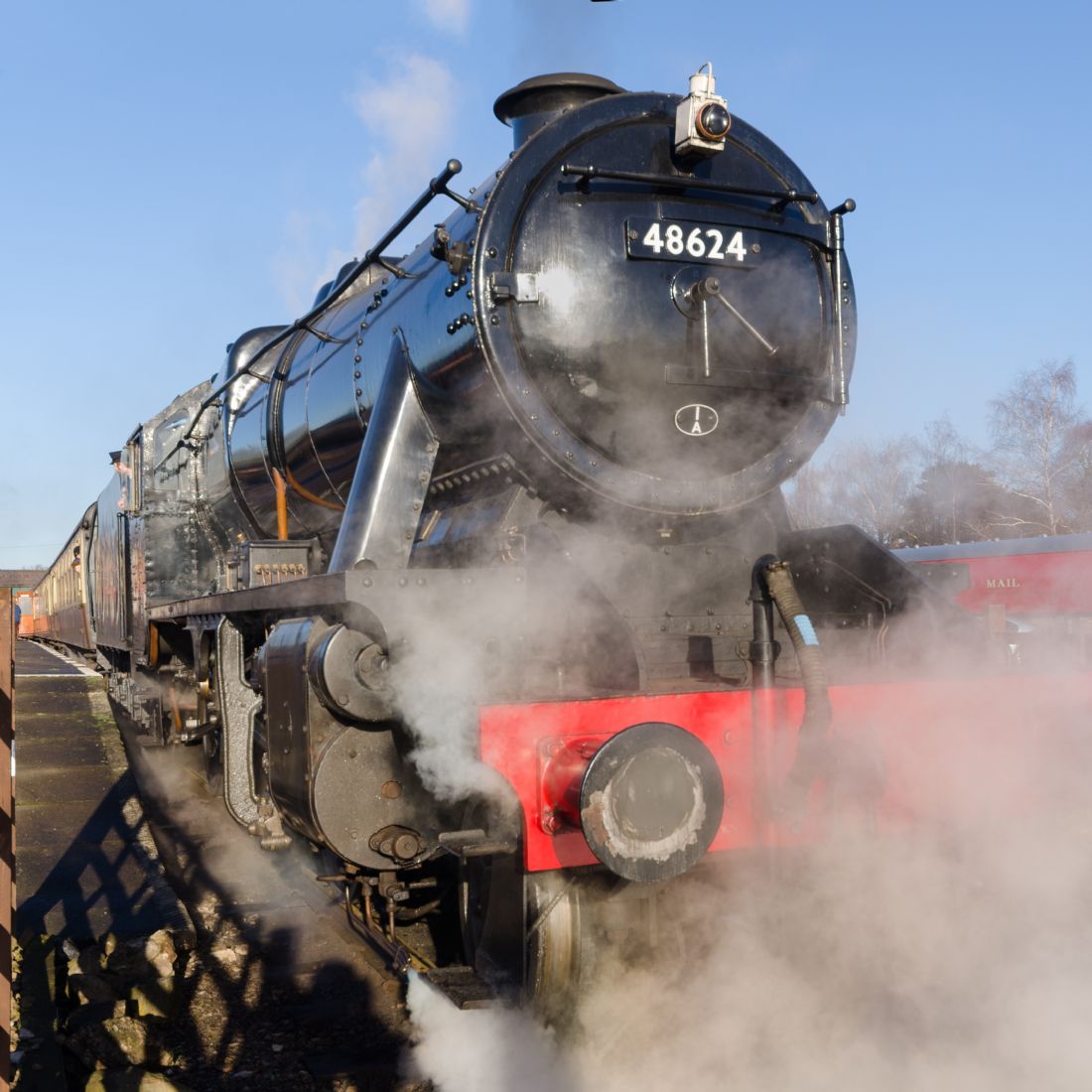
Wide angle close up image of a steam locomotive. Steam swirls around it moments before it pulls away. As well as the obvious large clouds pretty much the entire front end of the locomotive has a small steam cloud around it giving a slightly foggy effect.
Close up image of a steam locomotive as steam swirls around it moments before it pulls away. The edge of the platform just visible in the lower right corner.
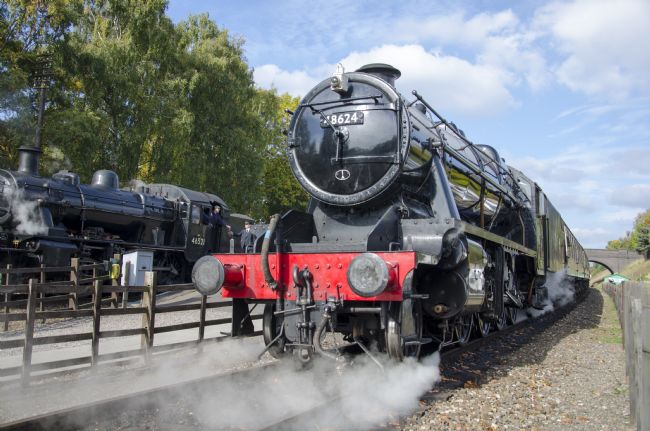
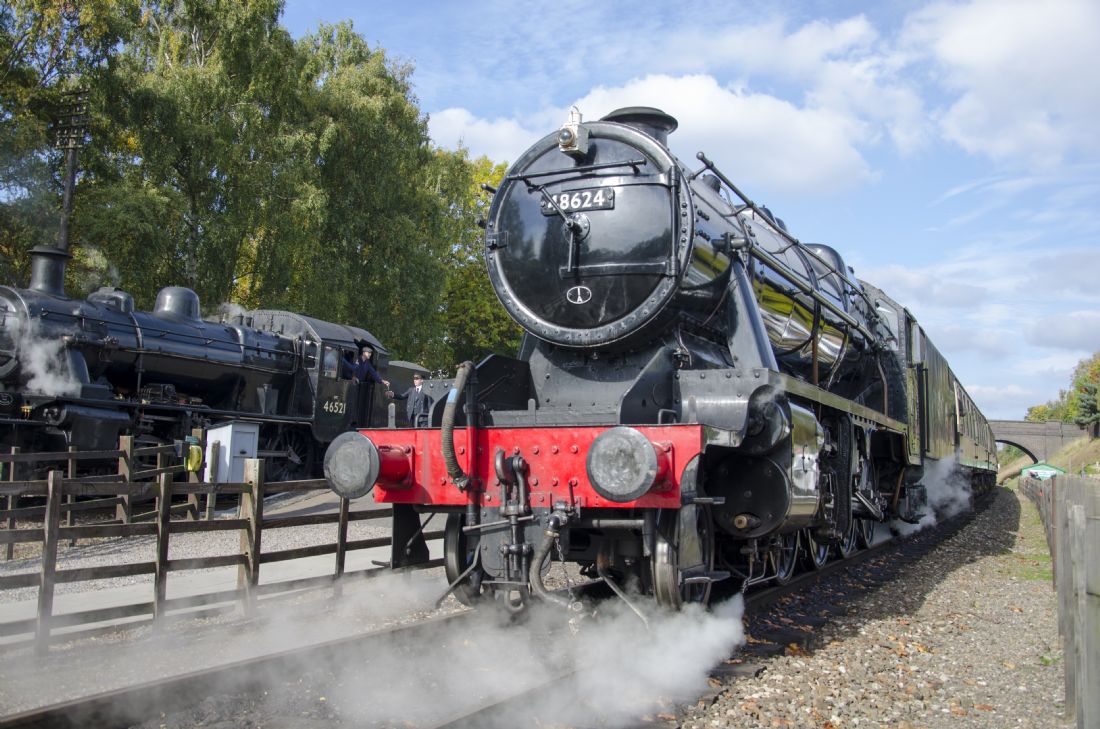
LMS 48624 on platform 1 in the foreground with LMS 46521 on platform 2 at Rothley station on the Great Central Railway.
34053 Sir Keith Park - a Battle of Britain class steam locomotive with a length of 67 feet and weighing in at over 100 tons. This 4-6-2 light Pacific was one of 110 built-in the West Country/ Battle of Britain Class, for use on the Southern Railway and was built at Brighton in January 1947
Stanier class 8F 2-8-0 Heavy steam locomotives were designed as freight movers but this one is seen in steam at Great Central Railway on a cold, frosty day.
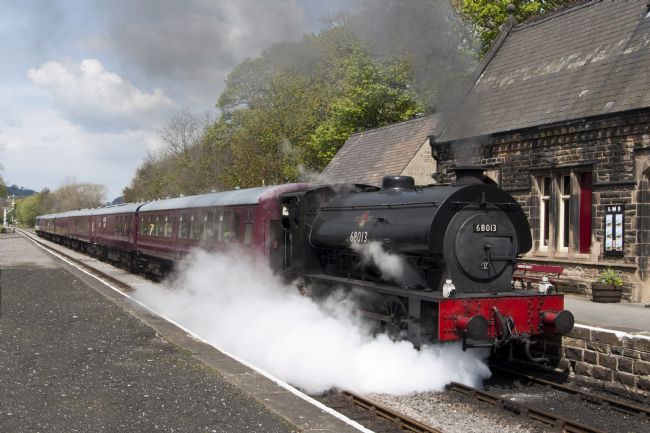
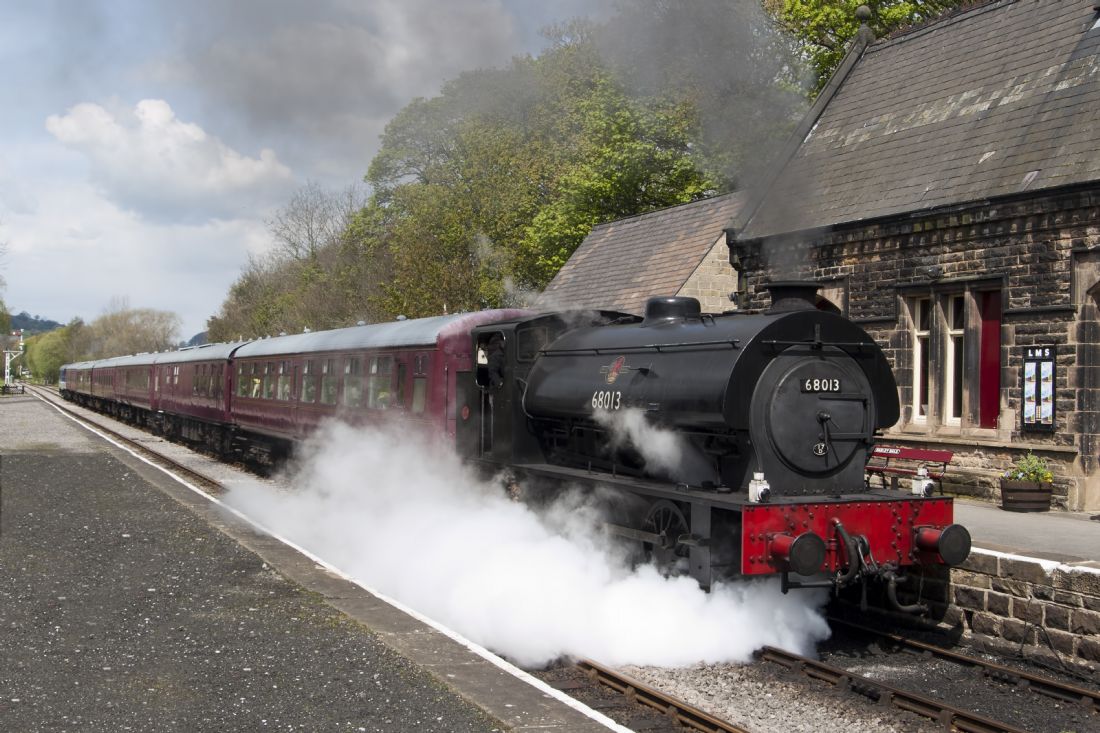
68013 Royal Pioneer steam locomotive with several carriages seen here on the Peakrail line in Derbyshire
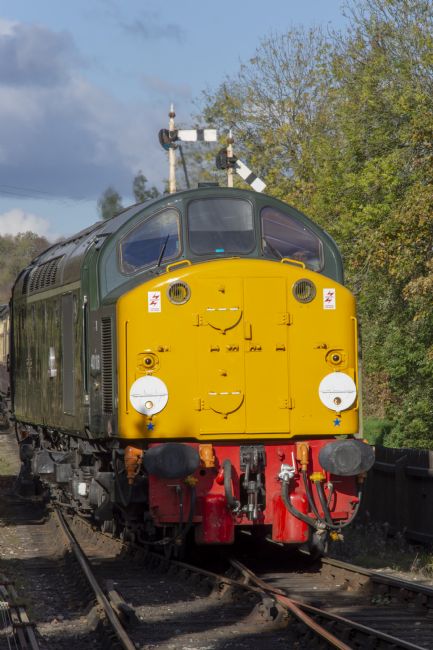
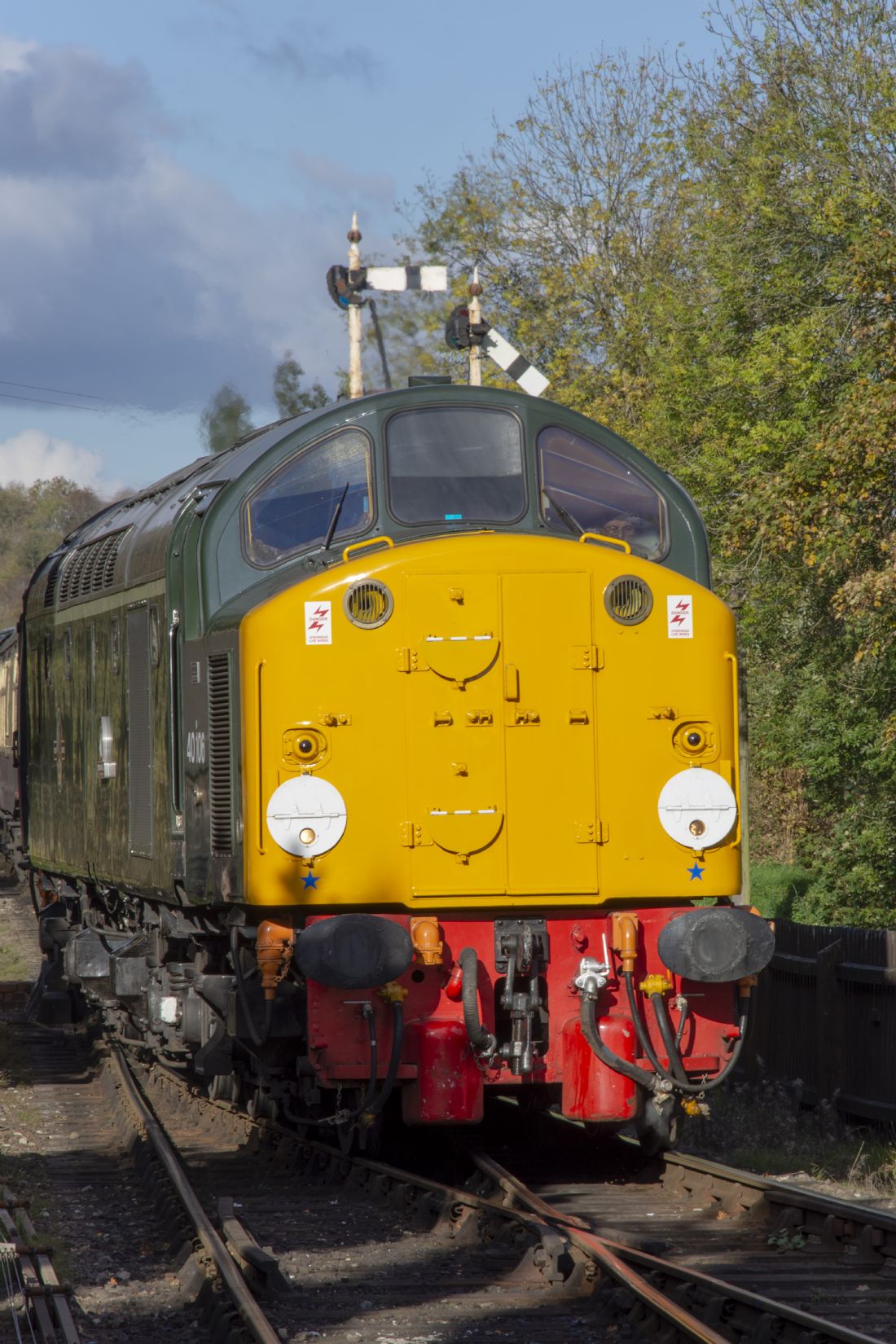
Originally built in 1960 this locomotive saw many years active running until 1983. Entering service as D306 it became re-branded as 40106 in the 1970s. It was bought for preservation and named as Atlantic Conveyor in honour of the ship of the same name that was lost in the Falklands conflict. It is also a bit of a movie star having been used as the loco in the film 'Buster' about the great train robbery.
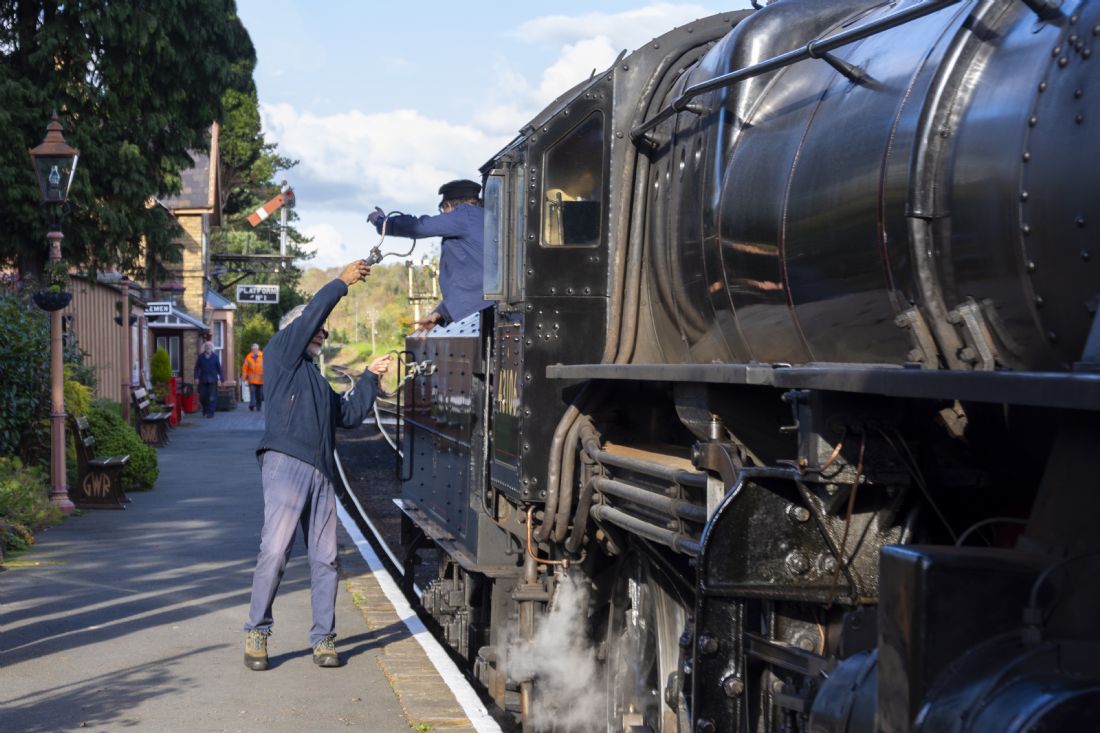
When a single track running line there needs to be a way to prevent two trains meeting by accident. The simple system of a 'key' that effectively locked the points at the far end was the solution. When the train carrying the key for that section reaches the signal box it is handed over so the section of now clear track can be released. Here you see a key exchange, the train crew have handed over the key for the section just cleared (lower key) and collected the key for the next section. The large hoop made it easier to do this as it passed.
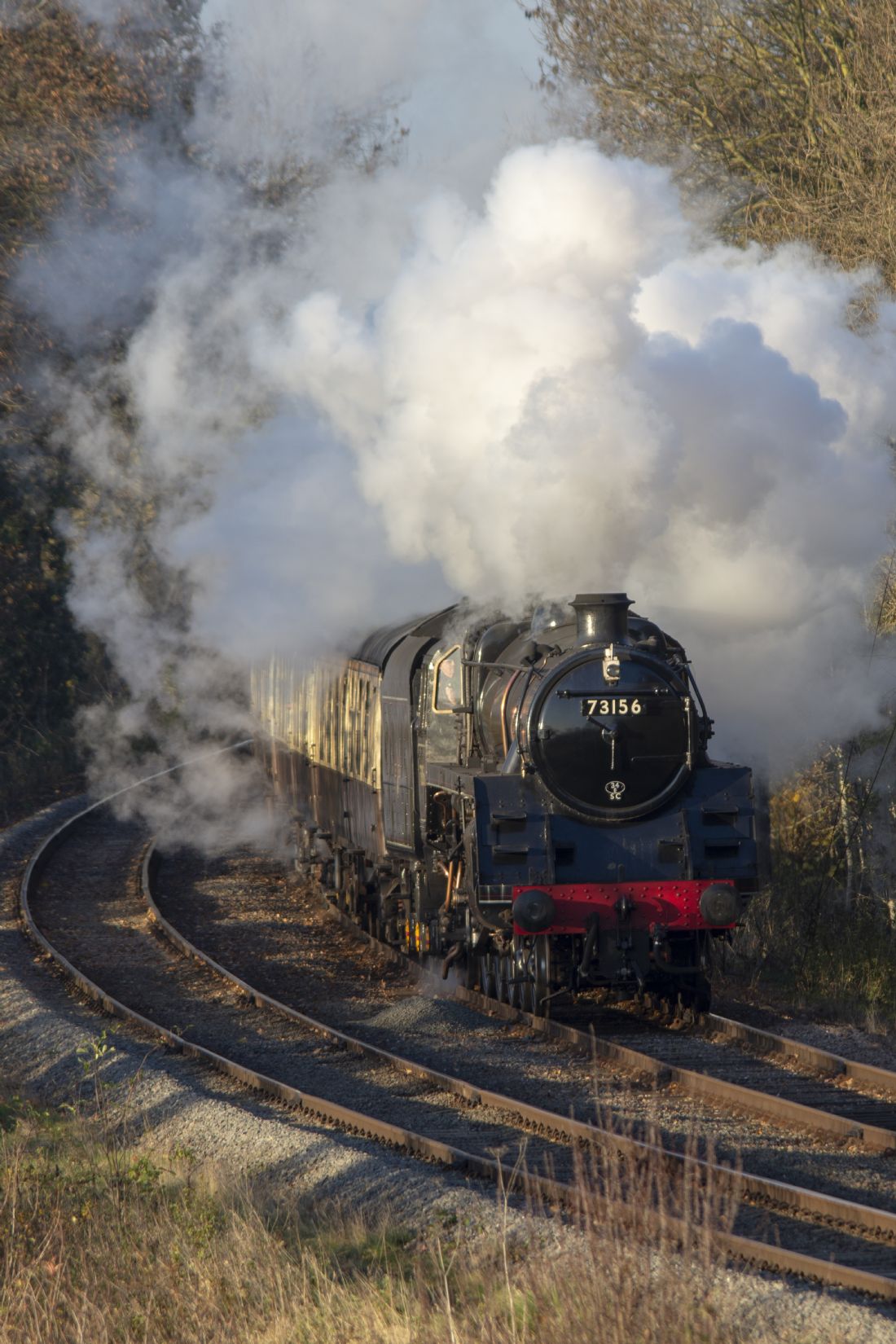
73156 is a class 5 4-6-0 steam locomotive that after a sustained restoration effort can now be seen as a regular on the Great Central Railway. Seen here in the wonderfully soft, late afternoon golden hour.
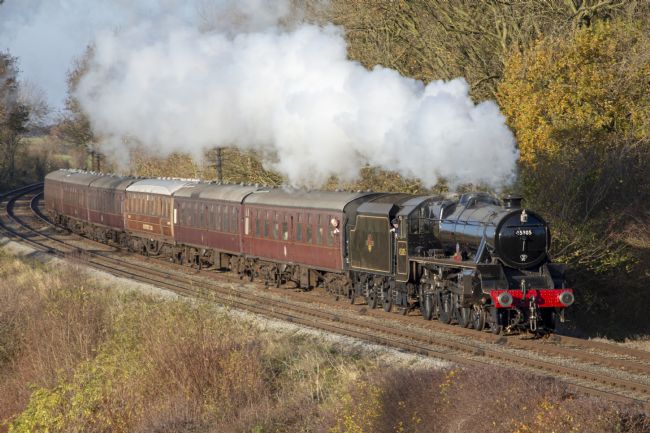
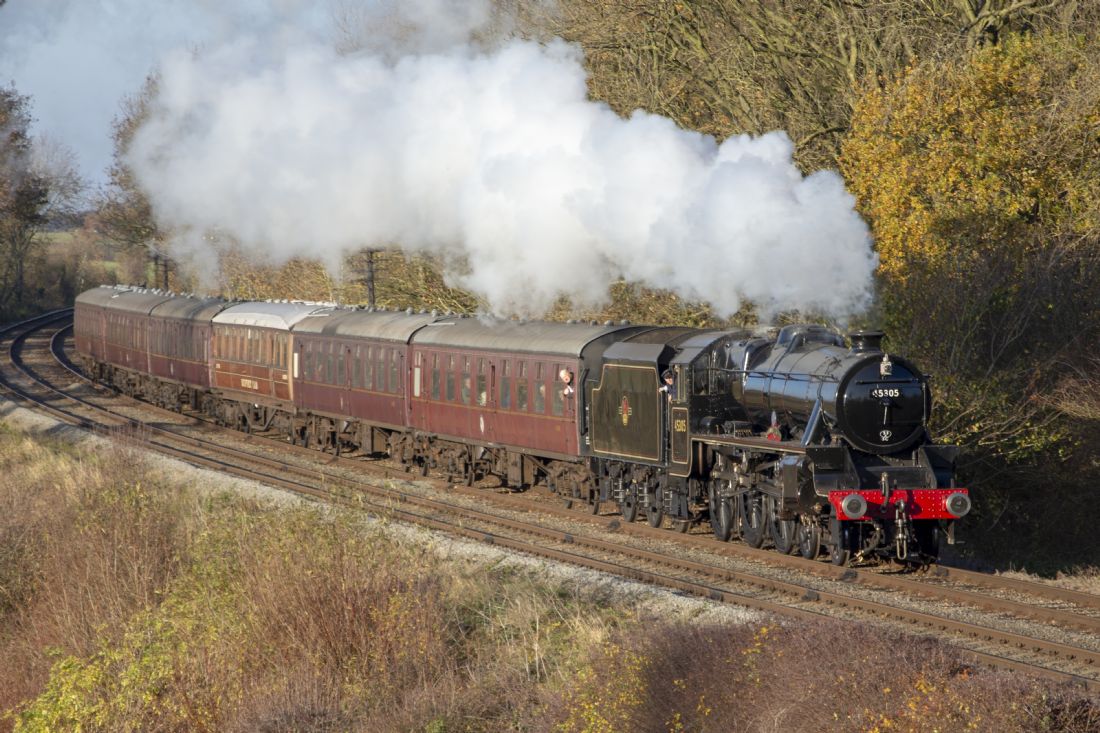
One of the famous Stanier 5 4-6-0 locomotives seen here hauling passenger carriages on the Great Central Railway in Leicestershire.
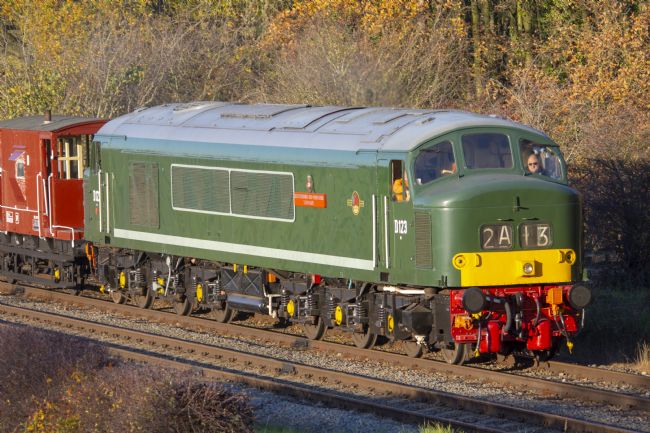
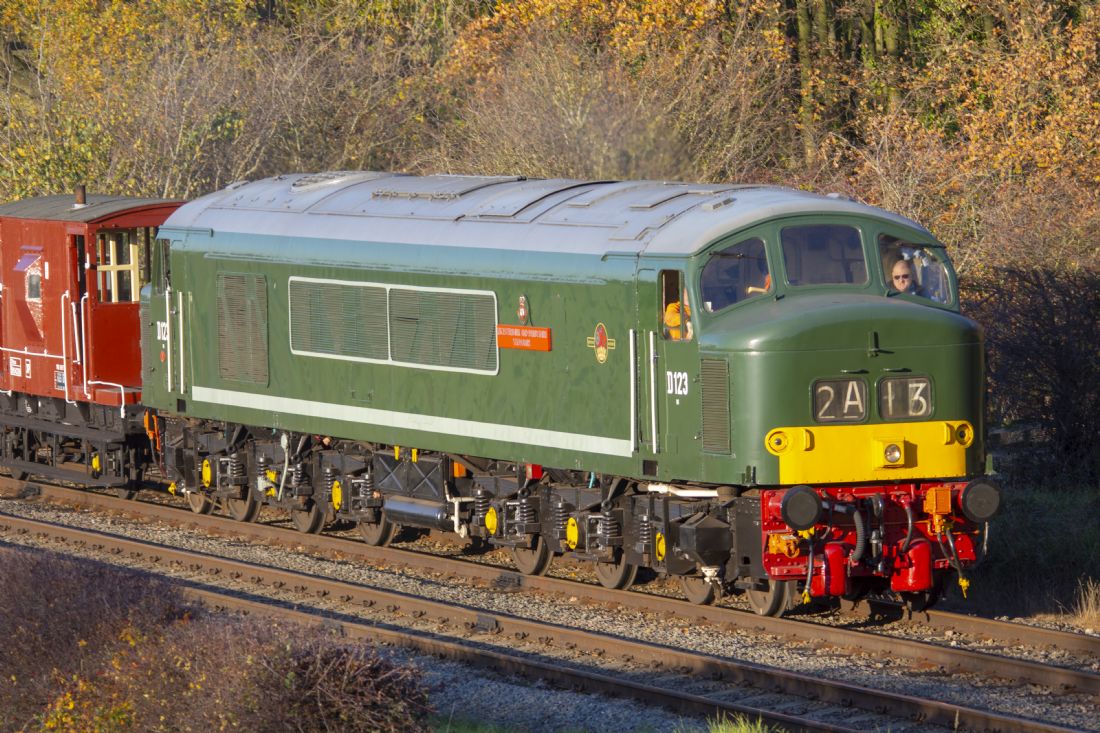
Seen here during the golden hour D123 is a preserved diesel locomotive from the Peak class and bears the name Leicestershire and Derbyshire Yeomanry.
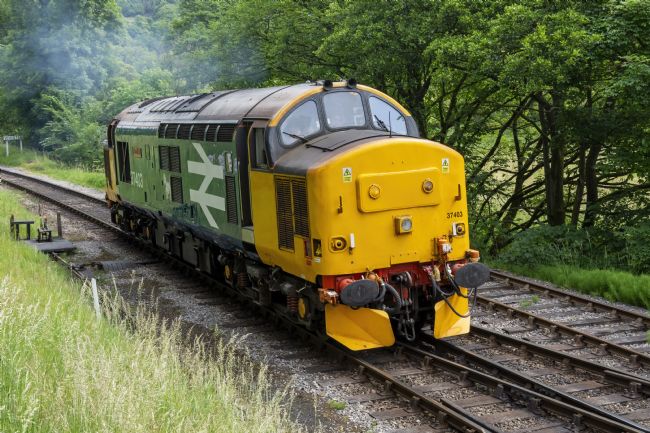
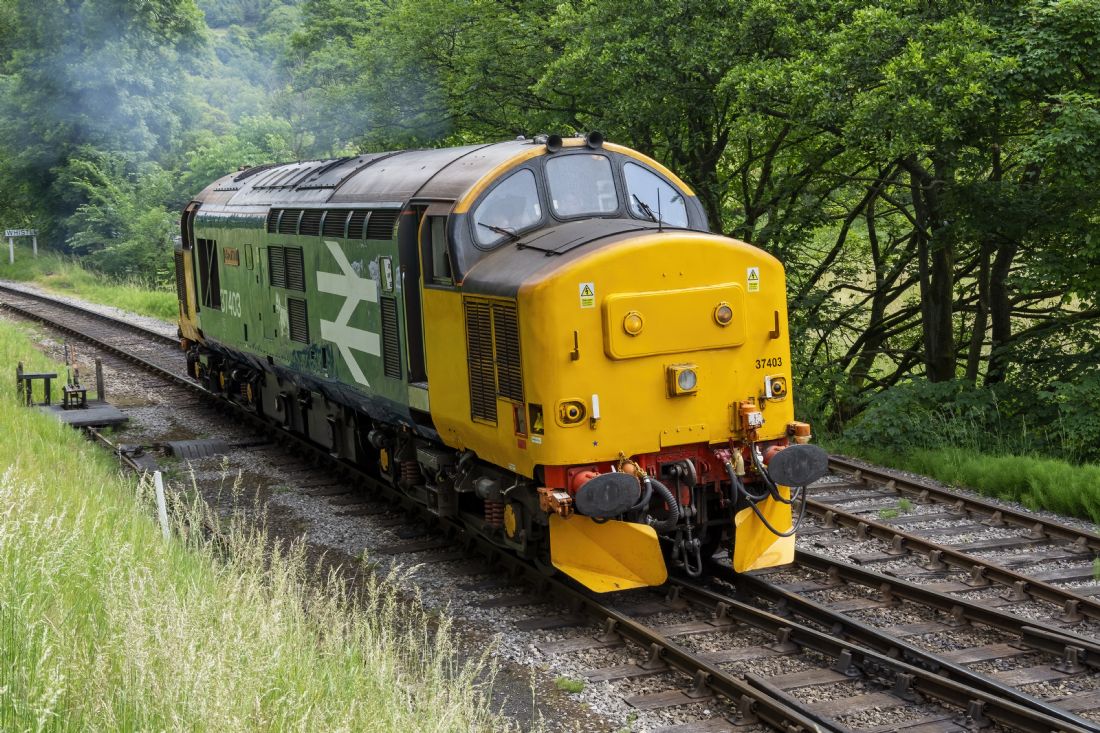
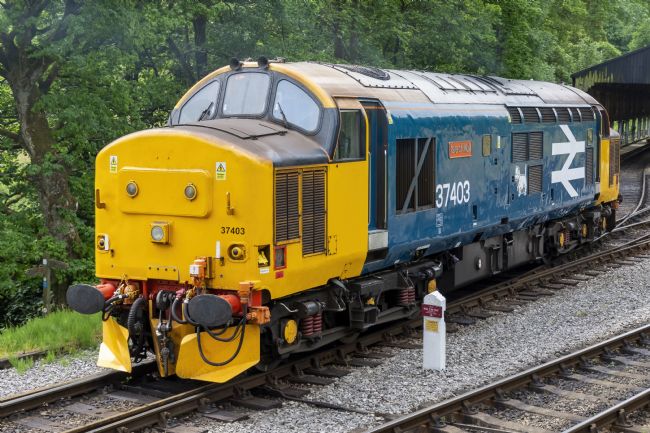
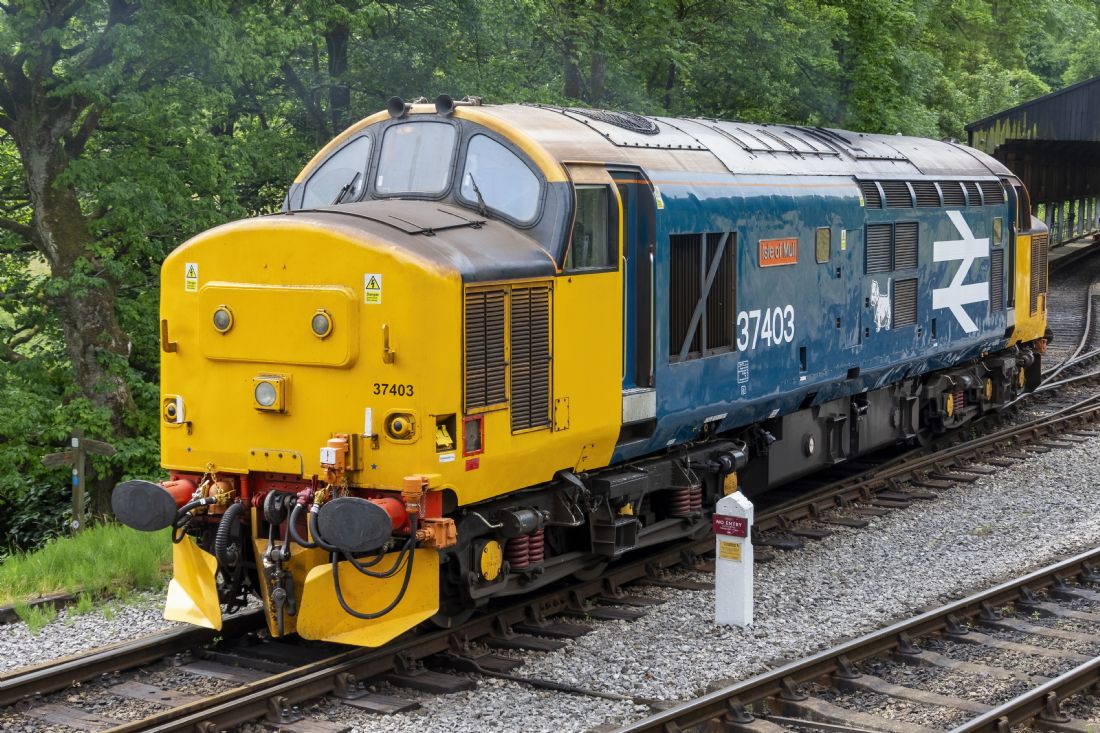
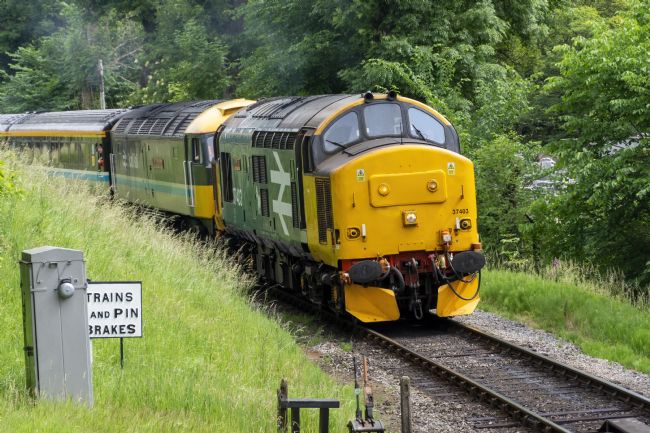
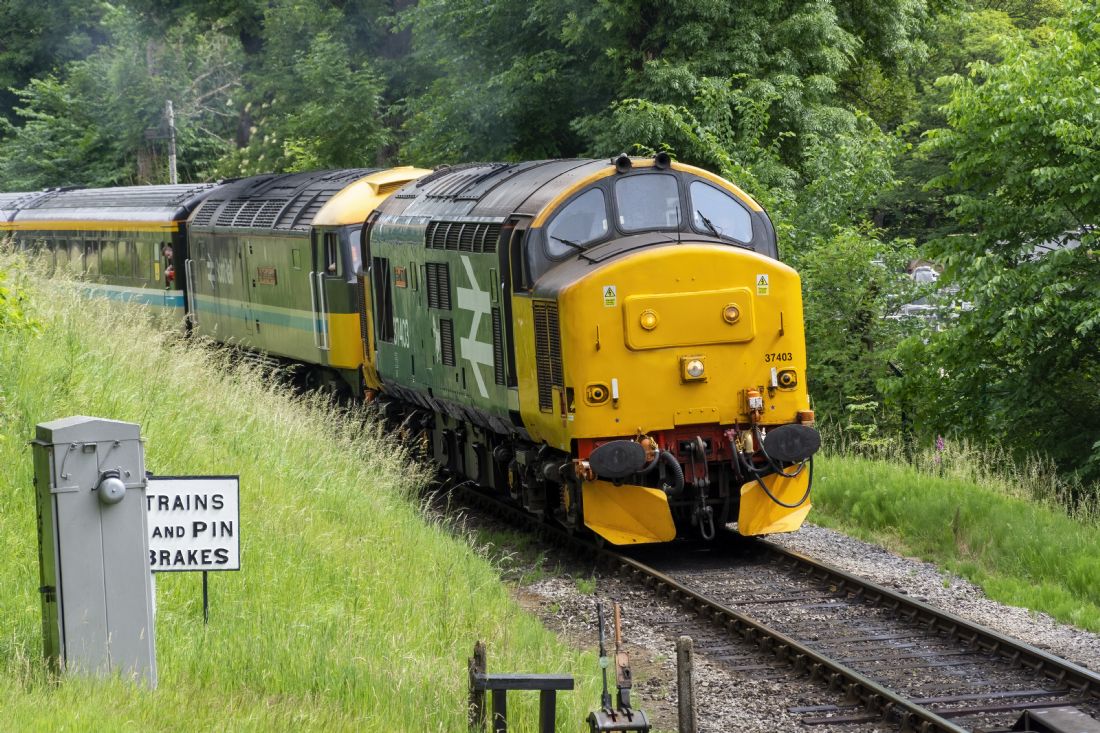
Isle of Mull 37403 is seen here just outside Oxenhope Station on the Keighley and Worth Valley Railway. It was being used as part of the railway's diesel gala weekend, often double heading with another loco. Delivered in 1965 it was originally designated as a type 3 D6607.
Isle of Mull 37403 is seen here at the sidings of Oxenhope Station on the Keighley and Worth Valley Railway. It was being used as part of the railway's diesel gala weekend, often double heading with another loco. Delivered in 1965 it was originally designated as a type 3 D6607.
Isle of Mull 37403 (closest and Lady Diana Spencer 47712 behind are seen here double heading just outside Oxenhope Station on the Keighley and Worth Valley Railway. Being used as part of the railway's diesel gala weekend.
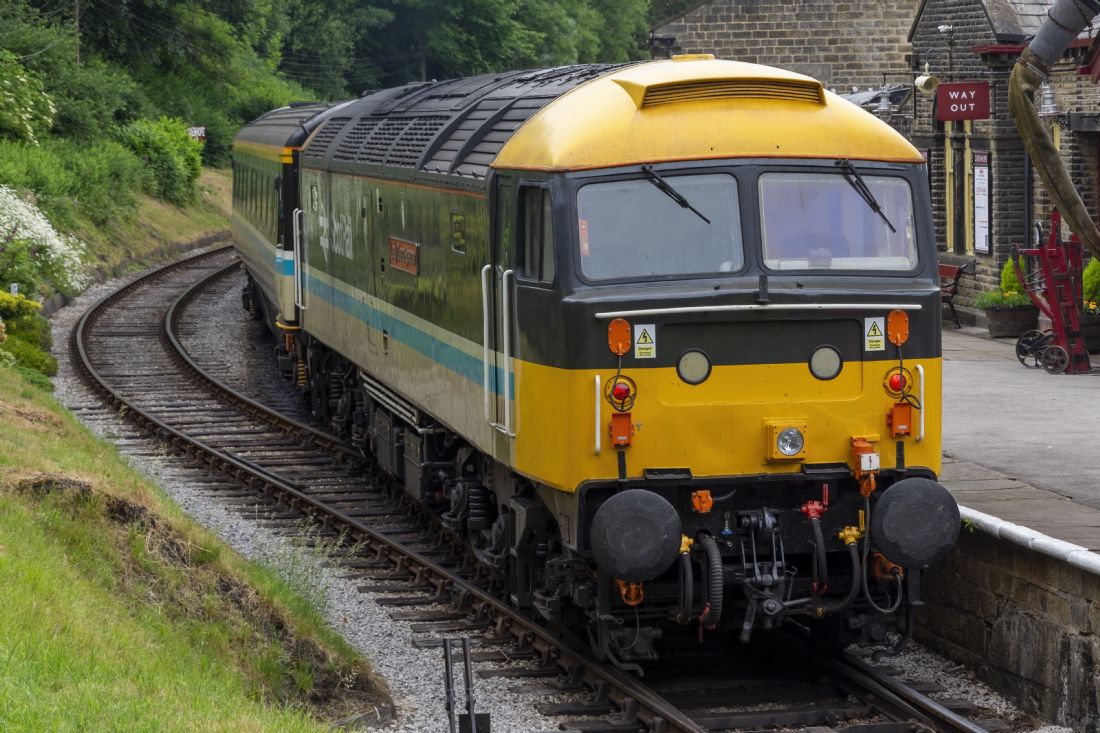
Seen here at Oxenhope Station on the Keighley and Worth Valley Railway. 47712 is a class 47 diesel electric loco that since being built in 1966 has carried many names, only becoming Lady Diana Spencer in 1995.
Cathryn is a 0-6-0 locomotive built by Hudswell Clarke in 1955 under works number 1884 and had a varied career covering several owners. Eventually retired in 1977 it has subsequently been restored to operation and now can be seen at heritage railways.
20 048 is a type 20 diesel electric locomotive, also known as an English Electric type 1. Its comparatively low weight and power restricted its use to less demanding freight roles. It lacked the capacity to provide train heating so it was not suited to passenger use.
In a curious renaming and renumbering beyond my comprehension the type 25 locomotive here bears the name Western Thunderer and D1011.
Seen here approaching Butterly station and often referred to as railbuses they were a combination of a railway frame from BREL at Derby and a body supplied by the Leyland bus company. These units were in operation for some 30 years before being phased out.
08590 is a Class 08 diesel shunter seen here at Swanwick. In the 9 years they were in production just under 1,000 were made, making them the most numerous British Rail locomotive.
Seen here approaching Butterley station and often referred to as railbuses they were a combination of a railway frame from BREL at Derby and a body supplied by the Leyland bus company. These units were in operation for some 30 years before being phased out.
Designated LO262 there were several thousand of these built and still around 300 in preservation. This one is 63 years old and has spent just a little under half its life on preserved railways.
Isle of Mull 37403 (closest and Lady Diana Spencer 47712 behind are seen here double heading just outside Oxenhope Station on the Keighley and Worth Valley Railway. Being used as part of the railways diesel gala weekend.
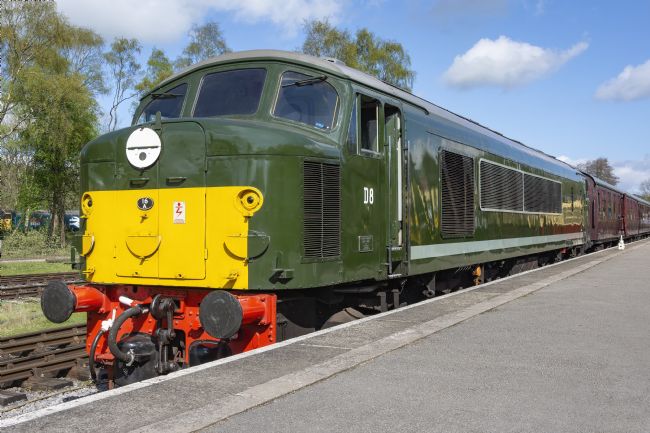
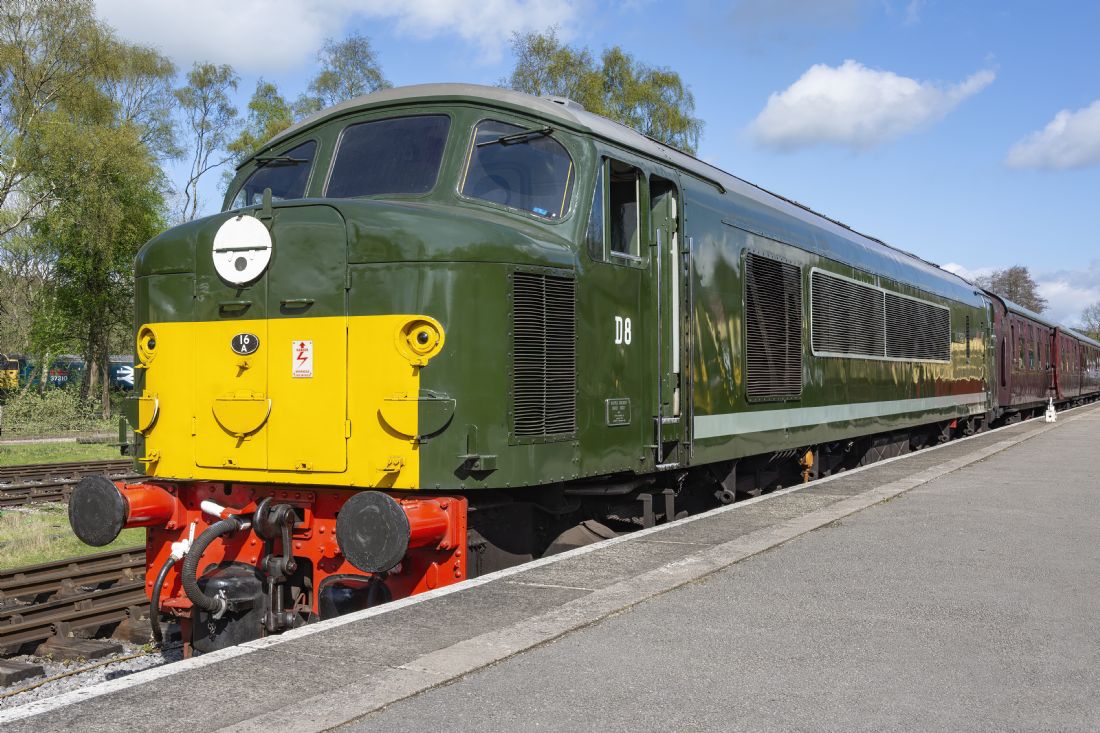
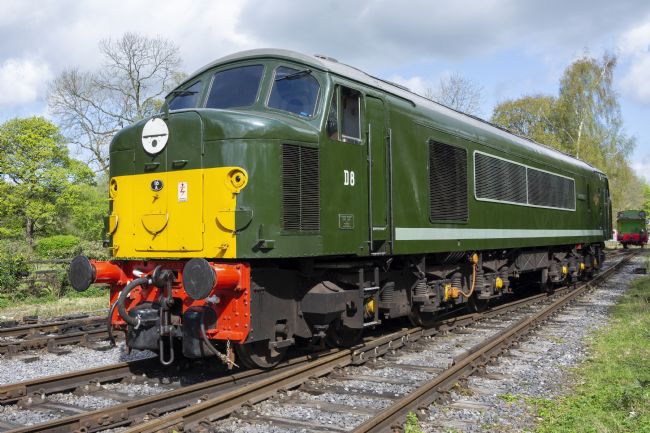
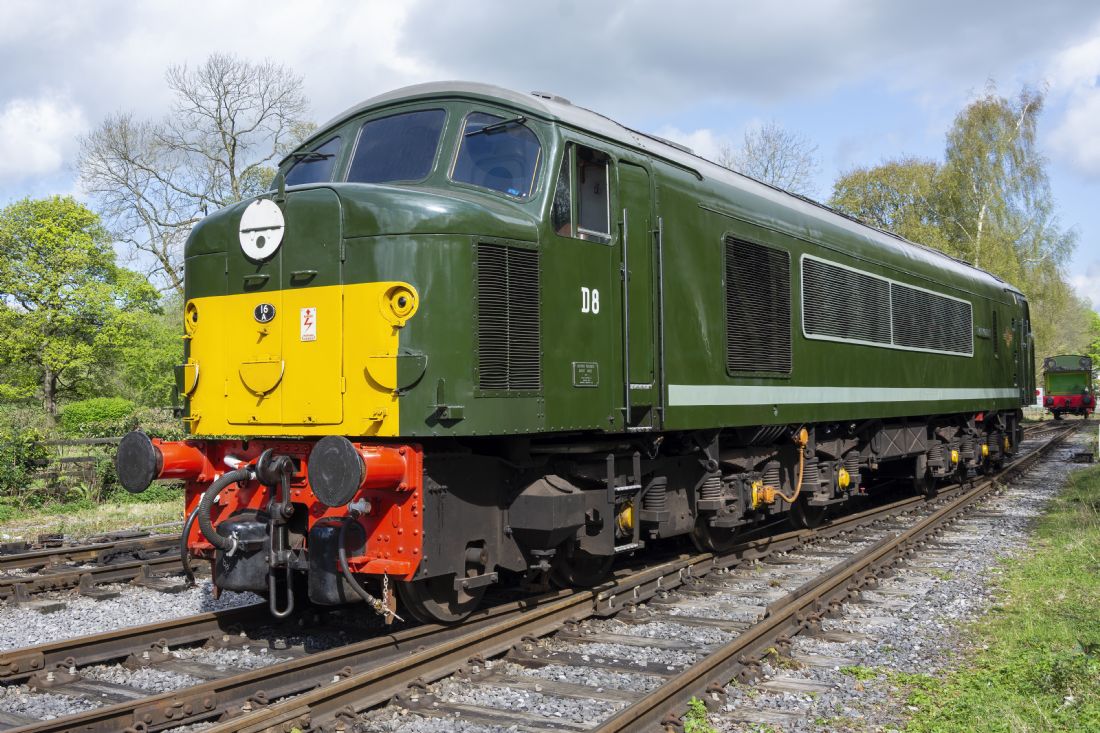
Only 10 British Rail Class 44 locomotives were built with just 2 remaining in operation on preserved lines. They were designed for high speed passenger services of up to 90mph and all were named after mountains in England and Wales.
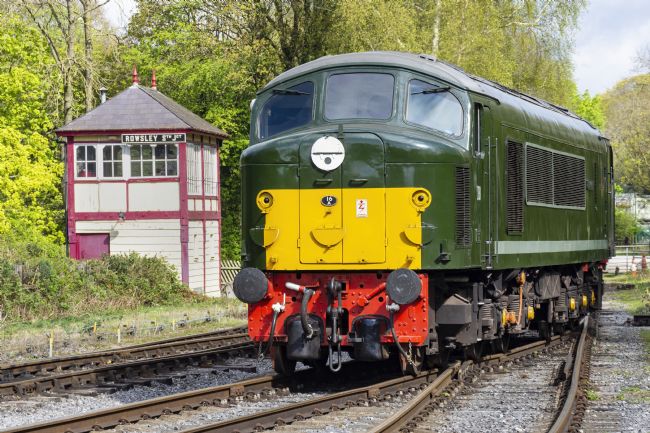
Only 10 British Rail Class 44 locomotives were built with just 2 remaining in operation on preserved lines. They were designed for high speed passenger services of up to 90mph and all were named after mountains in England and Wales.
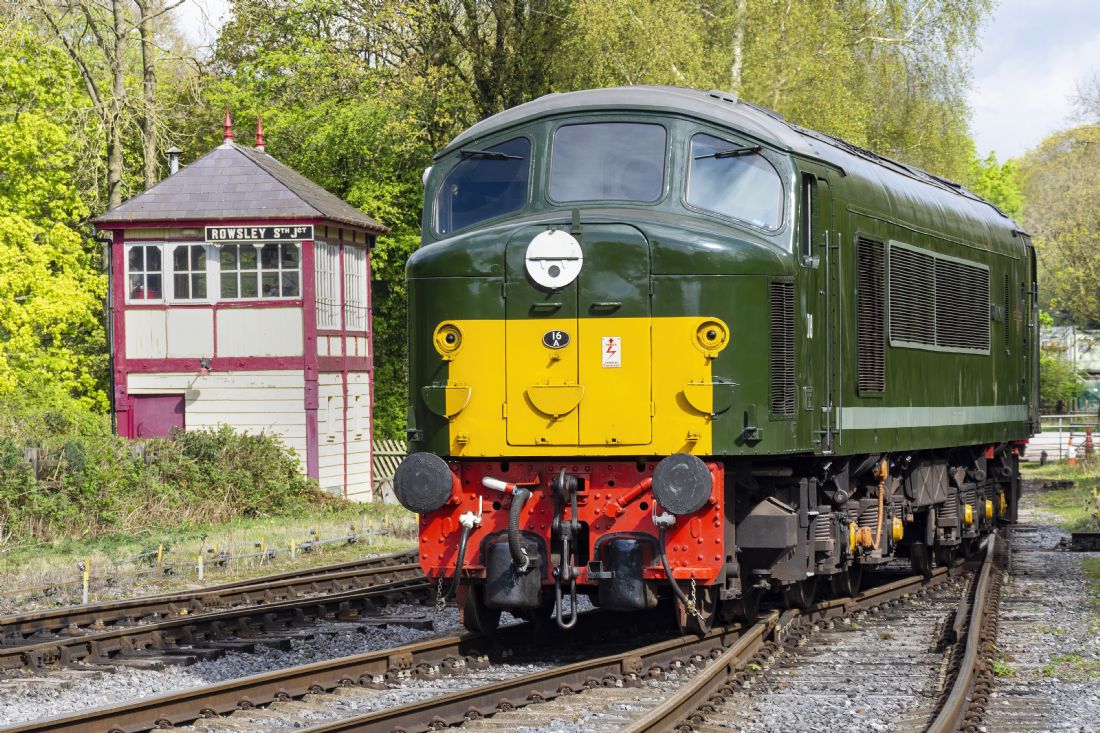
Only 10 British Rail Class 44 locomotives were built with just 2 remaining in operation on preserved lines. They were designed for high speed passenger services of up to 90mph and all were named after mountains in England and Wales.
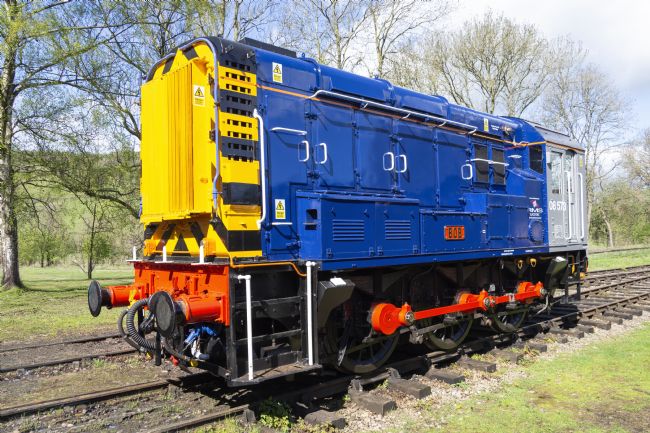
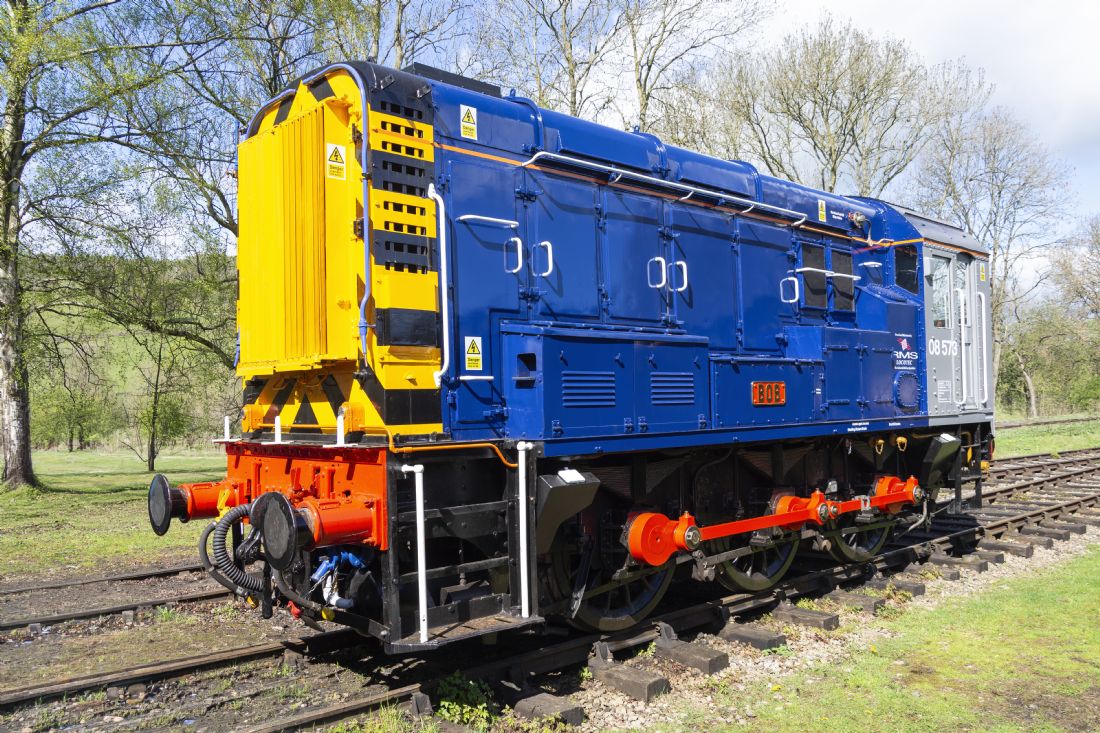
08573, also known as D3740 was built in 1979 is a lovingly restored Class 08 shunter currently owned by RMS Locotec and seen here looking immaculate at Peakrail in Derbyshire proudly displaying the name Bob.